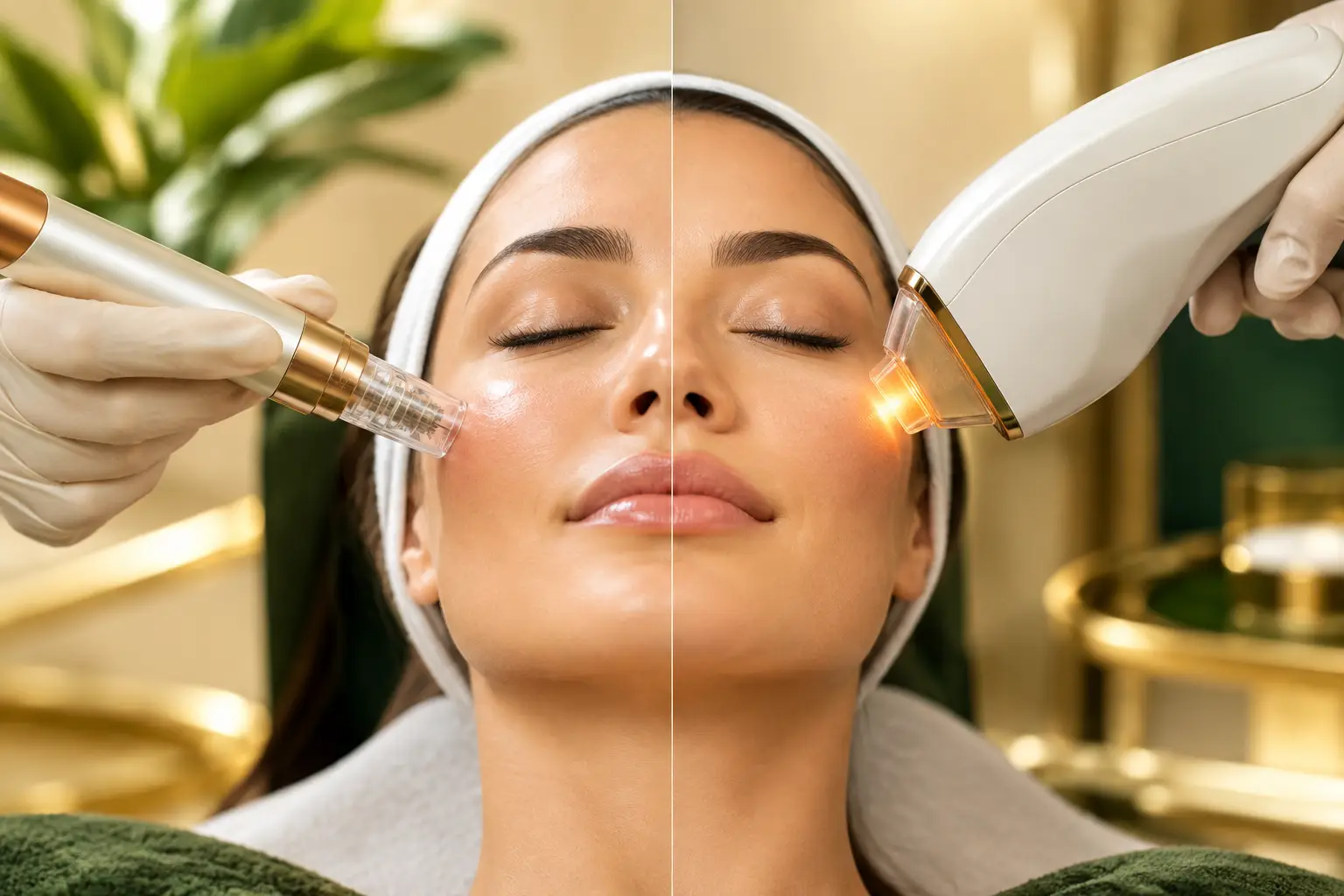
The skin around your eyes is delicate and often shows age first. Fine lines, crow’s feet, and hollowness under the eyes can make you look tired even when you’re well-rested.
Dermal fillers for eye wrinkles offer a straightforward way to restore volume and smooth these stubborn lines. At YouShine Med Spa, we’ve seen firsthand how the right filler can transform the eye area and refresh your entire face.
How Dermal Fillers Restore Your Eye Area
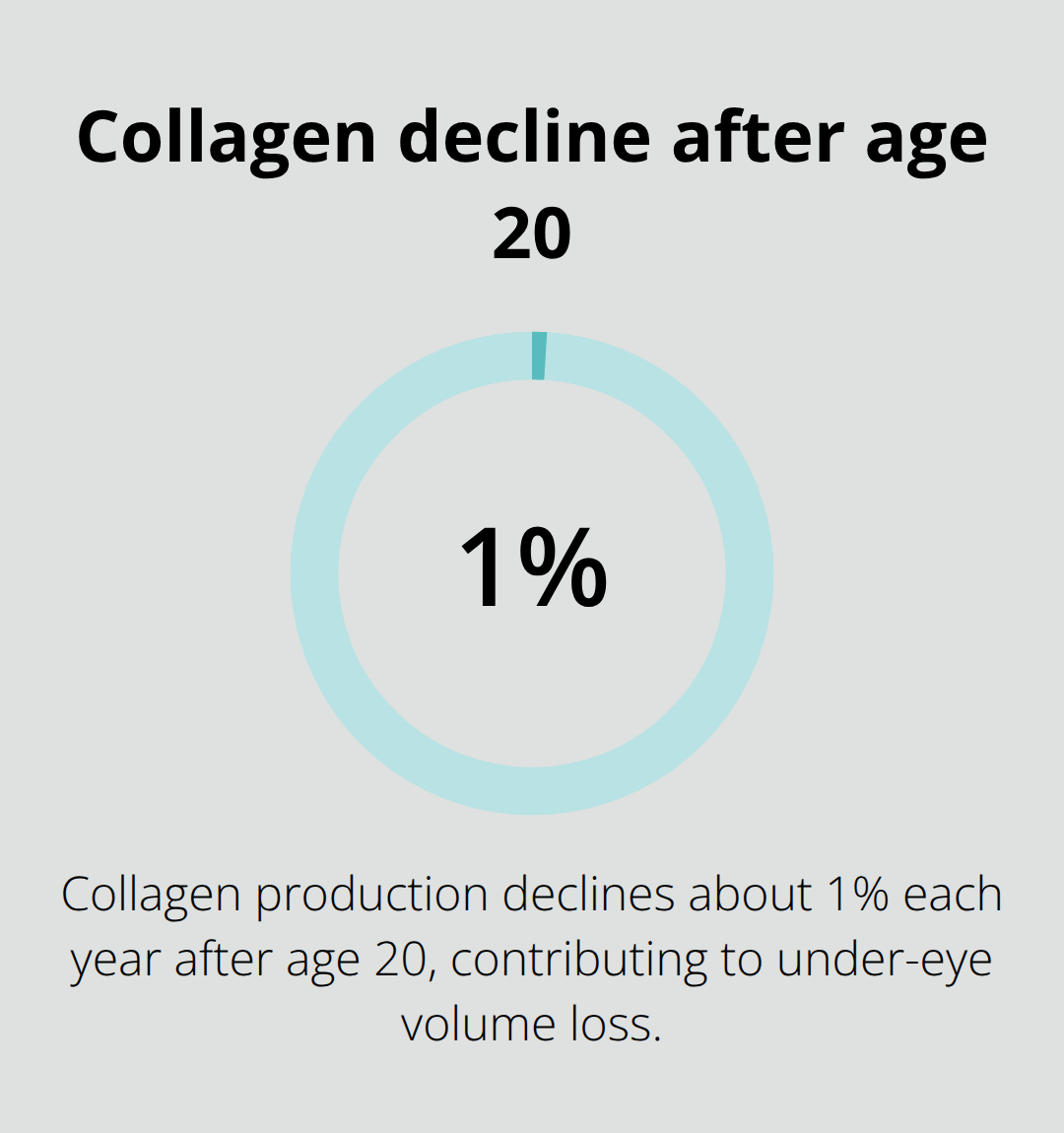
The eye area loses volume as you age because the skin thins and fat pads beneath the eyes shrink. This happens because collagen production drops by roughly 1% per year after age 20, according to research in the American Journal of Clinical Dermatology. When volume disappears, the tear trough-the hollow running from your inner lower eyelid to your cheek-becomes more pronounced, casting shadows that make you look exhausted.
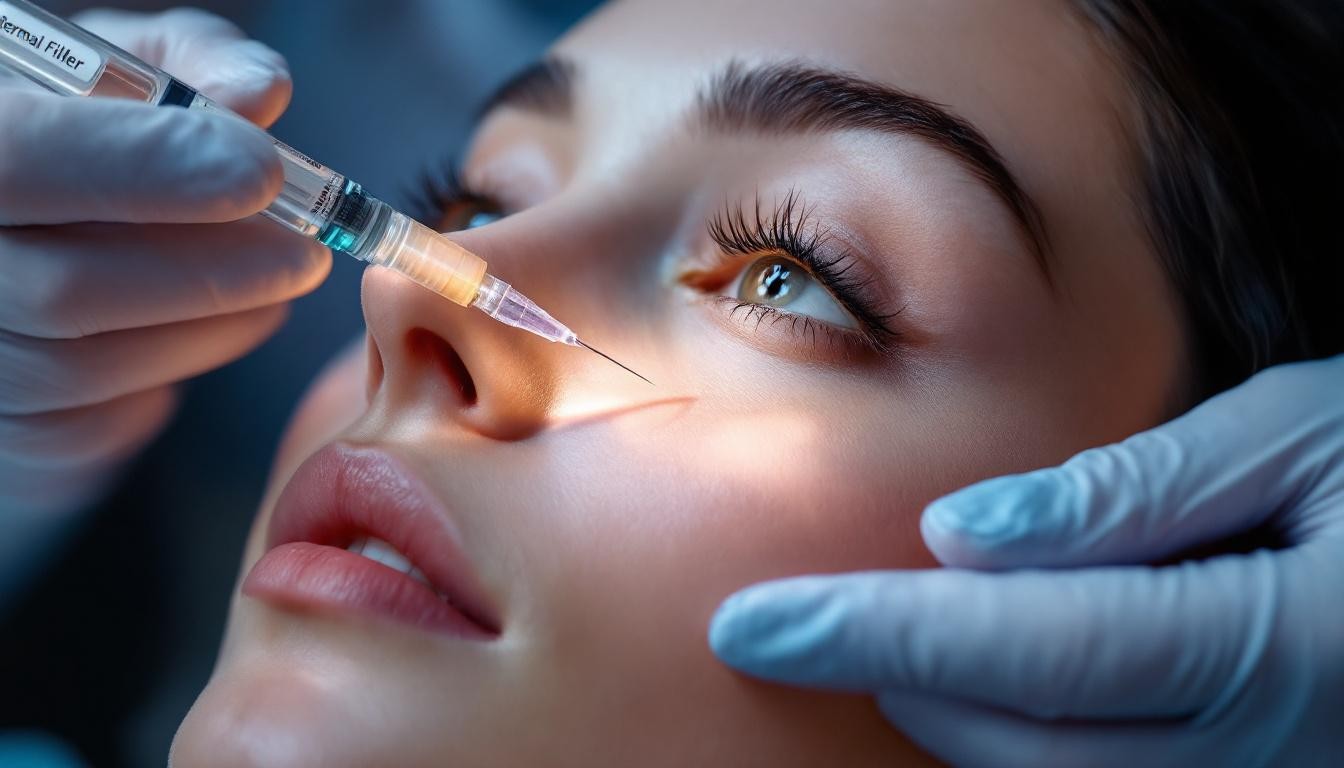
Dermal fillers work by injecting hyaluronic acid directly into these hollows to plump the tissue and soften the shadows. The results are immediate. Most patients see improvement within hours, though full settling takes 1 to 2 weeks as swelling subsides. Hyaluronic acid fillers like Juvederm Volbella and Restylane are the standard choices because they integrate smoothly with delicate under-eye skin and attract moisture to hydrate the area from within. These fillers restore the structural support your face loses over time, which is why the entire eye area looks fresher and more awake.
Why Volume Loss Creates the Tired Look
The tired appearance comes from shadows, not pigmentation. When the tear trough deepens, light hits the hollow and creates a dark shadow beneath your eye. Fillers eliminate this by raising the sunken area to the same level as surrounding skin, removing the shadow entirely. This is why fillers work better for dark circles caused by hollowness than for circles from genetics or actual skin discoloration. Your skin quality matters here-if you have good elasticity and no excessive laxity, fillers deliver natural results. If your lower eyelid sags significantly, surgery may work better than fillers alone.
How Long Results Actually Last
Hyaluronic acid fillers under the eyes last longer than in other facial areas. Results can last from 6 to 24 months depending on individual factors, with most patients experiencing benefits in the longer range because the eye area moves less than the mouth or cheeks. Restylane typically holds for about 9 to 12 months, while Juvederm Volbella lasts similarly. You’ll need maintenance treatments to sustain the refreshed look, but the predictable timeline makes planning straightforward. Understanding these timelines helps you decide which filler type works best for your lifestyle and aesthetic goals-a decision we’ll explore in the next section.
Which Filler Type Works Best for Your Eyes
Hyaluronic Acid Fillers: The Gold Standard
Hyaluronic acid fillers dominate under-eye treatment for good reason: they deliver results within hours and can be reversed if something goes wrong. We at YouShine Med Spa recommend hyaluronic acid options like Restylane and Juvederm Volbella because they integrate seamlessly with delicate eye skin and attract moisture to hydrate from within. Restylane and Juvederm Volbella offer similar longevity with a slightly thinner consistency that works better for fine lines. Belotero Balance integrates directly into skin tissue, making it ideal if you have very thin skin or want superficial smoothing rather than deep volume restoration.
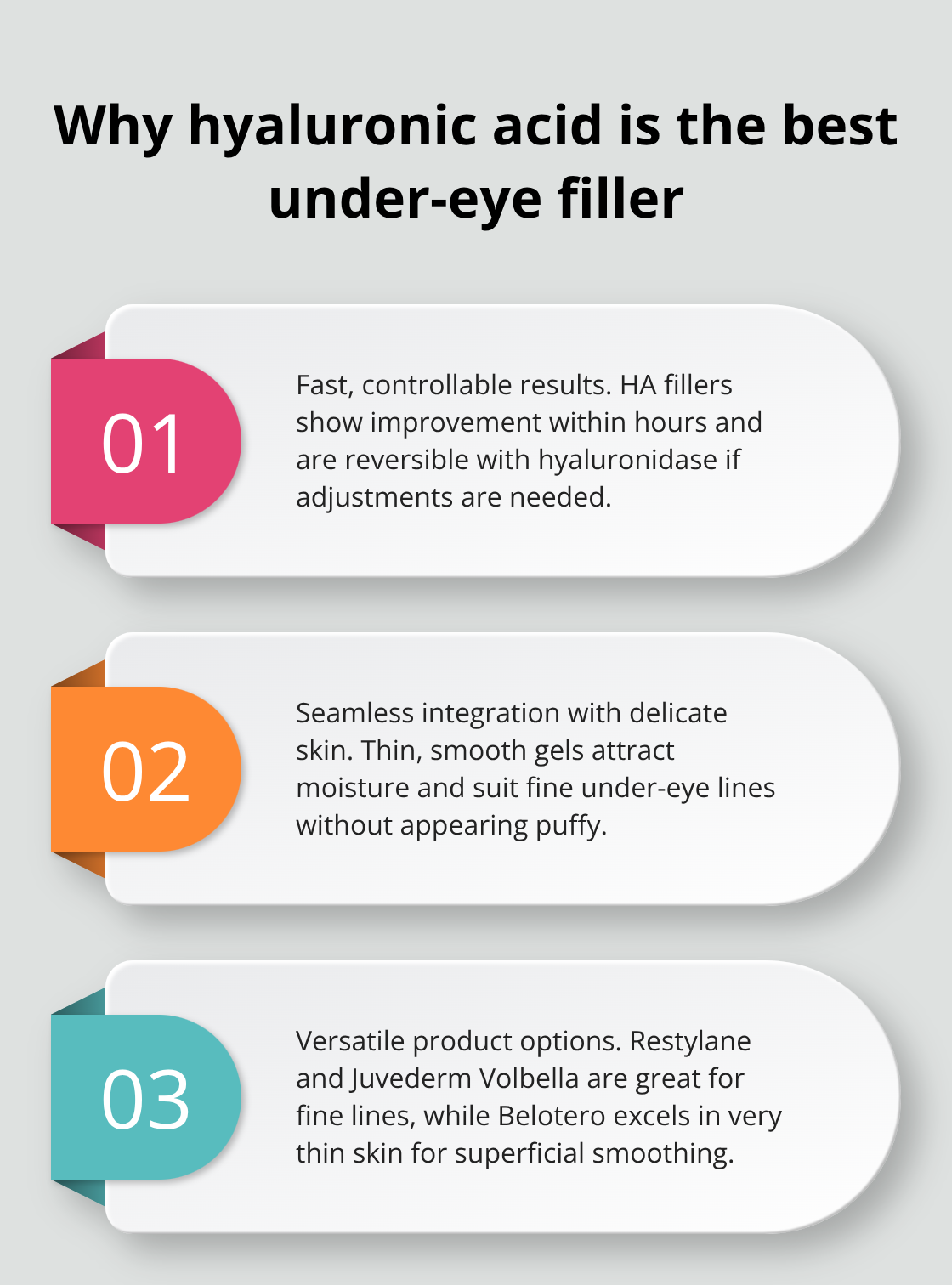
The real advantage of hyaluronic acid is reversibility: if you dislike the result or experience complications, hyaluronidase injections can dissolve the filler within days, giving you an exit strategy that other fillers don’t offer. This safety net matters because the under-eye area is unforgiving-mistakes are visible immediately and affect how you look every single day.
Why Other Fillers Fall Short for Under-Eye Work
Calcium hydroxylapatite and poly-L-lactic acid fillers carry significant drawbacks for under-eye work that make them poor choices despite longer-lasting claims. Calcium hydroxylapatite can cause whitening under the eye due to the Tyndall effect, creating a chalky appearance that looks unnatural and requires correction. Poly-L-lactic acid requires multiple sessions weeks apart and carries higher risk of lumps forming under delicate eye skin, plus it’s thicker and harder to place precisely in tight spaces. Neither option offers reversibility if results disappoint you.
Duration That Actually Matches Your Needs
The under-eye area moves minimally compared to other facial zones, so hyaluronic acid’s duration is genuinely sufficient-you don’t need permanence that comes with increased risk. Results typically last longer in the under-eye area than in other facial regions because this zone experiences less muscle movement. Most patients find that maintenance treatments every 9 to 12 months keep the refreshed look consistent without requiring permanent solutions.
Planning Your First Treatment
Start with hyaluronic acid and assess how you respond after 2 weeks when swelling settles, then decide if you want maintenance treatments every 9 to 12 months. This approach costs less upfront, delivers faster results, and protects you from irreversible mistakes in one of the most visible areas of your face. Once you understand how your skin responds to fillers, you’ll know exactly what to expect during the actual treatment process and recovery period.
What Happens During Your Eye Filler Appointment
The Treatment Timeline and Process
The procedure takes about 30 minutes from start to finish, though the actual injection time is much shorter. Numbing cream application takes at least 30 minutes before your treatment, so you’ll feel pressure and movement rather than sharp pain during injections. Your injector maps out your tear trough carefully, assessing how much volume you’ve lost and where shadows fall most noticeably. This assessment determines exactly how much filler goes into each side, since asymmetry looks worse than underfilling. Most injectors use a conservative approach on the first treatment, adding filler gradually rather than overfilling immediately. This matters because excessive filler creates a puffy, unnatural appearance that’s hard to correct without dissolving everything and starting over.
Injection Technique and Placement
The needle enters at specific angles to place filler directly on bone or beneath the eyelid muscle, avoiding superficial placement that causes visible irregularities or the bluish Tyndall effect. Proper placement requires anatomical knowledge and precision-this is why choosing a skilled, board-certified injector matters more than price. An experienced injector understands how different tissue planes affect results and adjusts technique accordingly. The delicate eye area leaves no room for error, so your injector’s credentials and experience directly impact whether you look refreshed or overdone.
What to Expect in the Days After Treatment
Swelling peaks within 24 to 48 hours, which is completely normal and expected. Most patients experience mild bruising that fades within 3 to 7 days, though some people bruise more easily depending on genetics and whether they take blood thinners. Avoiding alcohol and blood-thinning medications like aspirin for 24 hours before and after treatment reduces bruising significantly.
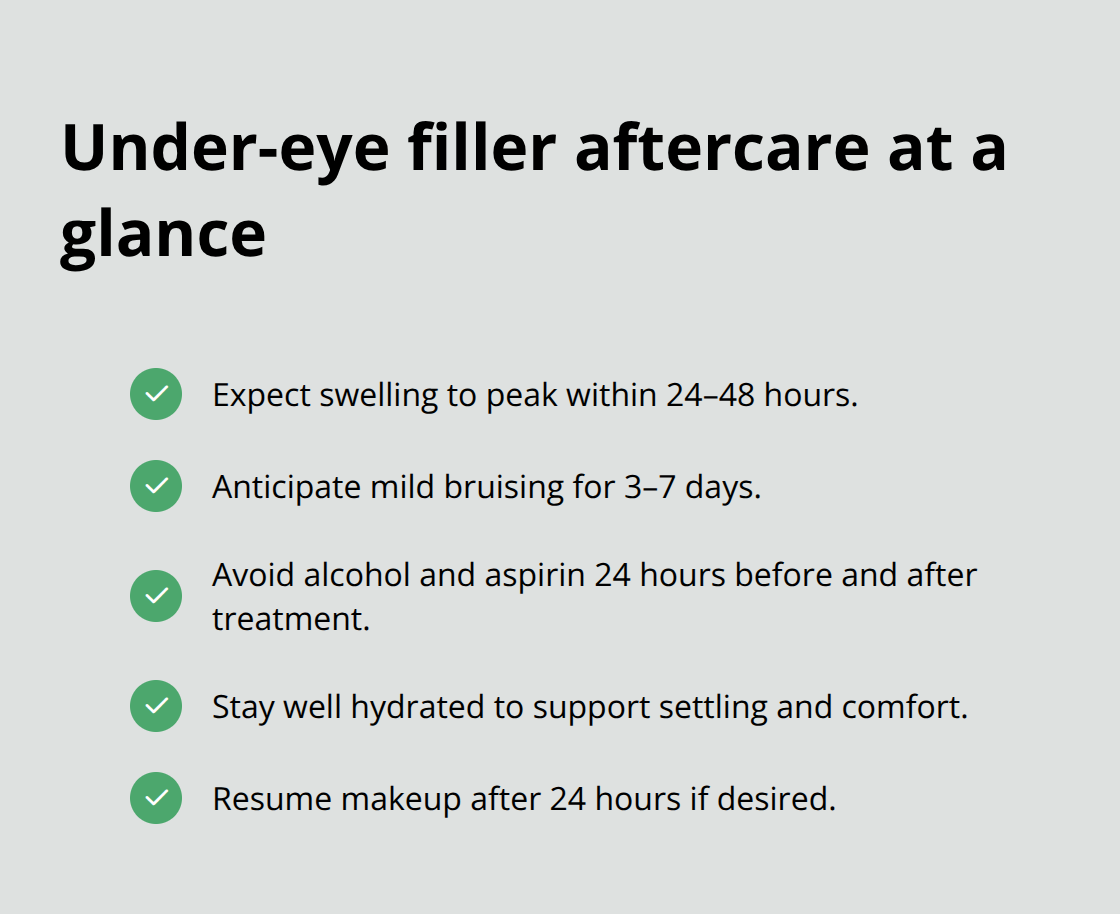
Staying hydrated after treatment helps skin settle faster and supports the hyaluronic acid filler’s ability to attract moisture. You can wear makeup after 24 hours and return to normal activities immediately, which is why fillers appeal to people who can’t take time off work.
When Your Final Results Appear
Results improve as swelling subsides over 1 to 2 weeks, so what you see immediately isn’t your final result. Many patients are surprised how much better they look once the puffiness resolves. Side effects beyond swelling and bruising are rare when an experienced injector performs the treatment, though sensitivity, redness, or mild tenderness at injection sites occasionally occurs and resolves within days. If you experience persistent swelling beyond two weeks, severe asymmetry, or lumps forming under your eyes, contact your injector immediately rather than waiting.
Planning for Maintenance and Longevity
Results typically last 9 to 12 months in the under-eye area, making maintenance treatments straightforward to schedule and budget for annually. The under-eye area moves minimally compared to other facial zones, so fillers hold their place longer here than elsewhere on your face. This predictable timeline helps you plan future appointments without surprise fading or unexpected touch-ups.
Final Thoughts
Dermal fillers for eye wrinkles work because they address the root cause of aging around your eyes: volume loss and the shadows it creates. Unlike creams or serums that sit on the surface, fillers restore structural support beneath your skin, making the entire eye area look fresher and more awake within hours. The science is straightforward, the results are visible immediately, and the recovery is minimal, which explains why injectables accounted for roughly 7 million minimally invasive cosmetic procedures in the U.S. in 2020 according to the American Society of Plastic Surgeons.
Choosing the right filler comes down to one principle: hyaluronic acid fillers are the only sensible choice for under-eye work. They deliver results fast, last long enough to justify the cost, and can be reversed if something goes wrong. Restylane and Juvederm Volbella integrate seamlessly with delicate eye skin, while Belotero Balance works better if you have very thin skin (other fillers like calcium hydroxylapatite and poly-L-lactic acid carry unnecessary risks in this sensitive area, from whitening effects to lumps that are hard to correct).
Your next step is scheduling a consultation with an experienced injector who understands eye anatomy and can assess whether fillers suit your specific situation. Some people have excessive eyelid laxity or severe bags that require surgery instead, and a skilled professional will tell you honestly whether dermal fillers for eye wrinkles will work for you. Contact YouShine Med Spa to book your free consultation and discover how personalized filler treatments can restore your refreshed, rested appearance.