Rough, uneven skin can make you feel less confident about your appearance. At YouShine Med Spa, we’ve seen firsthand how microneedling benefits for skin texture by triggering your skin’s natural healing response.
This treatment works by creating controlled micro-injuries that stimulate collagen production, smoothing out acne scars, enlarged pores, and rough patches. Read on to learn how many sessions you’ll need and what results you can realistically expect.
How Microneedling Rebuilds Your Skin
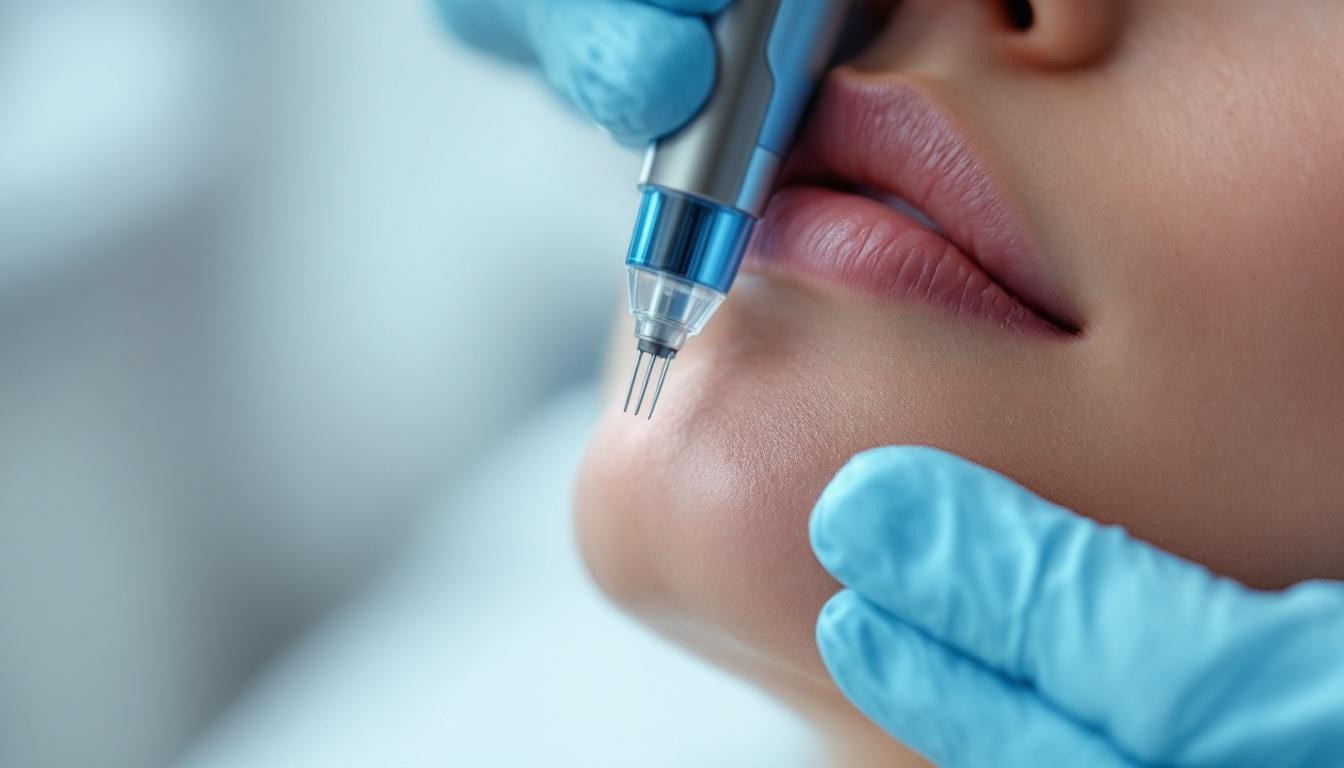
Microneedling works through a straightforward mechanism: tiny needles create controlled micro-injuries in your skin’s dermis layer, triggering your body’s natural healing response. This process activates fibroblasts, the cells responsible for producing collagen and elastin. According to research published in the Journal of Clinical and Aesthetic Dermatology, collagen production accelerates significantly within the first few weeks after treatment, with visible improvements typically emerging around four to six weeks as the skin remodels itself. The needle depth matters considerably-shorter needles address surface-level concerns like fine lines and pore size, while deeper penetration reaches the layers where acne scars and stretch marks originate.
Customized Depth for Your Specific Concerns
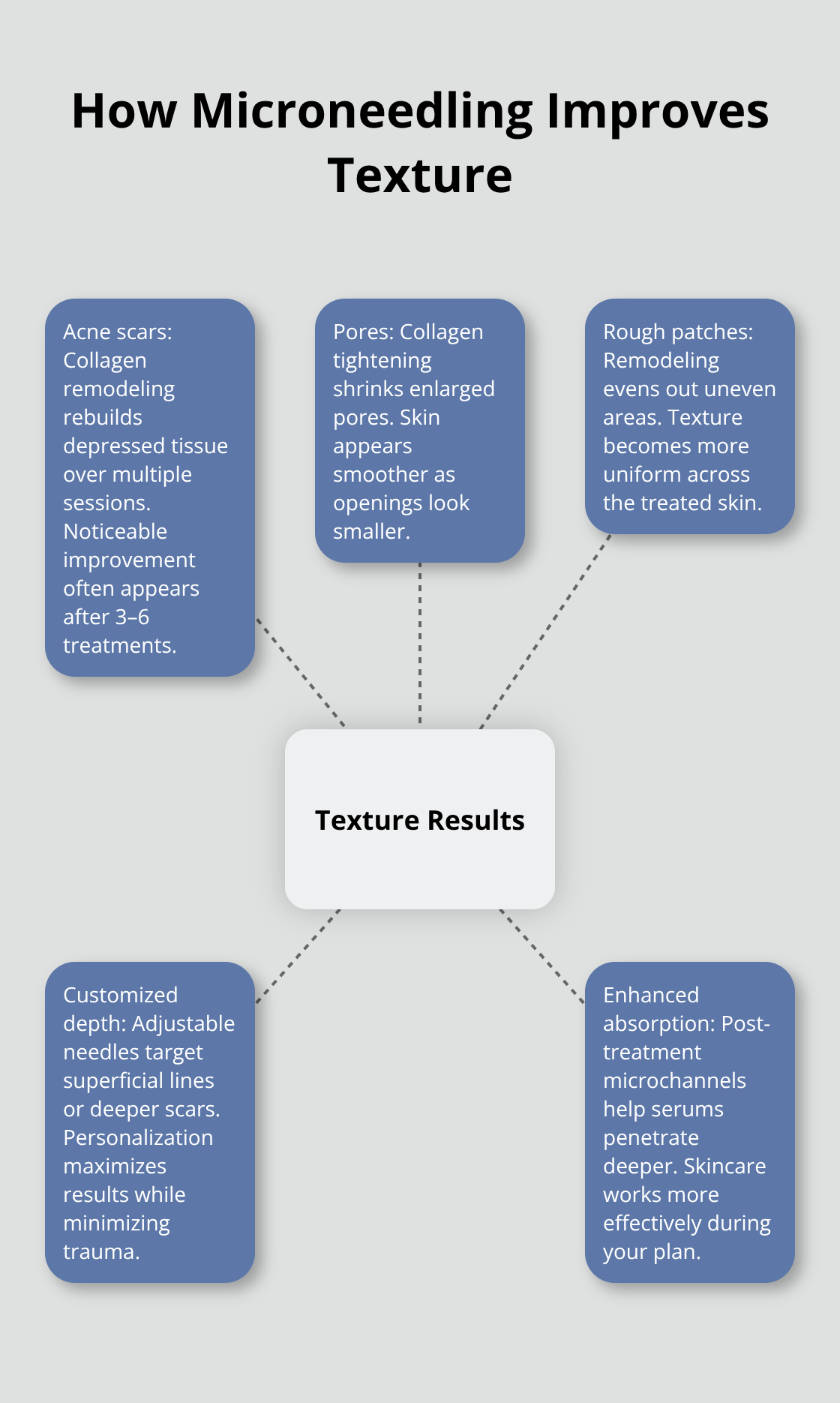
Adjustable-depth devices allow practitioners to customize needle penetration specifically for your skin’s needs, ensuring you receive results without unnecessary trauma. Acne scars respond exceptionally well to microneedling because the treatment literally rebuilds the depressed tissue beneath the scar. The collagen remodeling process fills in pitted areas over multiple sessions, with most patients seeing noticeable improvement after three to six treatments spaced four to six weeks apart. Enlarged pores shrink as collagen tightens the skin around them, and rough patches smooth out as the skin’s texture becomes more uniform.
Why Microneedling Outperforms Other Options
One significant advantage over lasers and chemical peels is that microneedling carries a substantially lower risk of post-inflammatory hyperpigmentation, making it particularly suitable for darker skin tones. The microchannels created during treatment also enhance absorption of topical products applied afterward-your serums and moisturizers penetrate deeper and work more effectively. This enhanced penetration means your skincare routine becomes more powerful during your treatment plan.
What Happens During Recovery
You’ll experience redness and mild swelling for three to five days after treatment, with some patients reporting tightness or temporary dryness. Most people return to normal activities immediately, though you should avoid makeup for 24 hours and sun exposure until the skin fully heals.
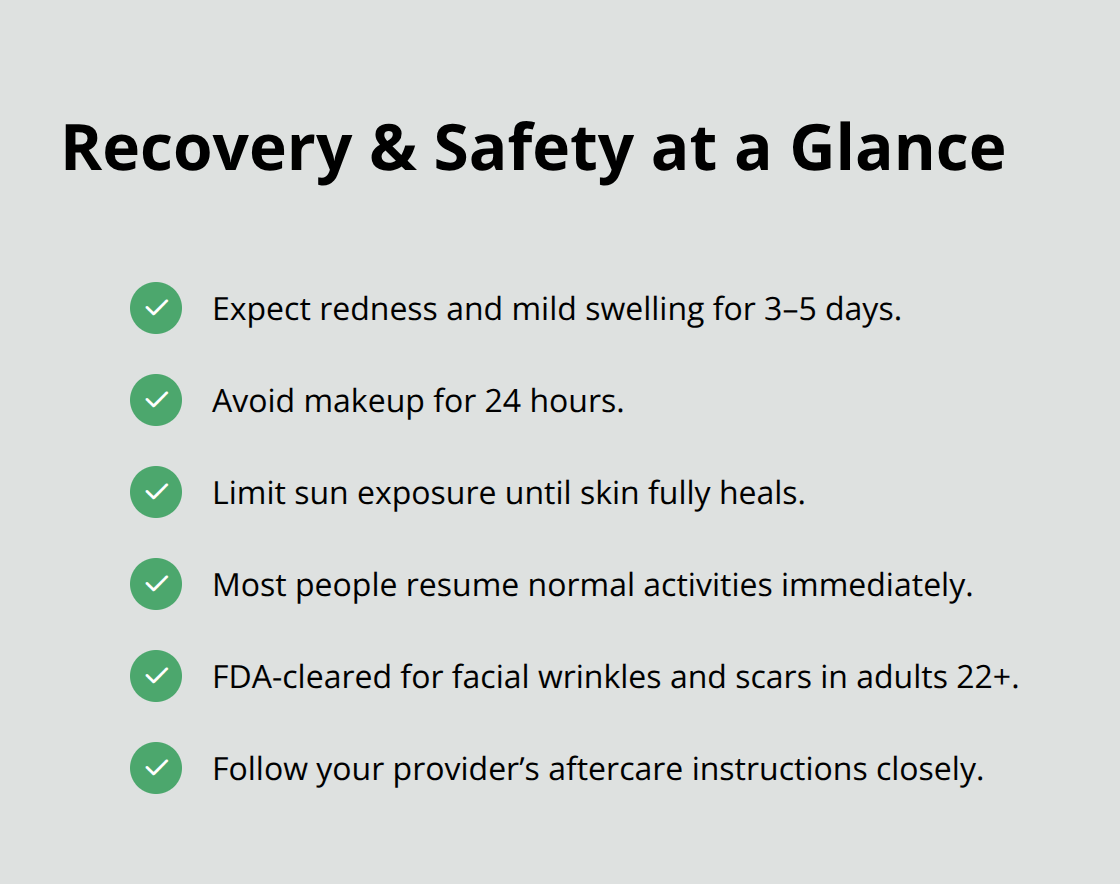
The FDA has cleared microneedling devices for treating facial wrinkles, acne scars, and abdominal scars in adults 22 and older, confirming its safety when performed by trained professionals.
Timeline and Session Requirements
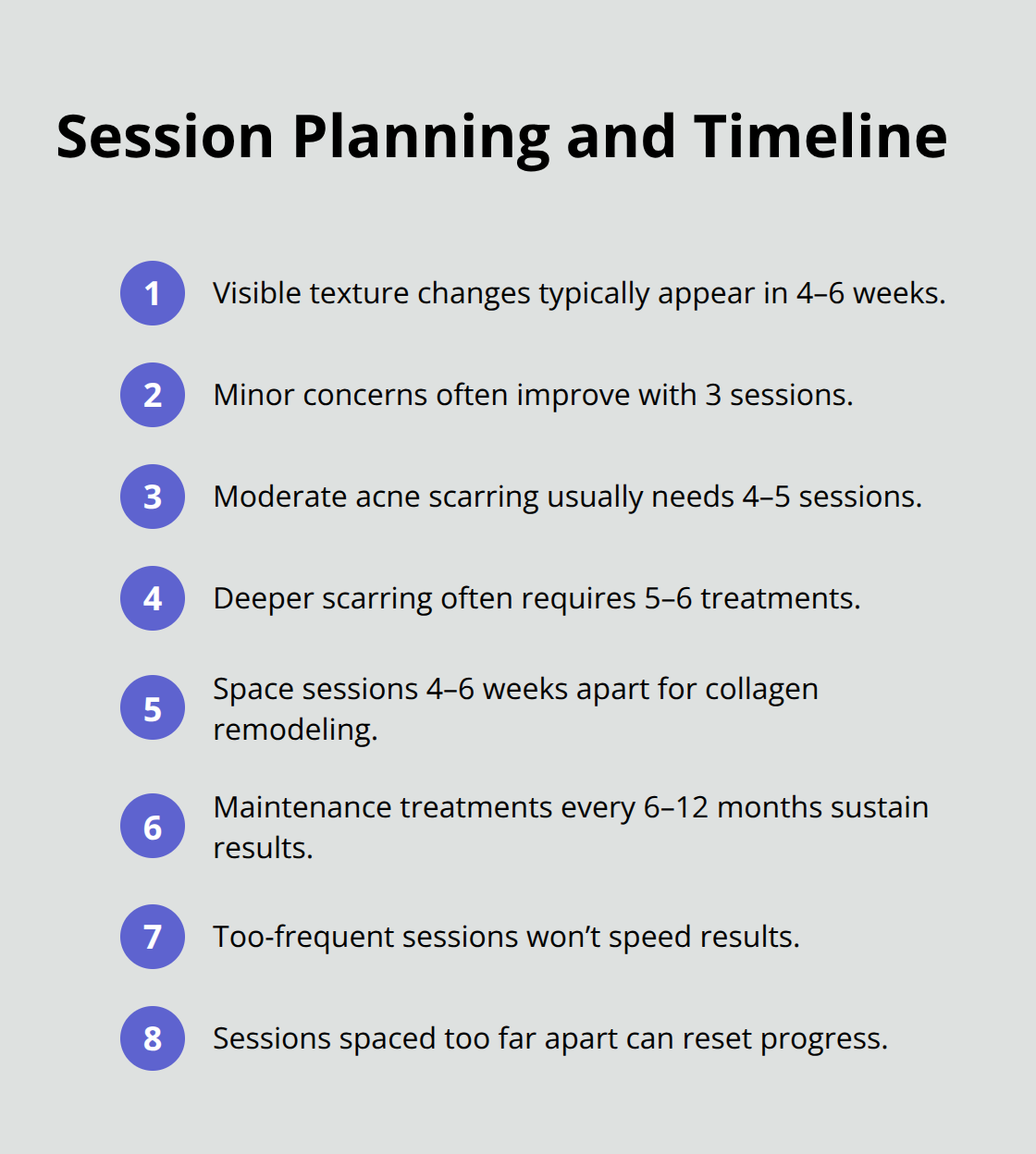
Results aren’t instant-patience is essential because collagen remodeling is a gradual biological process. Some patients notice subtle improvements within two weeks, but meaningful texture changes typically take four to six weeks to become apparent. The number of sessions you’ll need depends entirely on your specific concerns; someone addressing minor texture irregularities might see results with three sessions, while deeper acne scarring often requires five or six treatments to achieve your desired outcome. Understanding your personal timeline helps you plan your treatment schedule and set realistic expectations for what lies ahead.
What Results Can You Actually Expect from Microneedling
Acne scars and pitted skin respond exceptionally well to microneedling because the treatment physically rebuilds depressed tissue rather than simply smoothing the surface. Research confirms that microneedling consistently reduces scar depth and improves texture, with higher patient satisfaction rates compared to some traditional options. The collagen remodeling process fills in pitted areas progressively over multiple sessions, and most patients see noticeable improvement after three to six treatments spaced four to six weeks apart.
How Deep Scarring Responds to Treatment
Deeper or more severe scarring typically requires the upper end of that range-five or six sessions-to achieve meaningful results. Enlarged pores shrink measurably as collagen tightens the skin around them, and rough patches become noticeably smoother as texture becomes more uniform. The microchannels created during treatment enhance absorption of topical products you apply afterward, meaning your serums and moisturizers penetrate deeper and work more effectively during your treatment plan.
Texture Improvements Across Different Skin Types
Microneedling carries substantially lower risk of post-inflammatory hyperpigmentation compared to lasers and chemical peels, making it the better choice for darker skin tones where pigmentation complications are a genuine concern. If you have melasma or other pigmentary disorders, microneedling paired with depigmenting agents like vitamin C or tranexamic acid produces better results because the microchannels allow these ingredients to penetrate deeper into affected areas.
Radiance and Long-Term Durability
The overall radiance improvement comes from the skin’s natural healing response-as collagen rebuilds and new skin cells form, your complexion becomes brighter and more even-toned without the aggressive downtime associated with stronger treatments. Results typically last months to years, with maintenance treatments every six to twelve months helping you sustain the improvements you’ve achieved. Understanding your specific skin type and concerns allows practitioners to select the right needle depth and treatment frequency, which directly impacts how well your skin responds and how long results persist before you need another session.
How Many Sessions Until You See Results
The timeline for visible texture improvement spans four to six weeks, though this isn’t arbitrary-it’s rooted in how your skin actually rebuilds itself. Collagen remodeling happens gradually, and you’re essentially waiting for your body to produce new structural proteins beneath the surface. Some patients report subtle improvements within two weeks, but expecting dramatic texture changes before week four sets you up for disappointment. The Journal of Clinical and Aesthetic Dermatology documents that meaningful improvements in skin texture and scar depth typically emerge around the four to six week mark after your first session. This matters because it prevents you from abandoning treatment prematurely or scheduling sessions too close together, which would waste your money and potentially irritate your skin.
Session Frequency Depends on Your Specific Concerns
Session frequency depends entirely on what you’re treating. Minor texture irregularities and enlarged pores often respond well to three sessions spaced four to six weeks apart, meaning you’re looking at a three to four month commitment start to finish. Moderate acne scarring typically requires four to five sessions over four to five months, while deeper or more severe pitting usually demands five or six treatments to achieve results worth the investment. Spacing matters enormously-treating your skin every two weeks won’t accelerate results because your body needs those four to six weeks to produce new collagen. Spacing sessions too far apart, like every twelve weeks, means you’re starting over each time instead of building on previous progress.
Combine Treatments to Amplify Your Results
Microneedling alone delivers solid results, but pairing it with complementary treatments accelerates texture improvement significantly. The microchannels enhance topical product absorption by up to 300 percent, meaning serums containing vitamin C, retinoids, or growth factors penetrate deeper and work more effectively when applied immediately after treatment. This isn’t theoretical-it’s measurable improvement in product efficacy. Some practitioners apply platelet-rich plasma (PRP) or growth factors directly after microneedling to amplify collagen stimulation, though the FDA hasn’t formally cleared microneedling devices for use with these adjunctive treatments. Clinical observation shows better texture outcomes and faster improvements when combining microneedling with PRP compared to microneedling alone. If you have melasma or pigmentation issues alongside texture concerns, pairing microneedling with depigmenting agents like tranexamic acid or vitamin C produces superior results because these ingredients reach deeper layers where pigment discoloration originates.
Maintenance Sessions Sustain Your Investment
Results last six to twelve months before texture gradually reverts to baseline, which means treating microneedling as a one-time procedure wastes the initial investment. Maintenance sessions every six to twelve months sustain the improvements you’ve achieved without requiring the full treatment series again. Many patients schedule one session annually as preventive texture maintenance, particularly if they’re concerned about aging or sun damage. The cost-benefit calculation shifts dramatically when you view microneedling as ongoing maintenance rather than a finite treatment-one session yearly costs substantially less than repeating the entire series every few years. Your skincare routine between sessions matters too; consistent sun protection with SPF 30 or higher prevents new sun damage from undoing your texture improvements, while moisturizers and gentle cleansing support the collagen you’ve built.
Final Thoughts
Choosing where to receive microneedling matters more than you might think, because the difference between average results and exceptional outcomes comes down to practitioner expertise and equipment quality. We at YouShine Med Spa understand that microneedling benefits for skin texture depend entirely on proper technique and individualized care. Our team uses high-quality equipment calibrated to deliver precise needle depths matched to your particular texture issues, whether you’re treating acne scars, enlarged pores, or rough patches.
Your skin is unique, and your treatment plan should reflect that reality. We evaluate your skin type, the severity of your texture concerns, and your healing capacity before recommending a session schedule. Someone with darker skin tones treating melasma alongside texture issues receives a different approach than someone addressing minor pore enlargement, because this personalization directly impacts how quickly you see results.
The microneedling experience at YouShine Med Spa prioritizes your comfort throughout the process-we apply topical numbing before treatment, use advanced equipment that minimizes discomfort, and provide detailed aftercare guidance to support your skin’s healing. Visit YouShine Med Spa to schedule your consultation and discover how professional microneedling can deliver the smooth, radiant skin you’ve been seeking.