Hair loss affects roughly 50 million men and 30 million women in the United States alone. The good news is that you don’t need surgery to see real results.
At YouShine Med Spa, we’ve seen firsthand how non-surgical hair restoration treatments are transforming lives. These modern solutions work with your body’s natural healing processes to stimulate growth and restore confidence.
How PRP Stimulates Hair Growth
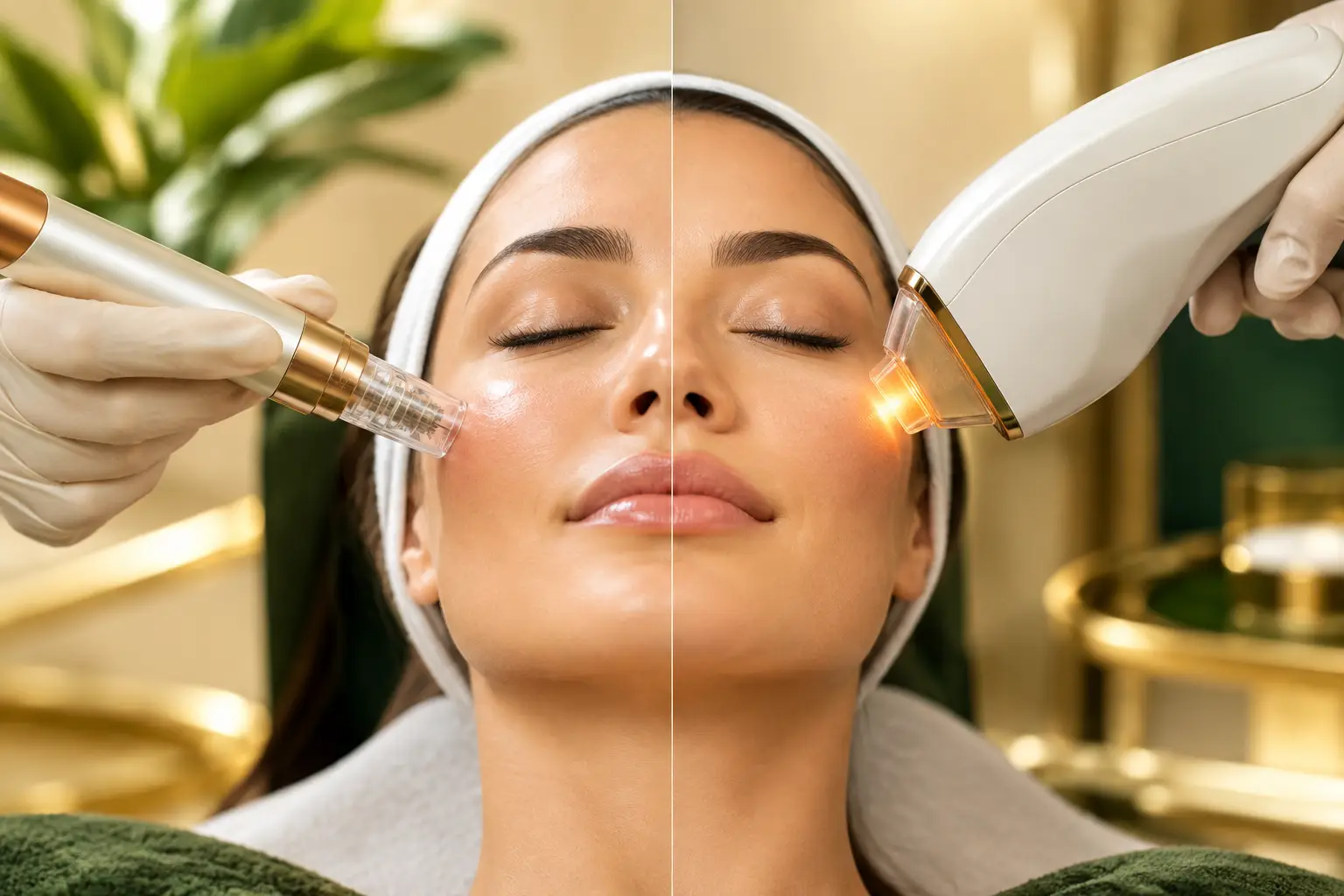
PRP hair restoration works by harnessing growth factors already present in your blood. The process starts with a simple blood draw, similar to a routine lab test. A centrifuge then spins that blood at high speed to separate and concentrate the platelets rich in growth factors. These concentrated growth factors are the proteins your body naturally uses to repair tissue and trigger healing responses. Once isolated, the PRP travels directly to your scalp through microneedling or cosmetic injections, targeting dormant hair follicles and damaged scalp tissue. The growth factors stimulate cellular activity at the follicle level, essentially waking up hair that has thinned or stopped growing. No external chemicals or additives are involved because the growth factors come entirely from your own blood. This autologous approach minimizes risk and allows your body to respond to its own natural healing signals.
What Happens During and After Treatment
Most patients return to work or exercise immediately after treatment, with only minor redness or swelling possible. A topical numbing agent keeps discomfort minimal during the procedure. The entire appointment takes minimal time, and you experience no downtime compared to surgical hair restoration options.
Your PRP Treatment Schedule
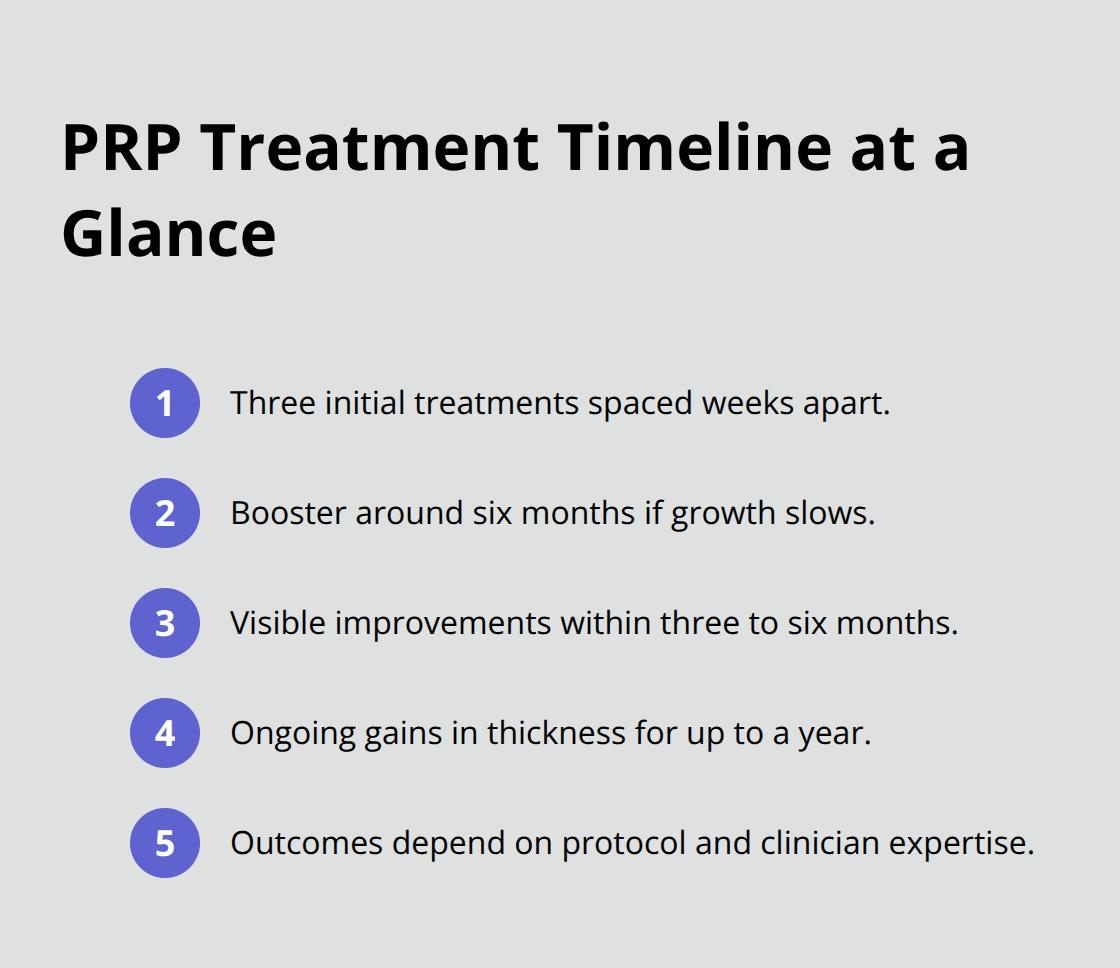
A typical PRP plan starts with three initial treatments spaced several weeks apart, followed by a booster around six months if hair growth slows. Most patients notice visible improvements within three to six months, though patients typically see ongoing improvements in hair growth and thickness for up to a year after starting their treatment plan. Research confirms that PRP shows measurable effectiveness, though results depend heavily on the protocol used and the clinician’s expertise.
What Results Look Like
Within months of treatment, patients commonly report less shedding, stronger strands, and improved hair texture. Hair grows about half an inch per month, so patience during the first few months remains essential as the follicles respond to the growth factors. Some clinics now offer PRFM, a variation that releases growth factors more gradually and may provide longer-lasting results than standard PRP. The timeline matters because hair has its own growth cycle, and the growth factors work within that natural rhythm rather than forcing accelerated growth. Understanding your individual response helps you stay realistic about when you’ll see the fuller, thicker hair you’re after.
What Your Non-Surgical Hair Restoration Options Really Offer
Beyond PRP: Other Evidence-Backed Treatments
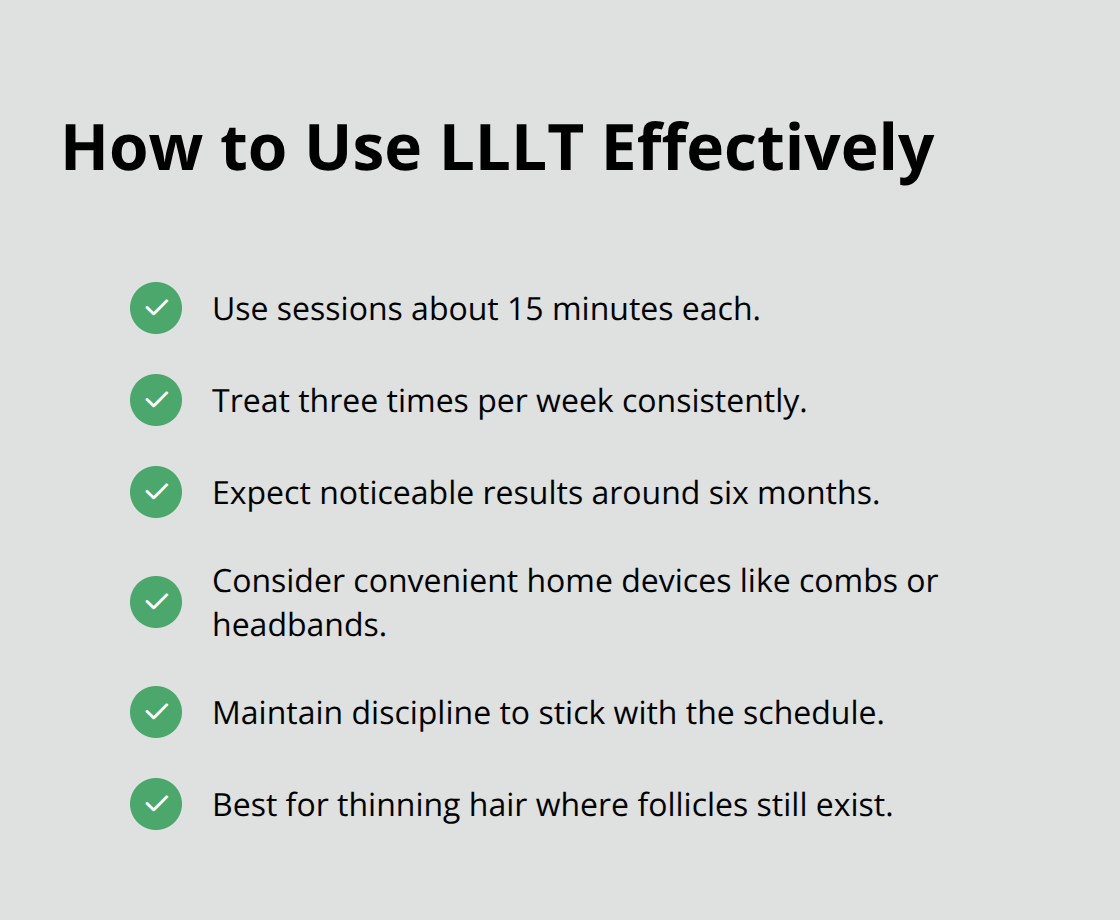
Several evidence-backed treatments address hair loss through different mechanisms, each with distinct timelines and commitment levels. Low-Level Laser Therapy (LLLT) uses targeted light to boost blood flow and cellular activity at the scalp without heat or burns. Clinical studies show LLLT works best when you use it consistently-about 15 minutes per session, three times weekly-with most patients seeing noticeable results around six months. Home devices like laser combs and headbands make this option more convenient and affordable than repeated in-office visits, though they require discipline to maintain the schedule. LLLT performs poorly if you are completely bald; it works best on thinning hair where follicles still exist.
Prescription and Over-the-Counter Options
Topical minoxidil remains an accessible over-the-counter option that can preserve existing hair and regrow some density, but you must continue using it indefinitely to maintain gains. Prescription options like finasteride (Propecia) address hormonal drivers of hair loss in men and may be combined with other treatments, though side effects require discussion with your doctor. Oral minoxidil at low doses has emerged as another prescription option for both men and women, offering flexibility beyond topical application.
Combining Treatments for Better Results
The practical reality is that combining treatments often outperforms single approaches. PRP pairs well with topical and oral options to amplify results. Tailoring your plan based on your hair loss pattern, age, and how quickly you want results produces stronger outcomes. Nutritional support matters too-while no supplement makes hair grow faster, deficiencies in iron, vitamin D, folate, vitamin B12, and selenium can worsen shedding. Get tested before supplementing rather than guessing.
Lifestyle Factors That Support Hair Health
Chronic stress triggers hair loss through multiple pathways, so stress reduction directly supports regrowth. Avoid rapid weight loss, which can shock follicles into shedding; try steady, protein-rich nutrition instead. Protect existing hair by using conditioner every wash, limiting heat styling to the coolest settings, and keeping extensions under 2–3 months if you wear them. The ISHRS 2025 Practice Census found that 44% of hair restoration patients plan to tell others about their treatment, reflecting growing openness-and that confidence boost often starts the moment you commit to a real plan, not just hope. This shift toward transparency reveals something important: people want solutions that work, and they want to share their success with others.
Why Non-Surgical Hair Restoration Wins Over Surgery
The Black Market Problem and Why It Matters
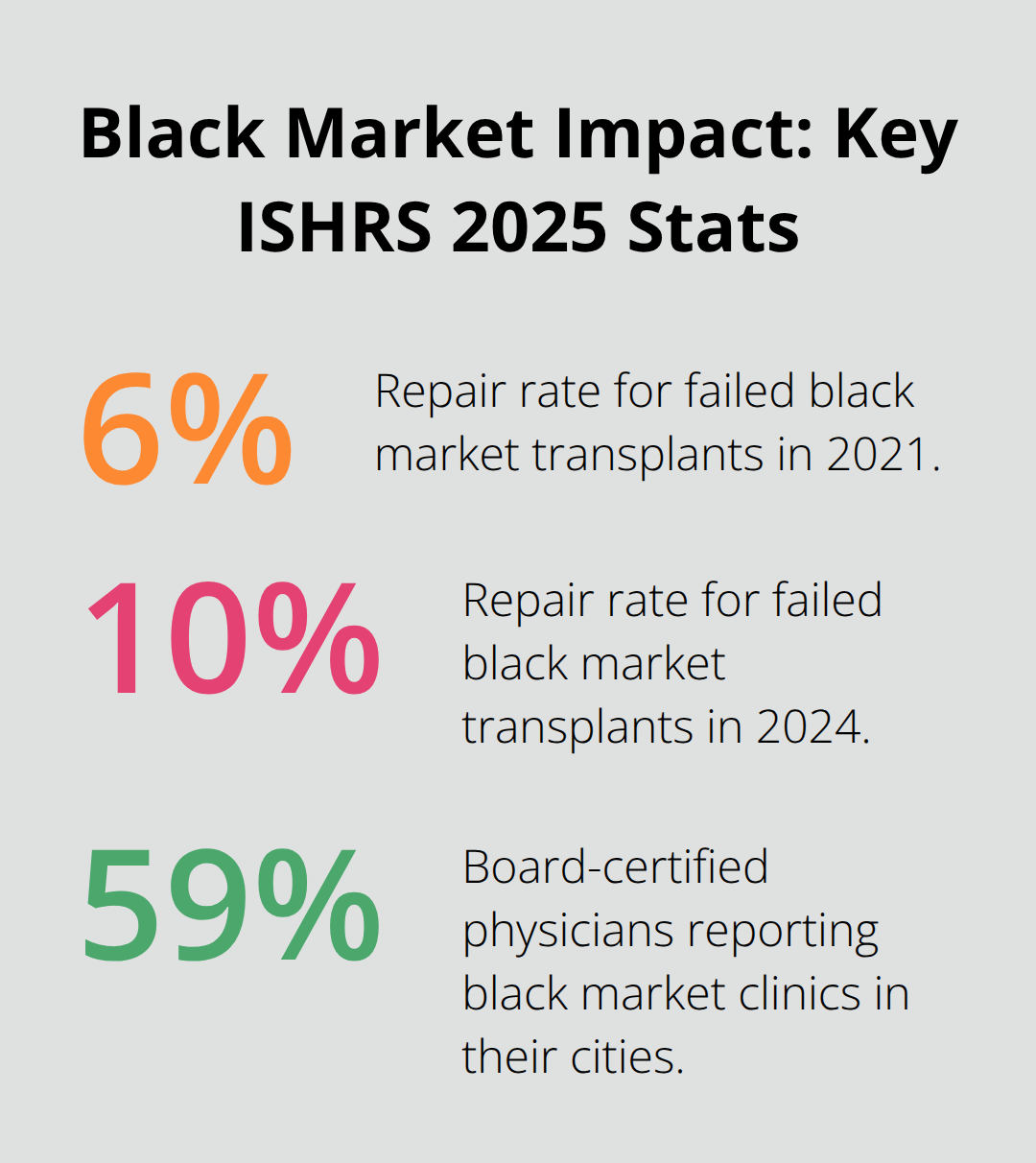
The ISHRS 2025 Practice Census reveals something stark: the repair rate for failed black market hair transplants jumped from 6% in 2021 to 10% in 2024, and 59% of board-certified physicians report black market clinics operating in their cities.
This explosion of risky procedures underscores why non-surgical restoration has become the smarter first choice. Hair transplant surgery demands anesthesia, incisions, and weeks of healing. Patients experience visible scabbing, swelling, and potential infection risk. Return-to-work timelines stretch to 7–10 days minimum, and strenuous exercise stays off-limits for three weeks.
Immediate Recovery and Real-World Convenience
Non-surgical PRP or laser therapy offers a stark contrast. You walk out the same day and hit the gym tomorrow. The financial gap widens further when you consider total cost. A single hair transplant session runs $4,000 to $15,000 depending on graft count, and many patients need multiple sessions for adequate coverage. A PRP plan with three initial treatments plus one booster costs substantially less while delivering measurable density gains within months.
How Your Body Works With Non-Surgical Methods
Non-surgical methods work with your body’s natural healing instead of against it. PRP uses your own growth factors to stimulate dormant follicles; there’s no foreign material, no scarring, and no permanent alterations to your scalp anatomy. If results plateau, you simply adjust your protocol or combine treatments rather than facing surgical revision complications. Low-Level Laser Therapy at home costs $200 to $800 upfront for a device, then zero per session. Prescription minoxidil runs roughly $20 to $50 monthly. Combining these with PRP creates a comprehensive approach for less than a single transplant surgery.
Patient Confidence in Non-Surgical Solutions
The openness shift among patients tells you something important about confidence in non-surgical outcomes. The ISHRS 2025 Practice Census found that 44% of hair restoration patients now plan to tell others about their procedure, reflecting trust in modern solutions. That transparency extends to non-surgical options, where patients see real thickness gains without the social friction of visible recovery. Most people achieve fuller, thicker hair through non-surgical pathways without the scars, infection risks, or weeks of social downtime that surgery demands.
Final Thoughts
Modern hair restoration non-surgical solutions have fundamentally changed what’s possible for people dealing with hair loss. You now have access to treatments that work with your body’s natural healing processes, deliver measurable results within months, and require zero downtime. PRP harnesses your own growth factors to stimulate dormant follicles, Low-Level Laser Therapy boosts scalp circulation through consistent home use, and prescription options preserve existing density while combined approaches amplify outcomes far beyond what any single treatment achieves alone.
The advantages over traditional hair loss treatments stand out immediately. Minoxidil and finasteride require indefinite use with variable results, hair transplant surgery demands anesthesia and weeks of recovery with costs between $4,000 and $15,000 per session, and non-surgical methods cost significantly less while eliminating surgical risks like infection and scarring. The ISHRS 2025 Practice Census shows that 44% of hair restoration patients now openly discuss their procedures, reflecting genuine confidence in modern solutions that signal real outcomes rather than false promises.
Schedule a consultation at YouShine Med Spa to assess your specific hair loss pattern, medical history, and goals. We specialize in personalized non-invasive treatments including PRP hair restoration designed to enhance your natural results, and our team evaluates your individual needs to build a tailored plan combining the treatments most likely to work for you. Hair grows about half an inch monthly, so starting now means visible fullness and thickness within three to six months.