When you start seeing more hair in the shower drain or a wider part in the mirror, the question usually is not just, “What works?” It is, “What can help without surgery, a long recovery, or a result that looks obvious?” That is exactly why interest in prp hair restoration louisville continues to grow. For many people, PRP offers a way to support fuller, healthier-looking hair using the body’s own regenerative properties.
Hair thinning can feel personal in a way few aesthetic concerns do. It affects how you style your hair, how you feel in photos, and sometimes how confident you feel walking into work or dinner. The good news is that early and moderate hair loss often responds best to non-surgical options, especially when treatment is started before thinning becomes severe.
What PRP hair restoration in Louisville actually is
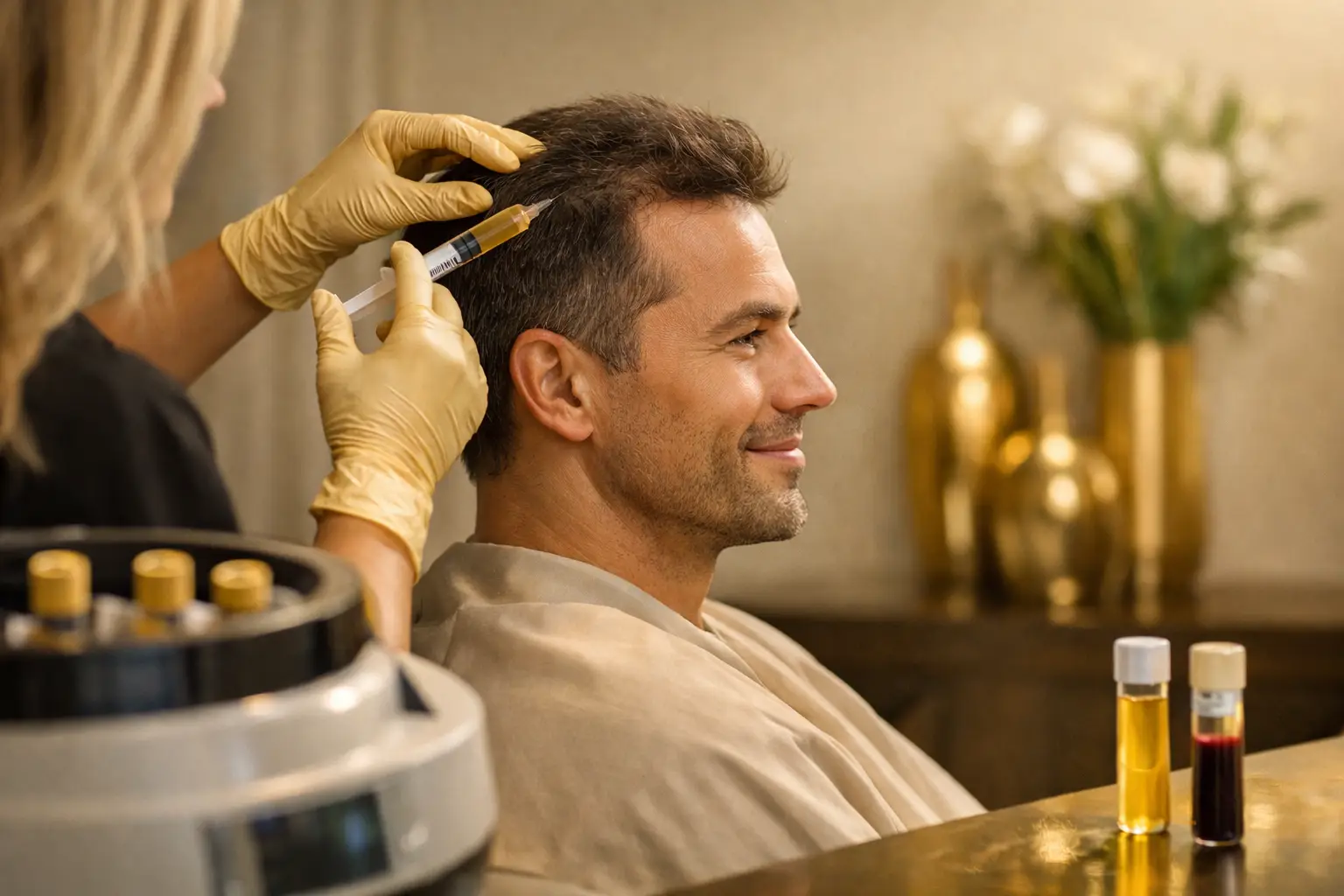
PRP stands for platelet-rich plasma. The treatment begins with a small blood draw, similar to routine lab work. That sample is then processed to separate out the plasma layer that contains a higher concentration of platelets and growth factors. Once prepared, that PRP is placed into areas of the scalp where thinning is happening.
The idea is straightforward. Platelets contain signaling proteins that support repair and regeneration. In the scalp, those growth factors may help create a healthier environment around hair follicles, encouraging stronger growth cycles and improved hair quality over time.
This is not the same as a transplant. PRP does not move hair from one area to another, and it does not create brand-new follicles where none remain. It is best understood as a treatment that supports weakened or miniaturizing follicles that still have potential.
Who is a good candidate for PRP hair restoration Louisville
PRP tends to work best for people in the earlier stages of thinning. That includes women noticing diffuse hair loss, widening at the part, or less density around the crown. It can also be a strong option for men with mild to moderate thinning, especially along the hairline or crown, if follicles are still active.
It can be particularly appealing if you want a treatment that feels natural and low-interruption. There is no surgery, no general anesthesia, and little downtime. For busy professionals, parents, or anyone who wants a polished appearance without stepping away from daily life for long, that matters.
That said, not every case of hair loss should be treated the same way. Shedding caused by thyroid imbalance, iron deficiency, hormonal shifts, stress, or certain medications may need broader medical evaluation. In some cases, PRP can still be helpful, but only after the underlying trigger is addressed. If thinning has progressed to large slick bald areas with no active follicles left, expectations also need to be more cautious.
Why people choose PRP over more aggressive options
For many clients, the appeal is not just hair growth. It is the overall experience of choosing something refined, regenerative, and subtle. PRP uses your own blood product, which makes it attractive to those who prefer a more biologically based approach. There is no implanted material and no surgical scar.
Another reason is flexibility. PRP can be used on its own, but it can also complement a broader hair restoration plan. Some people combine it with medical-grade scalp care, supplements, or physician-guided topical treatments. Others use it as a maintenance strategy after seeing the first signs of thinning rather than waiting until loss becomes more advanced.
The trade-off is patience. PRP is not a one-and-done solution. It usually works as a series, and the improvement develops gradually. If you want an instant visual change, this is probably not the treatment to choose. If you want a natural progression toward thicker, healthier-looking hair, it may be a very smart fit.
What treatment feels like
A well-run PRP appointment is usually straightforward. After the blood draw and processing, the scalp is cleansed and treatment areas are mapped out. Many providers use numbing methods to improve comfort, since the scalp can be sensitive.
The injections themselves are quick, though you may feel pressure, pinching, or mild stinging. Most clients tolerate the session well. Afterward, it is normal to have some tenderness, tightness, or light redness for a short period. You can usually return to normal activity the same day, with a few aftercare guidelines depending on your provider’s protocol.
One of the reasons this treatment fits so well into a modern aesthetic routine is that it does not ask much from your schedule. You can come in, be treated, and get back to life without the kind of visible downtime that makes people feel self-conscious.
When results show up and what they look like
This is where realistic expectations matter. PRP is usually a gradual treatment. Many people begin noticing less shedding first. That can happen before they see clear density changes. After that, hair may start to feel stronger, look healthier, and appear fuller in thinning areas.
Visible improvement often develops over several months, not several days. Hair grows in cycles, and follicles need time to respond. A common plan includes an initial series followed by maintenance sessions, because consistency usually leads to the best long-term outcome.
Results also vary by person. Someone with recent thinning and active follicles may see better improvement than someone with longstanding advanced loss. Age, hormones, stress, scalp health, and overall wellness can all influence how the hair responds.
The value of a personalized treatment plan
This is one area where the provider truly matters. Hair loss is not one-size-fits-all, and a personalized plan tends to produce better decisions and more satisfying results. A thoughtful consultation should look at your pattern of thinning, medical history, goals, and timeline.
For one person, PRP may be ideal as a standalone treatment. For another, it may work best as part of a more complete strategy that includes supportive scalp care or other regenerative options. Good aesthetic medicine is never about overselling a single service. It is about matching the right treatment to the right concern at the right time.
That philosophy is especially important in a luxury med spa setting, where the experience should feel both elevated and clinically grounded. Clients want comfort, yes, but they also want honesty. If PRP is likely to help, you should know why. If your case may need a different approach, that should be explained clearly too.
Questions worth asking before booking
If you are comparing providers for PRP hair restoration in Louisville, ask how the PRP is prepared, how many sessions are typically recommended, and what kind of hair loss they most often treat. Ask what results are realistic for your pattern of thinning, and whether your provider suggests any medical workup if shedding seems sudden or severe.
It is also reasonable to ask about maintenance. Hair restoration is often an ongoing conversation, not a single appointment. Knowing the longer-term plan can help you decide whether the treatment fits your budget, your schedule, and your expectations.
Comfort also matters. A polished experience, clear communication, and a team that listens carefully can make a meaningful difference. When treatment is personal, the setting should feel reassuring from the first consultation forward.
Is PRP worth it?
For the right candidate, it often is. PRP can be a valuable option for thinning hair because it supports a more refreshed, fuller look without surgery or dramatic downtime. It is especially appealing to people who want to stay ahead of hair loss rather than react after it becomes difficult to treat.
The key is understanding what “worth it” means for you. If your goal is to preserve density, improve hair quality, and encourage healthier growth over time, PRP can be a very worthwhile investment. If you are expecting a transplant-level transformation from one session, it may feel underwhelming.
At YouShine Med Spa, that balance between visible results and natural refinement is exactly what many clients are looking for. Hair restoration should not feel intimidating or overly clinical. It should feel like a well-chosen step toward looking like yourself again, just more confident.
If thinning hair has been sitting quietly in the background of your life, this may be the right moment to address it with expert guidance and realistic optimism. Sometimes the best aesthetic decisions are the ones that help you feel a little more like yourself every time you catch your reflection.