A new fine line rarely shows up all at once. It starts when makeup settles a little differently, when your under-eyes look less smooth in bright light, or when your forehead keeps a crease after your expression relaxes. If you are looking for the best treatment for fine lines, the real answer is not one treatment for everyone. It is the treatment that matches where the lines appear, why they formed, and how much change you want to see.
Fine lines can come from repeated facial movement, collagen loss, sun exposure, dehydration, or a combination of all four. That is why a personalized plan tends to deliver the most natural, satisfying result. Some lines respond best to injectables. Others improve more with collagen-stimulating treatments or a stronger skincare routine. In many cases, the most elegant result comes from combining approaches rather than relying on a single fix.
What is the best treatment for fine lines?
The best treatment for fine lines depends on the type of line you are treating. Dynamic lines, which form from movement, often respond beautifully to Botox or Dysport. Static lines, which are visible even when your face is at rest, may need a different strategy such as microneedling, PRP, or carefully placed filler. Texture-related fine lines can improve with collagen-focused treatments and medical-grade skincare.
This is where people often get frustrated. They assume all lines are wrinkles, and all wrinkles need the same solution. In practice, the forehead, crow’s feet, under-eye area, lip lines, and smile lines all behave differently. Treating them well means respecting those differences.
Fine lines from facial movement
Forehead lines, frown lines, and crow’s feet are usually tied to muscle activity. If you smile often, squint in the sun, or lift your brows expressively, the skin folds in the same places over time. Early on, those lines appear only when you move. Later, they may linger even when your face is relaxed.
For this kind of aging, neuromodulators such as Botox and Dysport are often the most effective option. They soften the muscle movement that etches lines more deeply into the skin. The result is not about looking frozen. When treatment is done with precision, it simply helps the face look smoother and more rested while preserving natural expression.
This option tends to work especially well for people in their late 20s to 40s who are seeing the first signs of repetitive creasing. It can also be part of maintenance for more established lines. The trade-off is timing. Results are temporary, so upkeep matters if you want consistency.
Fine lines caused by collagen loss
Not every fine line comes from expression. As collagen and elastin decline, skin becomes thinner and less resilient. That can lead to crepey texture around the eyes, vertical lines around the mouth, and a general loss of smoothness across the cheeks.
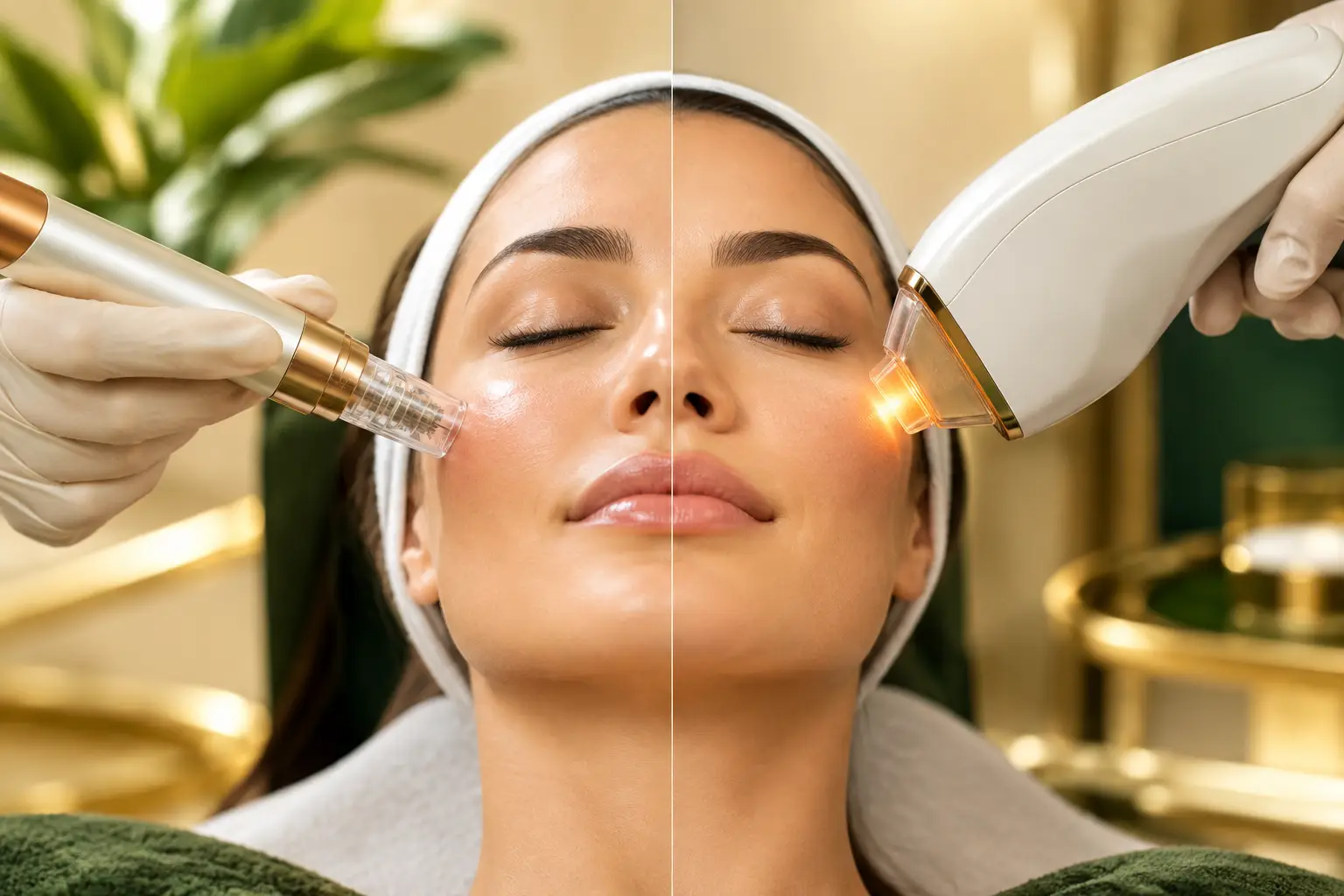
In these cases, collagen-stimulating treatments often make more sense than muscle relaxers alone. Microneedling is a strong choice because it creates controlled micro-injuries that encourage the skin to repair itself. Over time, that process can improve texture, soften fine lines, and support firmer-looking skin.
When paired with PRP or PRF, microneedling becomes even more appealing for clients who want a regenerative approach. These treatments use growth factors from your own blood to support healing and rejuvenation. The improvement is not instant in the way injectables can be, but many people love the gradual, healthy-looking refinement they see over a series of sessions.
This approach is especially attractive if your skin concern is broader than a single wrinkle. If you want smoother texture, more radiance, and a fresher overall quality, collagen-focused treatments often deliver a more comprehensive payoff.
When filler is the best treatment for fine lines
Dermal filler can be an excellent answer, but only in the right context. Fine lines that are linked to volume loss, especially around the mouth, cheeks, or lower face, may soften when the underlying support is restored. In some areas, a very conservative amount of filler can smooth etched-in lines and create a more refreshed appearance.
That said, filler is not the best treatment for fine lines everywhere. Very superficial or delicate lines do not always respond well to added volume, and too much product can make the skin look heavy rather than refined. This is one reason injector expertise matters so much. The goal is not to chase every line. It is to understand whether restoring support will actually improve the area.
For clients who value natural results, restraint is part of the artistry. A polished outcome should leave you looking rested and radiant, not overdone.
The best treatment for fine lines around the eyes and mouth
The eye and lip areas deserve special attention because the skin is thinner and more expressive there. Fine lines around the eyes may come from smiling, squinting, collagen loss, or dryness. Crow’s feet often respond well to Botox or Dysport, while crepey under-eye texture may need microneedling, PRP, or a skin-strengthening regimen instead.
Around the mouth, vertical lip lines can be more complex. Some improve with a touch of neuromodulator, some with filler, and some with collagen-stimulating treatments. Lifestyle also matters here. Sun damage, smoking history, and habitual lip movement can all deepen these lines.
Because these areas are so visible, they benefit from a measured plan. Small improvements often look better than aggressive correction. The face still looks like you, just smoother and more refreshed.
Why skincare still matters
Professional treatments can create meaningful change, but home care supports how well those results hold. If your routine is inconsistent or overly harsh, even great in-office work may not perform as well as it could.
For fine lines, the basics matter more than people think. Daily sunscreen helps prevent collagen breakdown. Hydrating products improve the look of surface lines. Retinoids can support cell turnover and collagen production, though they need to be introduced carefully. Antioxidants can also help defend against environmental stress that accelerates aging.
Skincare alone may not erase established lines, but it can make a visible difference in texture, brightness, and prevention. It is often the foundation that helps advanced treatments do their best work.
How to choose the right treatment plan
The most useful question is not, “What is the single best treatment for fine lines?” It is, “What is causing my fine lines, and what result am I hoping for?” If you want quick softening of expression lines, injectables may be the best fit. If your main concern is skin quality, microneedling or PRP may make more sense. If volume loss is contributing, filler may be part of the answer.
Downtime, budget, and maintenance preferences matter too. Botox and Dysport offer relatively fast results with minimal interruption to daily life. Microneedling and regenerative treatments often require a series and patience, but they can improve the skin in a different way. Filler can be transformative in the right candidate, though it should be approached thoughtfully.
This is where an expert consultation becomes valuable. A strong provider will look at your face as a whole, not just point to one line and offer one syringe. They will assess movement, skin quality, facial balance, and your comfort level with treatment. At a practice like YouShine Med Spa, that personalized approach is what helps clients achieve refined, confidence-boosting results that still feel like themselves.
What to expect from realistic results
Fine lines can absolutely improve, but perfection is not the standard. Healthy skin still moves. A beautiful result is one that softens distraction, restores freshness, and keeps your expressions believable.
Some clients need one treatment. Others get the best result from a layered plan over time. For example, Botox may relax forehead lines while microneedling improves overall texture. A small amount of filler may restore support while skincare helps maintain glow and smoothness. Those combinations often create the most natural-looking outcome because they treat the full reason the lines developed.
If you are noticing early signs of aging, starting sooner can also make treatment easier. Softer lines are usually more responsive than deeply etched wrinkles. Preventive care is not about looking different. It is about helping your skin stay smoother, longer.
Fine lines are a normal part of living, smiling, and expressing yourself. The goal is not to erase every trace of that. It is to choose care that helps you look rested, polished, and confidently like yourself.