A weak chin can throw off your entire facial balance, making your nose appear larger or your neck less defined. At YouShine Med Spa, we’ve seen how this concern affects many patients looking for a more sculpted profile.
Dermal fillers for weak chin enhancement offer a straightforward solution without surgery. In this guide, we’ll walk you through how the treatment works, what results look like, and whether it’s right for you.
What Makes a Chin Weak and Why It Matters
How Chin Structure Shapes Your Face
A weak chin isn’t just about the chin itself-it’s about how your entire face comes together. When your chin lacks projection, your nose can appear disproportionately large, your jawline loses definition, and your neck may look less sculpted. Chin structure fundamentally shapes how people perceive facial balance and attractiveness. The chin occupies roughly the lower third of your face, and even small changes in its projection create a cascading effect on your overall proportions.
Recognizing Chin Retrusion
What defines weakness varies from person to person, but generally it means your chin doesn’t extend forward enough relative to your lower lip and jawline. Some people are born with naturally smaller chins due to genetics, while others experience changes over time from aging or weight loss. If you notice your chin blends into your neck without clear definition, or if your profile shows your chin sitting behind an imaginary vertical line from your lower lip, you likely have what professionals call chin retrusion. This structural imbalance affects how you perceive your own appearance and how others view your facial proportions.
Gender-Specific Aesthetic Goals
Round faces often benefit most from chin augmentation because adding projection reduces perceived roundness and creates a more oval or heart-shaped contour. Men and women both seek chin enhancement, though the aesthetic goals differ-men typically want stronger, more angular projection, while women often prefer refined projection that complements softer facial features. The chin’s position influences whether your face reads as youthful, defined, or balanced. Many patients describe feeling like their face lacks definition or that their profile doesn’t match their self-image, even when nothing else seems obviously wrong. The reality is that a recessed or underprojected chin pulls your entire lower face backward, which can make you look older, heavier, or less confident than you actually are.
Understanding your specific chin structure and aesthetic goals sets the stage for exploring how dermal fillers can address this imbalance directly and effectively.
How Dermal Fillers Restore Chin Projection
Dermal fillers add volume directly where your chin lacks projection. Hyaluronic acid-based fillers integrate naturally with your tissue and attract moisture to create lasting volume. When injected into specific points along your chin, these fillers build structure in three dimensions-forward projection, lateral width, and vertical length. A clinical study of 60 patients treated with chin fillers across the nasolabial folds, marionette lines, and chin showed 100% improvement in facial harmony at 9 weeks. The same study reported 98% experienced better double chin appearance, 95% were satisfied with improved symmetry, and 97% felt their overall facial balance improved.
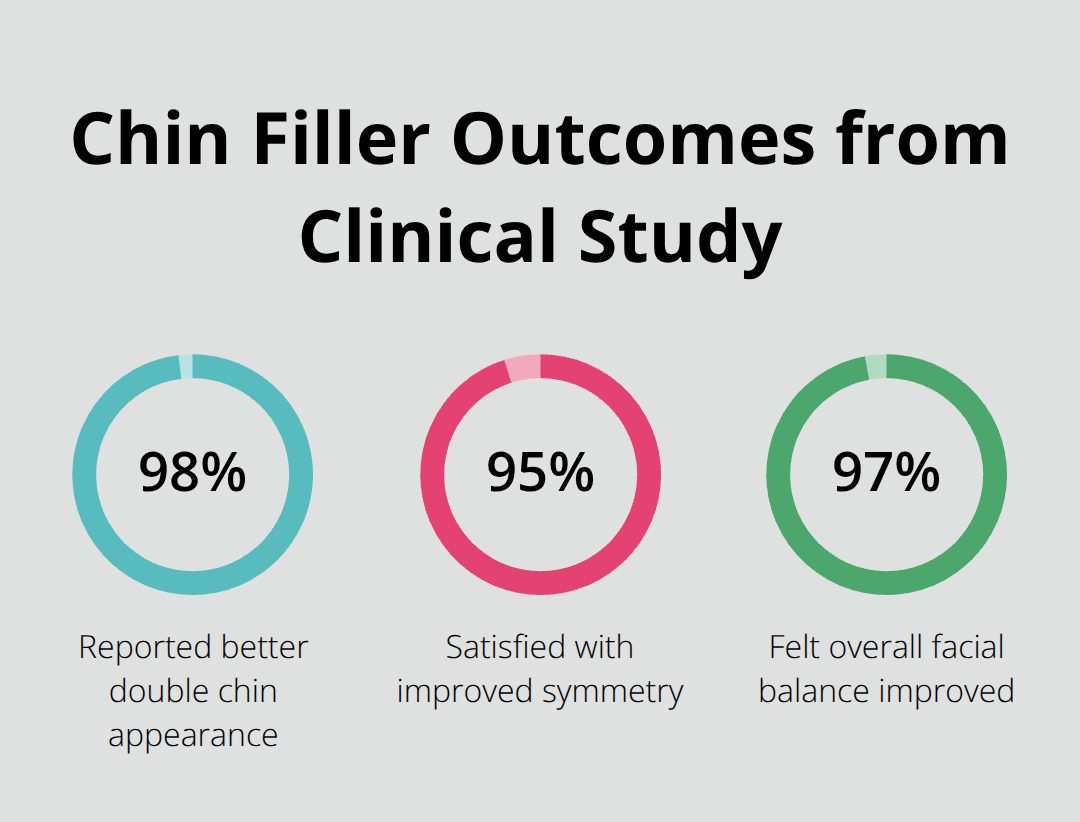
These results matter because they show fillers don’t just add volume; they restore the architectural foundation your face needs for proportion. Most appointments take less than an hour, and results appear almost immediately as the added volume defines your chin contour and smooths the transition between your chin and neck.
Which Fillers Deliver the Best Results
Restylane Defyne works well for chin treatment because it provides structural support in the mid-to-deep dermal layers where chin projection happens. Clinical cases show chin treatments typically use 0.3 to 0.4 mL of filler, though your exact amount depends on how much projection you need. Hyaluronic acid fillers remain the gold standard because the FDA approves them, they’re reversible if needed with an enzyme called hyaluronidase, and they settle naturally into your facial structure. Results last 12 to 18 months on average, though some patients see them persist longer depending on metabolism and lifestyle. Touch-ups every 12 to 15 months maintain your appearance without requiring larger doses over time. The reversibility matters too-if you want adjustments after your initial treatment, your provider can dissolve and refine the filler rather than waiting for your body to absorb it naturally.
Why Surgery Isn’t Your Only Option
Non-surgical chin enhancement beats permanent implants because it’s adjustable, reversible, and carries far fewer risks. Surgical chin implants require anesthesia, incisions, recovery time measured in weeks, and permanent placement that can shift over decades. Fillers give you immediate results with minimal downtime (you might see mild swelling or tenderness for a few days, but you return to normal activities right away). If your chin projection improves but you decide you want more or less, your provider adjusts the filler at your next appointment. If your face changes with age or weight loss, fillers adapt to those changes without surgical revision. The procedure also lets you combine chin enhancement with other treatments like jawline contouring or lip balancing to achieve complete lower-face harmony, something permanent implants can’t offer without additional surgery.
What Happens During Your Appointment
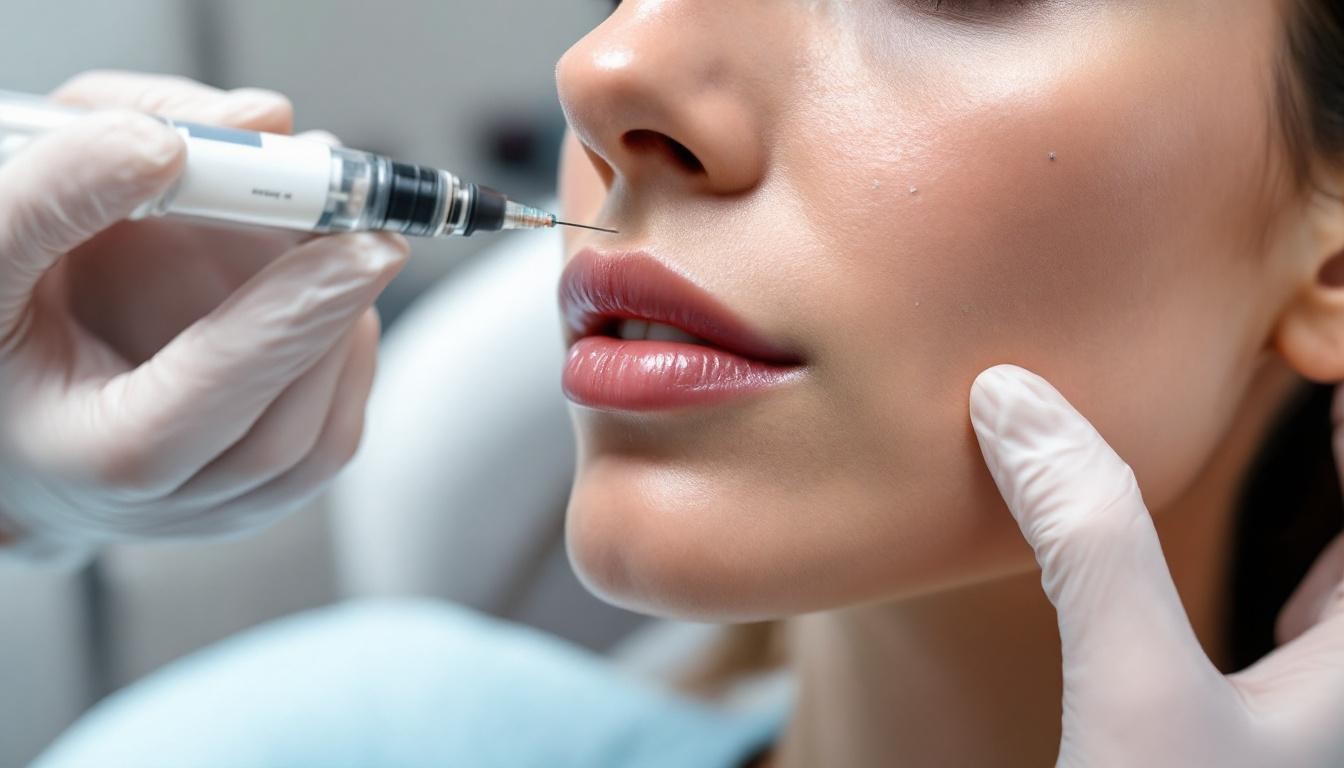
Your provider starts with a detailed facial analysis and marks the injection points where filler will create the most natural projection. Topical numbing cream and ice minimize discomfort during treatment. Small-volume injections at strategic points along your chin build dimension without overcorrection (the goal is subtle enhancement that complements your other features, not dramatic change). Your provider shapes the filler in real time and checks symmetry before you leave. The entire process takes 15 to 30 minutes, and you walk out with visible improvement that continues to refine as any initial swelling subsides over the next few days.
Aftercare Keeps Results Looking Natural
Avoid touching the treated area for at least 24 hours after your appointment. Sleep with your head elevated for the first night to minimize swelling. Skip strenuous exercise and heat exposure for 24 to 48 hours, as these increase blood flow and can worsen bruising or swelling. Ice packs reduce puffiness, and acetaminophen handles any tenderness. Most side effects (swelling, bruising, mild tenderness) resolve within a few days, leaving you with the refined chin projection you came for. Serious complications are rare, but vascular occlusion or infection require immediate medical attention if they occur.
Understanding how fillers restore your chin’s structure and what the treatment experience actually involves helps you move forward with confidence. The next step is determining whether you’re a good candidate and what your specific results might look like.
Your Chin Filler Timeline and What Happens Next
What Happens During Your Appointment
Your appointment unfolds in a predictable sequence that takes 15 to 30 minutes from start to finish. Your provider applies topical numbing cream and ice to your chin area first, reducing discomfort during injections.
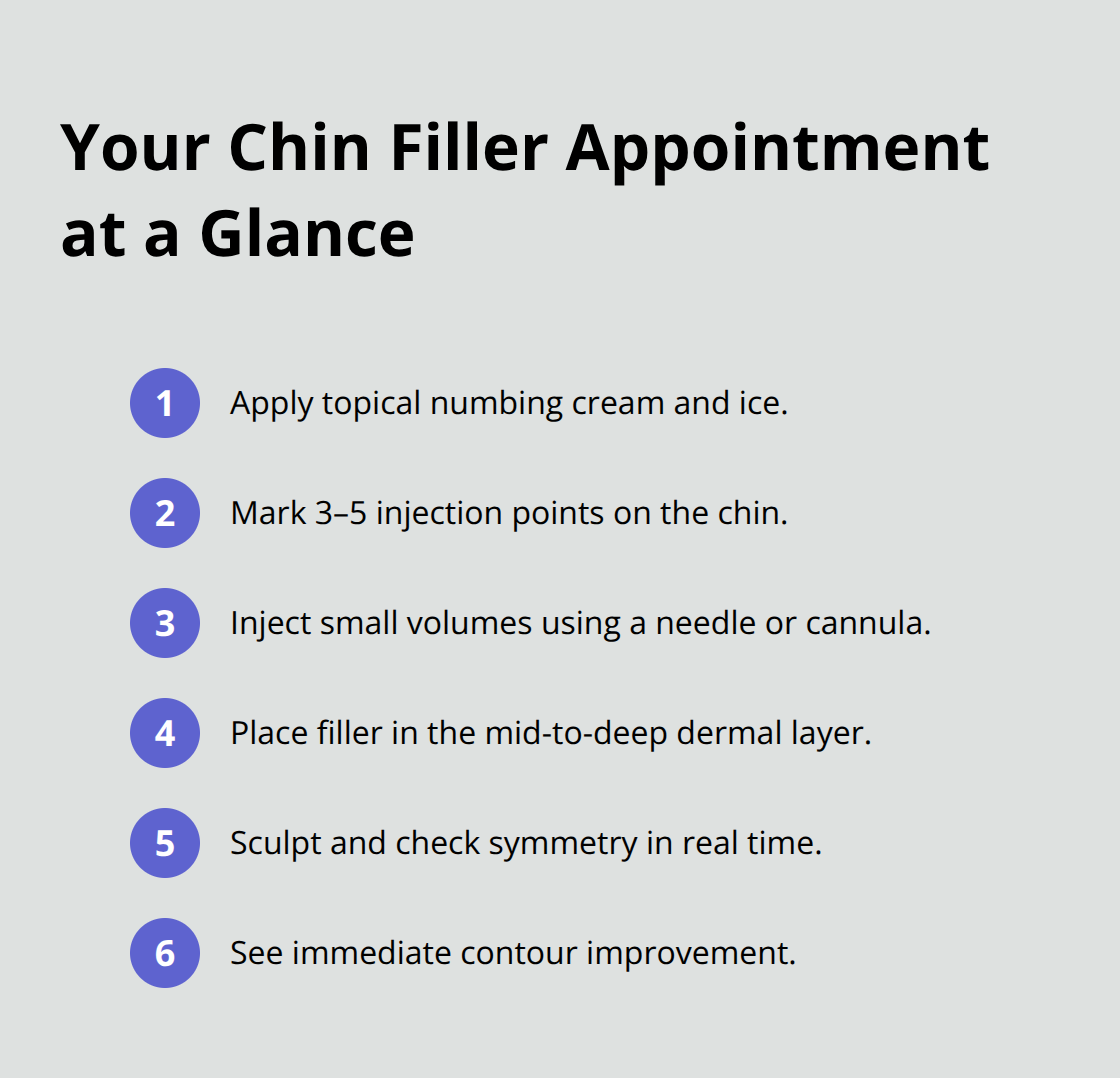
They mark three to five strategic points along your chin where filler will build projection most effectively, then inject small volumes of hyaluronic acid filler at each location using either a needle or cannula. The filler goes into the mid-to-deep dermal layer where it can support your chin’s structure without creating lumps or irregularities. Your provider shapes and sculpts the filler in real time, checking symmetry and proportion as they work. You’ll see visible improvement before you leave the office because the filler immediately adds volume and defines your chin contour.
How Your Results Develop Over Time
Any initial swelling peaks within 24 hours and subsides completely within three to five days, revealing your final results more clearly. Most patients experience only mild side effects like slight swelling, redness, or tenderness at the injection sites, all manageable with ice and over-the-counter pain relief if needed. Results from chin filler last 12 to 18 months depending on your metabolism, how active you are, and which filler your provider chose. A clinical study published in the journal Dermatological Surgery tracked 40 patients who received chin filler using a three-point injection technique, and found 87.5% were extremely satisfied at two weeks, with satisfaction climbing to 100% by two months and remaining there through four months. At six months, 87.5% remained extremely satisfied while 12.5% stayed satisfied, showing consistent longevity.
How Your Body Processes the Filler
Your body gradually absorbs the hyaluronic acid, so your chin doesn’t suddenly revert to its previous appearance; instead, results fade gradually over months, giving you time to schedule maintenance treatments. Many patients find they need less filler at subsequent appointments because their chin structure has improved and their body adapts to the enhancement. This pattern means your investment in the initial treatment compounds over time, as your face builds its own structural foundation alongside the filler support.
Aftercare Instructions for Optimal Results
For the first 24 hours after treatment, avoid touching your chin and sleep with your head elevated to minimize swelling. Skip strenuous exercise and heat exposure like saunas or hot yoga for 48 hours, as increased blood flow worsens bruising and puffiness. Ice packs applied for 10 to 15 minutes several times daily reduce swelling significantly.

If bruising appears, you can cover it with makeup immediately, and most bruises fade within one to two weeks. Serious complications like vascular occlusion or infection are extremely rare, but seek immediate medical attention if you experience vision changes, severe pain, skin discoloration, or signs of infection after your appointment.
Final Thoughts
Dermal fillers for weak chin enhancement offer immediate, visible results without anesthesia, incisions, or weeks of recovery. A clinical study of 60 patients showed 100% improvement in facial harmony within nine weeks, with 98% reporting better double chin appearance and 97% satisfied with overall facial balance. The procedure takes less than an hour, costs significantly less than chin implants, and remains completely reversible if you want adjustments.
Your face changes over time with aging and weight fluctuations, and fillers adapt to those changes without requiring surgical revision. If your results don’t match your vision, your provider can dissolve the filler with hyaluronidase and start fresh-permanent implants don’t offer that flexibility. You can combine chin enhancement with jawline contouring or other treatments to achieve complete lower-face harmony, something permanent surgery struggles to accomplish without multiple procedures.
Schedule a consultation with an experienced provider who understands facial anatomy and can assess your specific chin structure. Contact YouShine Med Spa to discuss your aesthetic goals and see realistic before-and-after examples so you understand exactly what to expect. Your chin should complement your nose, lips, and jawline, and our team prioritizes subtle enhancement over dramatic change.