Hair loss affects millions of people, and many are searching for solutions that actually work. Platelet rich plasma hair restoration has emerged as a science-backed treatment that stimulates your own hair follicles to regrow thicker, healthier hair.
At YouShine Med Spa, we’ve seen firsthand how this treatment transforms lives. This guide walks you through everything you need to know about PRP for hair restoration, from how it works to what results you can realistically expect.
How PRP Works for Hair Growth
Understanding the Growth Factors in Your Blood
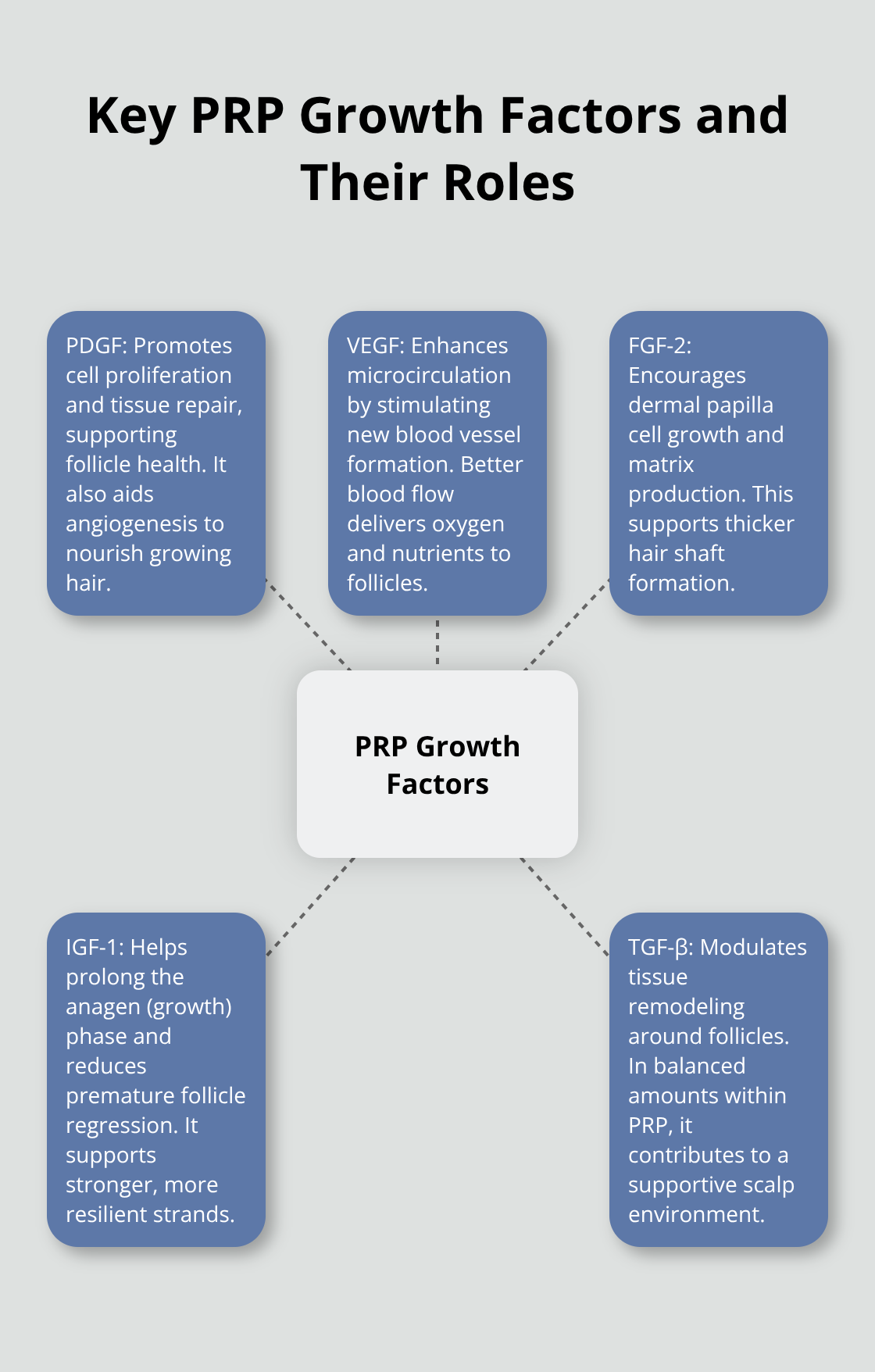
Platelet rich plasma works because it contains growth factors that your dormant hair follicles respond to. When we draw your blood and concentrate the platelets, we isolate substances like PDGF, VEGF, FGF-2, IGF-1, and TGF-β that directly stimulate follicle cells. These growth factors accomplish three critical tasks: they extend the active growth phase of your hair, thicken individual hair shafts, and improve blood flow to the scalp. Research from the Journal of the American Academy of Dermatology shows that patients who receive PRP injections see an average increase of 45.9 hairs per cm² and roughly a 29% increase in overall hair count within six months.
The Science of Follicle Reactivation
The mechanism isn’t theoretical-studies confirm that these growth factors trigger anti-apoptotic signaling, which tells your follicles to stay active longer instead of entering the resting phase prematurely. This is why PRP works best on thinning hair rather than complete baldness; your follicles need to be dormant but still present to respond. The growth factors essentially wake up sleeping follicles and keep them in their productive phase longer than they would naturally.
How Preparation Quality Affects Results
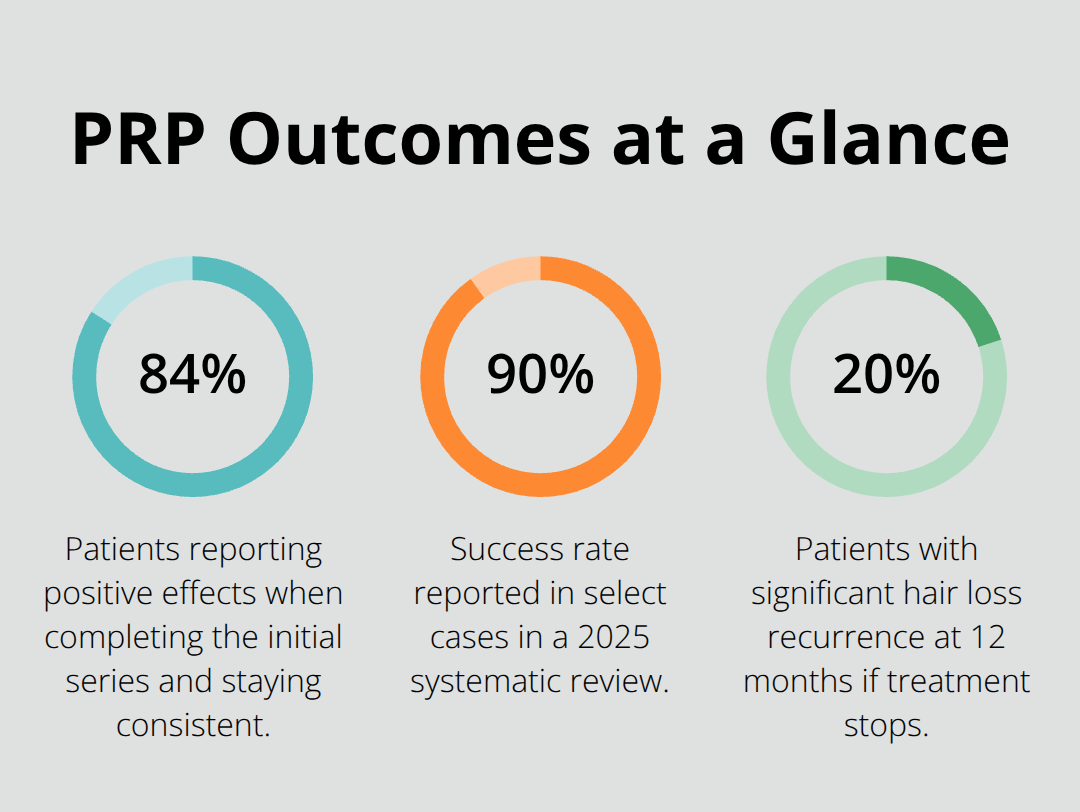
The preparation process directly affects how well PRP performs. A typical session involves drawing about 15 milliliters of blood, centrifuging it for 8 to 10 minutes to isolate the platelet-rich layer, and achieving a concentration of 2 to 6 times your baseline platelet count. Higher platelet concentrations correlate with better outcomes, which is why the quality of your PRP preparation matters significantly. Clinical trials show that across androgenetic alopecia patients, roughly 70 to 80% experience meaningful improvements, with success rates reaching 90% in select cases according to a 2025 systematic review.
What Timeline to Expect
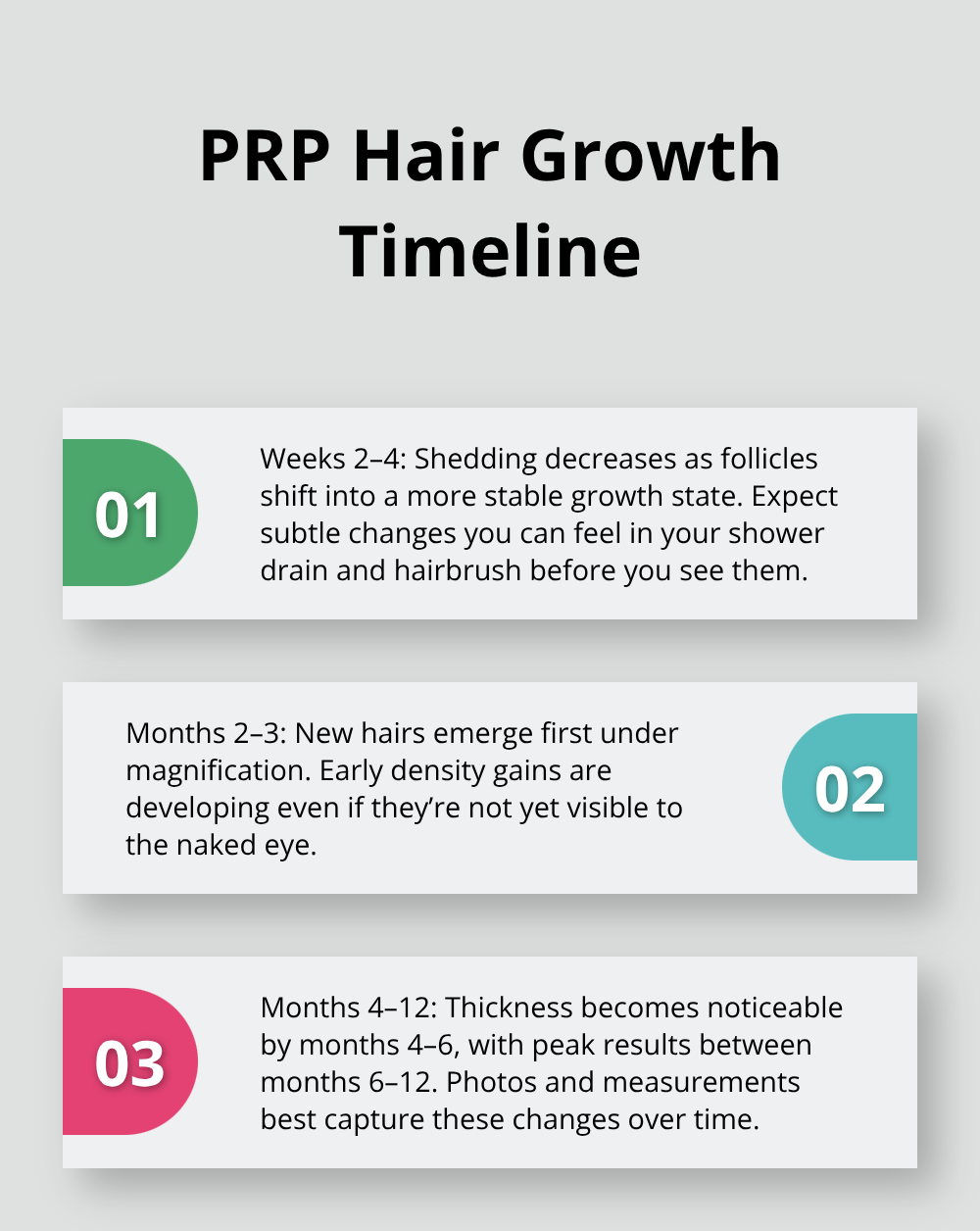
The timeline for results follows a predictable pattern. You’ll notice reduced shedding within 2 to 4 weeks, new hair growth beginning around 2 to 3 months, visible thickness by 4 to 6 months, and peak results at 6 to 12 months. This isn’t overnight transformation, but it is consistent and measurable. Women with female pattern hair loss show particularly strong responses in hair diameter improvements, while men typically see density gains.
The evidence supporting PRP comes from peer-reviewed research published in Dermatologic Surgery, the Journal of Cosmetic Dermatology, and other respected journals documenting these specific density increases and growth timelines.
Now that you understand how PRP stimulates your hair follicles at the cellular level, the next step is learning exactly what happens during your treatment at our clinic.
Your PRP Treatment Journey at YouShine Med Spa
Initial Assessment and Medical Screening
Before your first injection, we conduct a thorough scalp assessment that goes beyond a quick visual inspection. We examine your hair density patterns, identify which areas show the most miniaturization, and review your medical history to confirm you’re a suitable candidate. This consultation determines your baseline, which matters because we’ll measure your progress against it at follow-up visits. We discuss your expectations honestly-some patients see dramatic regrowth while others experience primarily thickening and reduced shedding. We also address practical concerns like medication interactions. If you take blood thinners or NSAIDs, we ask you to pause them about two weeks before treatment since they increase bruising and reduce platelet function. Your blood work may be reviewed to check platelet levels, as higher baseline counts typically correlate with better PRP potency and outcomes. This assessment phase takes 20 to 30 minutes and establishes the personalized protocol we follow throughout your treatment plan.
Blood Draw and PRP Preparation
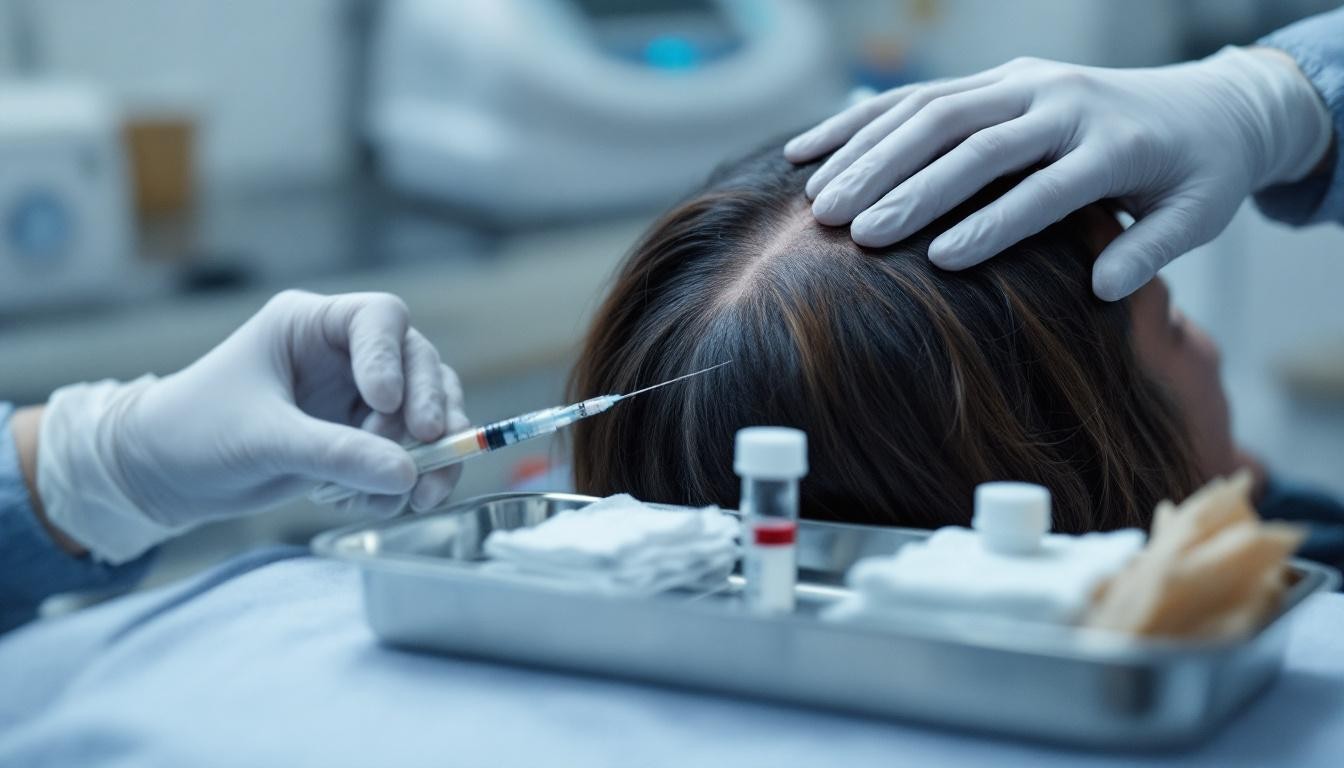
The actual PRP preparation happens during your appointment. We draw approximately 15 milliliters of blood using standard venipuncture, then place it in a centrifuge for 8 to 10 minutes to separate the platelet-rich layer from red blood cells and other components. The goal is achieving a 2 to 6 times concentration of your baseline platelet count-higher concentrations deliver more growth factors to your follicles. Once prepared, we apply a topical anesthetic to your scalp, then inject PRP across the thinning areas using a systematic pattern that covers roughly 120 injection sites per session. Each injection delivers a small volume (typically 0.05 milliliters) directly into the dermis where follicles reside.
The Injection Process and Immediate Aftercare
The entire injection process takes 15 to 30 minutes. Most patients tolerate this well and return to normal activities immediately, though we recommend avoiding harsh shampoos and scalp products for 48 hours and skipping NSAIDs for about 14 days post-treatment. Temporary redness and swelling at injection sites resolve within a few days. A standard treatment plan involves 4 to 6 PRP sessions spaced 4 to 6 weeks apart to start seeing visible hair regrowth. This maintenance schedule keeps your follicles stimulated and prevents the gradual return of hair loss that occurs when treatment stops.
Once you understand what happens during your PRP sessions, the next critical question becomes: when will you actually see results, and how long do those results last?
Results and Timeline for PRP Hair Restoration
When Hair Growth Becomes Visible
The first question every patient asks is when they’ll notice actual changes in their hair. PRP follows a predictable timeline, but patience matters. Within the first few weeks, you’ll notice reduced shedding, which signals that the treatment is working. This happens because the growth factors in PRP extend the active growth phase of your hair and reduce premature follicle loss. Around 2 to 3 months, new hair growth becomes visible under magnification, though you won’t see it with the naked eye yet. Visible thickening develops by 4 to 6 months, with peak results arriving between 6 and 12 months.
This timeline matters because many people expect faster results and abandon treatment too early. A 2025 systematic review found that roughly 84% of patients experienced positive effects, but those gains only materialized for people who completed their initial treatment series and maintained consistency. If you stop after one or two sessions, you won’t see meaningful improvement. Patients receiving 3 to 4 monthly injections followed by maintenance treatments achieved clinical improvement in mean hair count at six months, with results continuing to develop over the full treatment period.
Why Maintenance Treatments Keep Results
Maintenance is non-negotiable if you want to keep your results. PRP isn’t a permanent cure because your follicles eventually return to their original state without continued stimulation. Long-term efficacy data show that about 20% of patients experience significant hair loss recurrence after 12 months if they stop treatment. This is why maintenance treatments every 6 to 12 months after your initial series preserve your gains. Think of it like exercise for your hair follicles-you wouldn’t expect to stay fit after one month at the gym, and your follicles work the same way.
How PRP Compares to Other Hair Loss Treatments
When comparing PRP to other options, understand the practical differences. Oral finasteride and topical minoxidil require daily application forever, carry potential systemic side effects, and don’t work for everyone. Hair transplants are invasive, expensive, and don’t treat the underlying hair loss process. PRP addresses the root cause by stimulating your existing follicles, works for both men and women, and has virtually no serious side effects since it uses your own blood.
The trade-off is that results take time and require ongoing maintenance. For people with early-stage thinning or androgenetic alopecia, PRP outperforms waiting or doing nothing. It works exceptionally well when combined with finasteride or minoxidil for enhanced results (this combination approach maximizes your chances of sustained hair density improvement). Women with female pattern hair loss show particularly strong responses in hair diameter improvements, while men typically see density gains across treated areas.
Final Thoughts
PRP for hair restoration works because it harnesses your body’s own growth factors to reactivate dormant follicles and extend their productive phase. The evidence is clear: patients see reduced shedding within weeks, visible new growth by 3 months, and meaningful thickness by 6 months. Success rates hover around 70 to 80% for androgenetic alopecia, with some patients experiencing even stronger results.
What makes platelet rich plasma hair restoration different from other options is that it addresses the underlying problem rather than masking it. Unlike daily medications with potential side effects or invasive surgery, PRP uses your own blood to stimulate natural regrowth. It works for both men and women, produces minimal downtime, and carries virtually no serious complications.
If you’re ready to stop hair loss and restore thickness to thinning areas, contact YouShine Med Spa to schedule your initial consultation. We’ll assess your scalp, review your medical history, and create a personalized treatment plan designed specifically for you. Your hair restoration journey starts with a single conversation.