Many patients ask us: is PRP and stem cell therapy the same thing? The short answer is no – these are two distinct regenerative treatments with different approaches to healing.
At YouShine Med Spa, we see growing interest in both therapies as people seek natural alternatives to traditional treatments. Understanding their differences helps you make informed decisions about your health and wellness journey.
How Does PRP Therapy Work
PRP therapy extracts your blood and concentrates the platelets to create a powerful healing solution. The process begins when we draw 30-60 milliliters of blood from your arm, then spin it in a centrifuge for 15 minutes to separate the platelets from other blood components. This concentration increases platelet levels and creates a serum packed with growth factors that accelerate tissue repair.
The Science Behind Platelet Concentration
The concentrated platelets release over 30 different growth factors when we inject them into damaged tissue. These proteins trigger your body’s natural healing cascade, attract stem cells to the injury site, and promote new blood vessel formation. Research from Johns Hopkins Medicine shows PRP accelerates post-surgical healing in muscles, tendons, and ligaments. The growth factors remain active for 7-10 days after injection and continuously stimulate repair processes during this critical healing window.
Medical Applications That Show Real Results
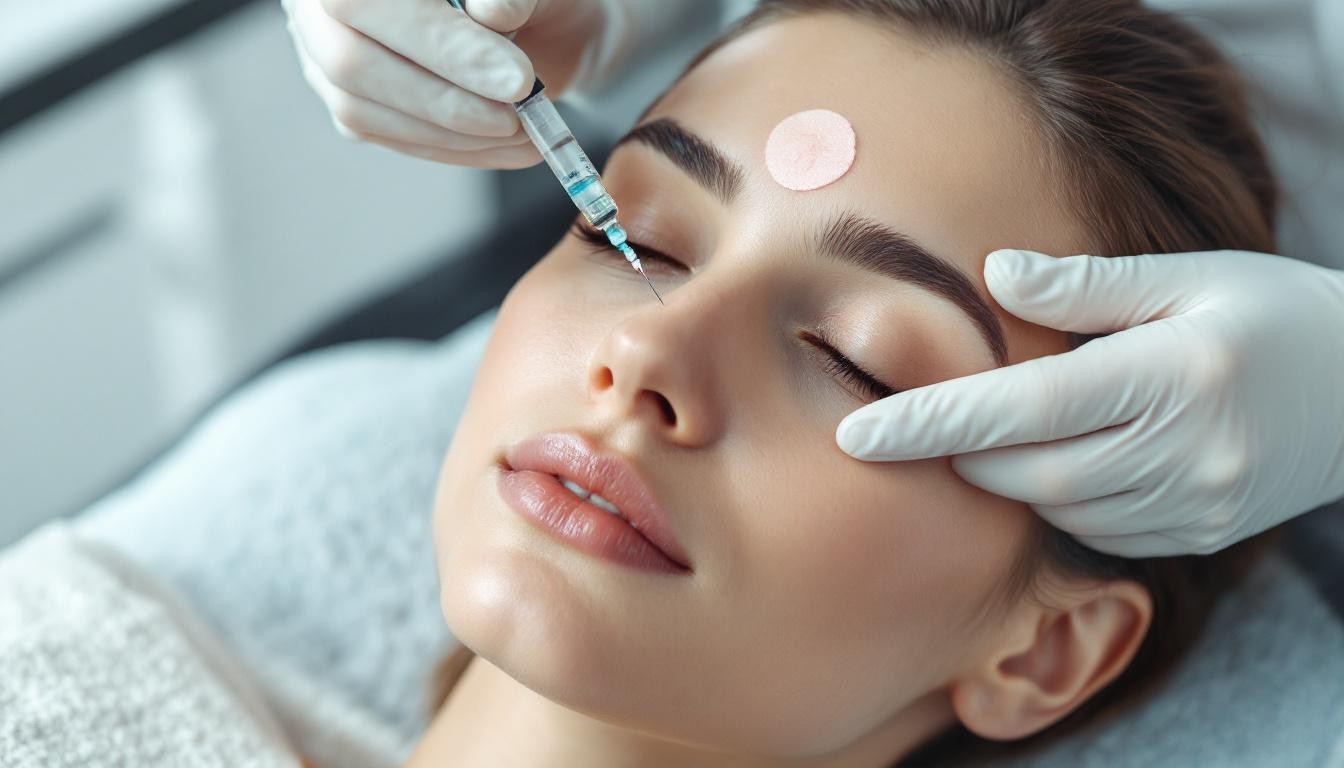
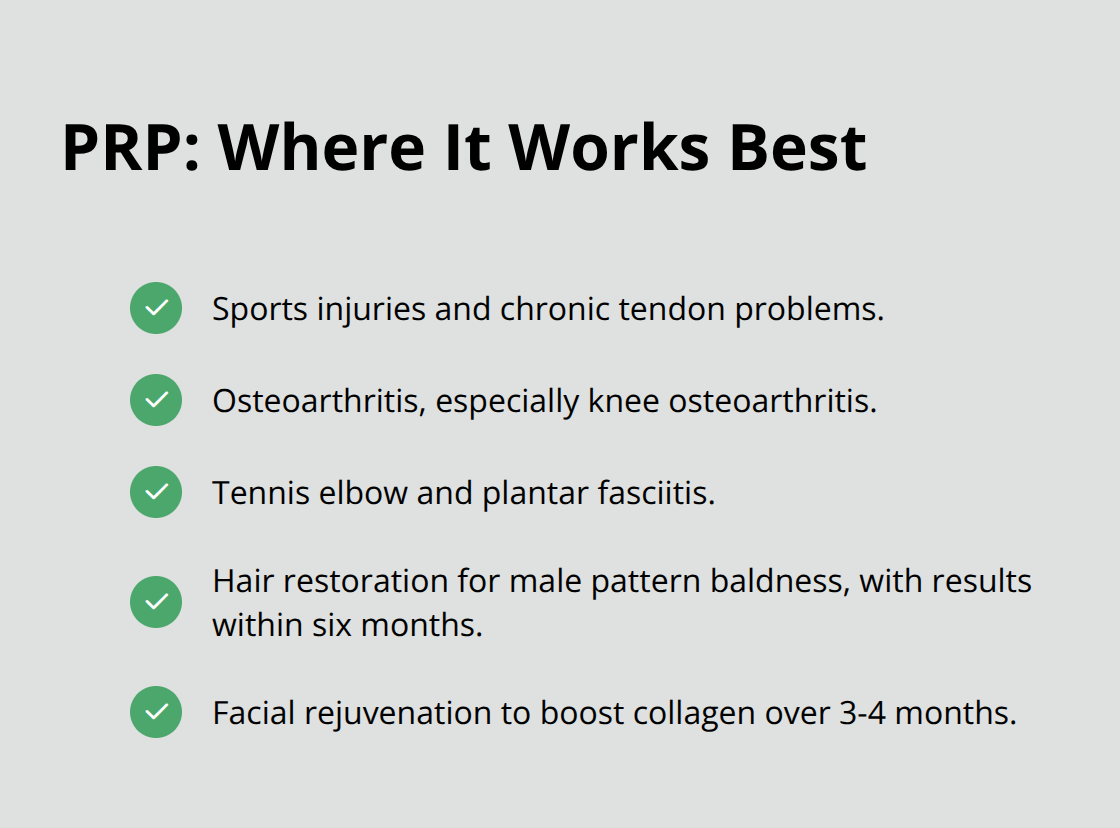
PRP proves most effective for sports injuries, chronic tendon problems, and osteoarthritis (which affects adults over 40). Tennis elbow, plantar fasciitis, and knee osteoarthritis respond particularly well to PRP injections. Hair restoration represents another major application, with scalp injections that show results within six months for male pattern baldness. We also use PRP for facial rejuvenation, where the growth factors stimulate collagen production and improve skin texture over 3-4 months.
Treatment Timeline and Recovery Expectations
Most patients notice improvement 2-4 weeks after injection, with peak results that occur at 6-8 weeks. Joint treatments typically require 1-3 sessions spaced 4-6 weeks apart, while hair restoration needs 3-4 sessions monthly. The procedure itself takes 45-60 minutes (this includes blood draw and processing time). Side effects remain minimal since PRP uses your own blood, though soreness and bruising at injection sites are common for 2-3 days. Results last 6-12 months for joint conditions and require maintenance treatments to sustain benefits.
While PRP harnesses your body’s own healing factors, stem cell therapy takes a different approach to tissue regeneration.
How Does Stem Cell Therapy Actually Work
Stem cell therapy harvests undifferentiated cells from your body and injects them directly into damaged tissue areas. These versatile cells transform into specialized tissue types needed for repair and offer regenerative capabilities that go far beyond what PRP can achieve. Stem cells offer promise for new medical treatments and can differentiate into multiple cell types, which makes them powerful tools for treating severe tissue damage and degenerative conditions.
Adult Stem Cells Versus Embryonic Options
Adult stem cells from bone marrow and fat tissue dominate clinical treatments because they eliminate ethical concerns and reduce immune rejection risks. Bone marrow stem cells prove most effective for orthopedic conditions, while adipose-derived stem cells work well for soft tissue repair. Embryonic stem cells remain largely experimental due to regulatory restrictions and ethical considerations. Induced pluripotent stem cells represent a promising middle ground – scientists reprogram adult cells to behave like embryonic stem cells without the controversial source issues.
Real-World Medical Applications That Work
Stem cell therapy shows remarkable success in treating severe osteoarthritis, particularly when PRP fails to provide adequate relief. Research shows there are 654.1 million individuals (40 years and older) with knee osteoarthritis worldwide who often benefit from stem cell injections when their condition has progressed beyond mild stages. Research demonstrates significant improvements in patients with degenerative disc disease, chronic tendon tears, and advanced joint deterioration. Heart disease, neurodegenerative disorders, and diabetes represent emerging applications where clinical trials show encouraging results.
Treatment Process and Recovery Timeline
Bone marrow extraction typically occurs from the hip area under local anesthetic and takes just minutes to complete. The harvested cells undergo laboratory processing for concentration and purification before reinjection into target areas. Most patients report noticeable improvement within 4-6 weeks, with peak results that occur at 3-4 months post-treatment.
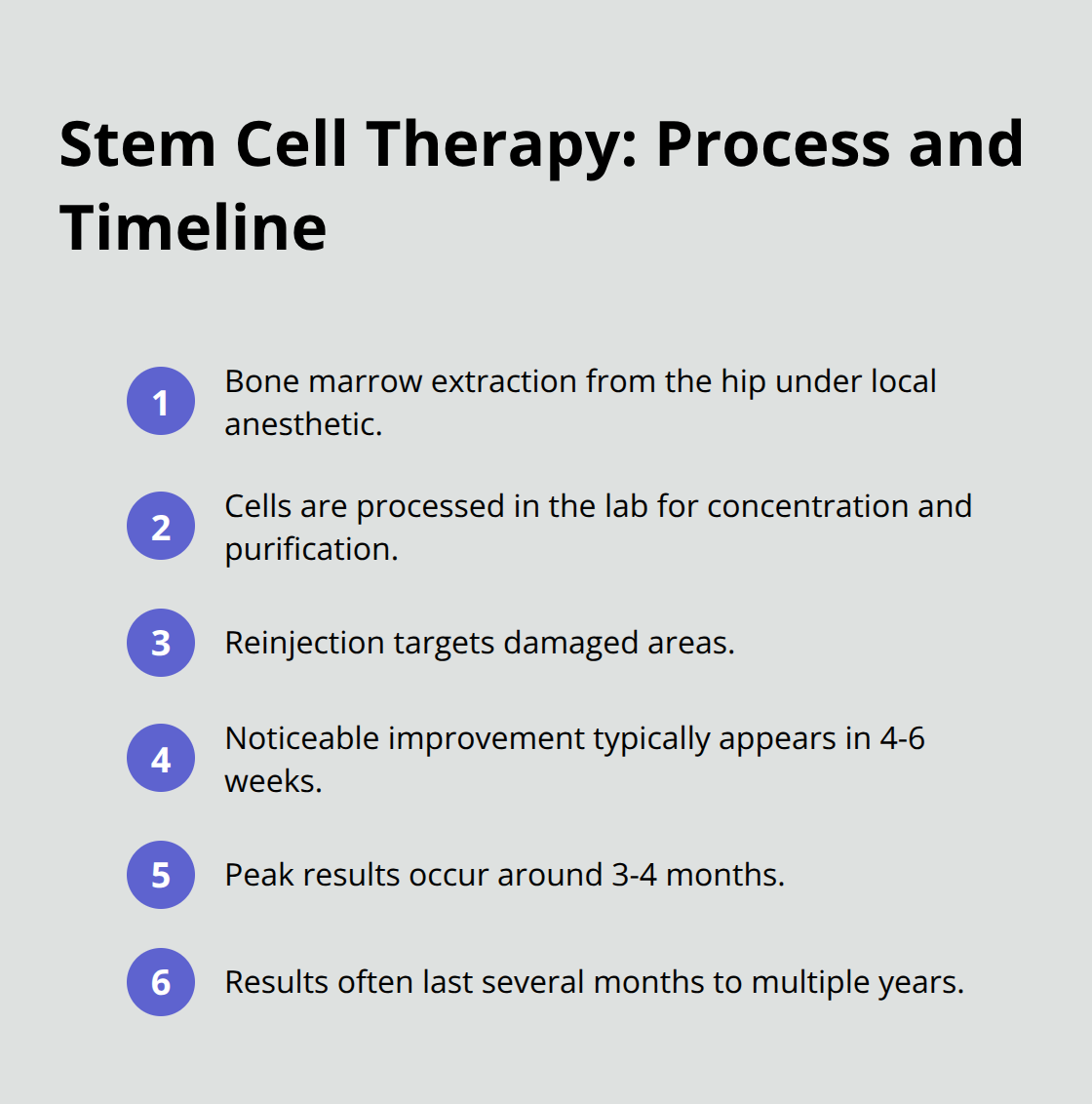
Unlike PRP, stem cell therapy often provides longer-lasting results with effects lasting several months to multiple years depending on their condition severity.
Both therapies offer unique advantages, but their fundamental differences in source materials and healing mechanisms create distinct treatment profiles that patients should understand.
What Makes PRP and Stem Cell Therapy Fundamentally Different
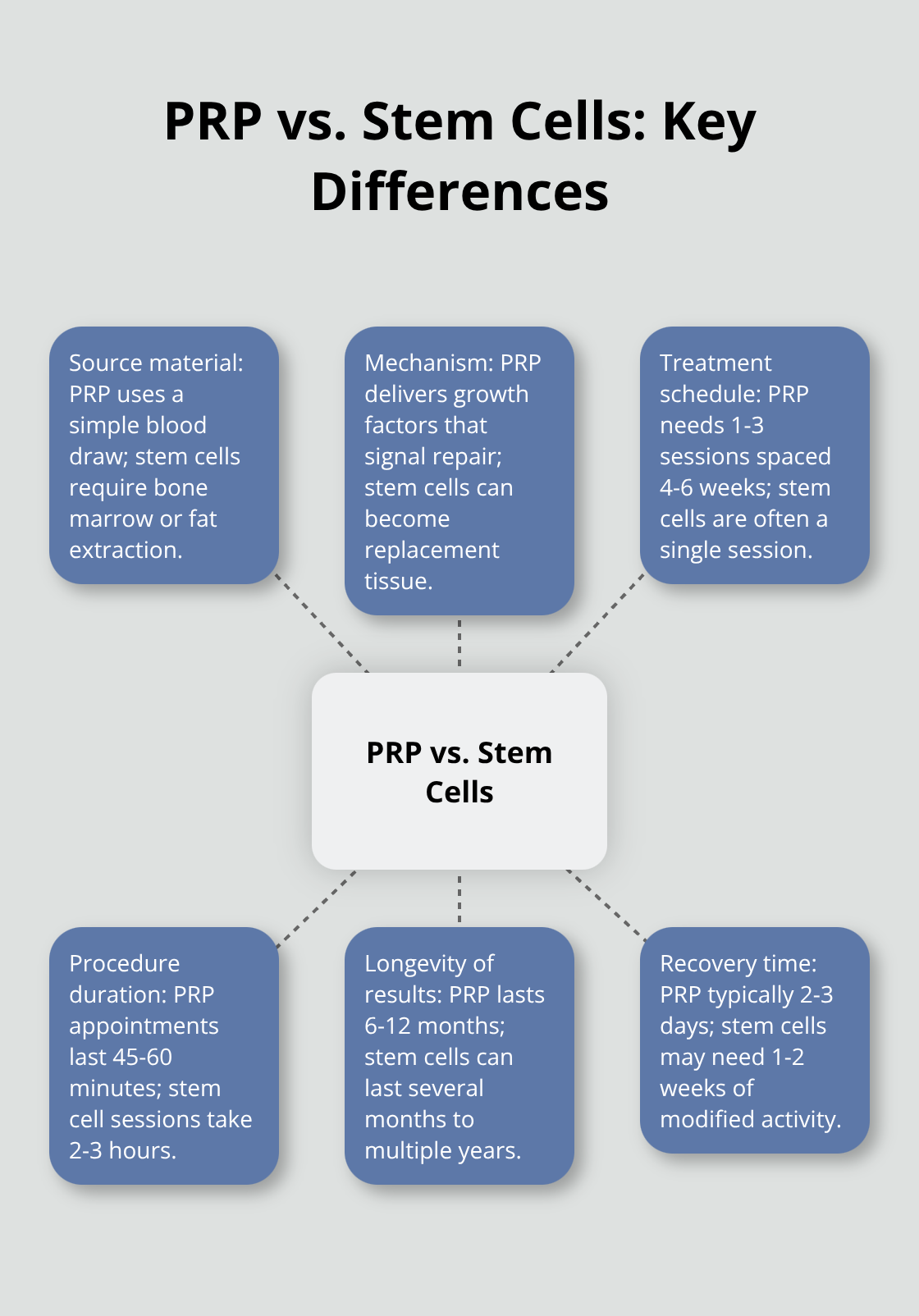
PRP and stem cell therapy differ dramatically in their source materials, with PRP that requires only a simple blood draw while stem cell therapy demands complex tissue extraction from bone marrow or fat deposits. PRP concentrates platelets to 3-5 times normal levels from 30-60 milliliters of blood and creates a golden-colored serum rich in growth factors. Stem cell therapy extracts multipotent cells through bone marrow aspiration from the hip area or liposuction from abdominal fat, which requires sterile laboratory processes that take several hours compared to PRP’s 15-minute centrifuge preparation.
How Each Treatment Triggers Healing
PRP works when it floods damaged tissue with growth factors that attract your body’s existing stem cells to injury sites and stimulate blood vessel formation. The platelets essentially act as biological messengers that jumpstart stalled processes in tissues capable of self-repair. Stem cell therapy takes a replacement approach when it introduces undifferentiated cells that transform into the specific tissue types your body needs (cartilage for joints, muscle fibers for tears, or disc material for spinal problems). These cells don’t just signal for repair; they become the actual replacement tissue.
Treatment Schedules and Recovery Expectations
PRP typically requires 1-3 sessions spaced 4-6 weeks apart for joint conditions, with each appointment that lasts 45-60 minutes. Patients experience peak results but need maintenance treatments every 6-12 months since effects gradually diminish. Stem cell therapy usually involves a single treatment session that takes 2-3 hours from extraction to injection, with results that last several months to multiple years (depending on condition severity). The recovery timeline differs significantly – PRP patients return to normal activities within 2-3 days while stem cell patients may need 1-2 weeks of modified activity as the cells establish themselves in target tissues.
Final Thoughts
PRP and stem cell therapy are not the same thing – they represent distinct regenerative approaches with different mechanisms, timelines, and applications. PRP concentrates your blood platelets to release growth factors that stimulate existing tissue repair, while stem cell therapy introduces undifferentiated cells that transform into replacement tissue. PRP requires multiple sessions with results that last 6-12 months, whereas stem cell therapy typically involves one treatment with effects that last several months to years.
Your condition severity determines the best choice between these two regenerative options. PRP works well for mild to moderate osteoarthritis, sports injuries, and hair restoration cases. Stem cell therapy proves more effective for advanced joint deterioration and severe tissue damage that PRP cannot adequately address (particularly in cases where cartilage loss is extensive).
Professional medical consultation remains essential for determining which treatment aligns with your specific needs and health goals. At YouShine Med Spa, we specialize in PRP treatments that help you achieve natural results through personalized care. Our expert team evaluates your condition and recommends the most appropriate regenerative approach for optimal outcomes.