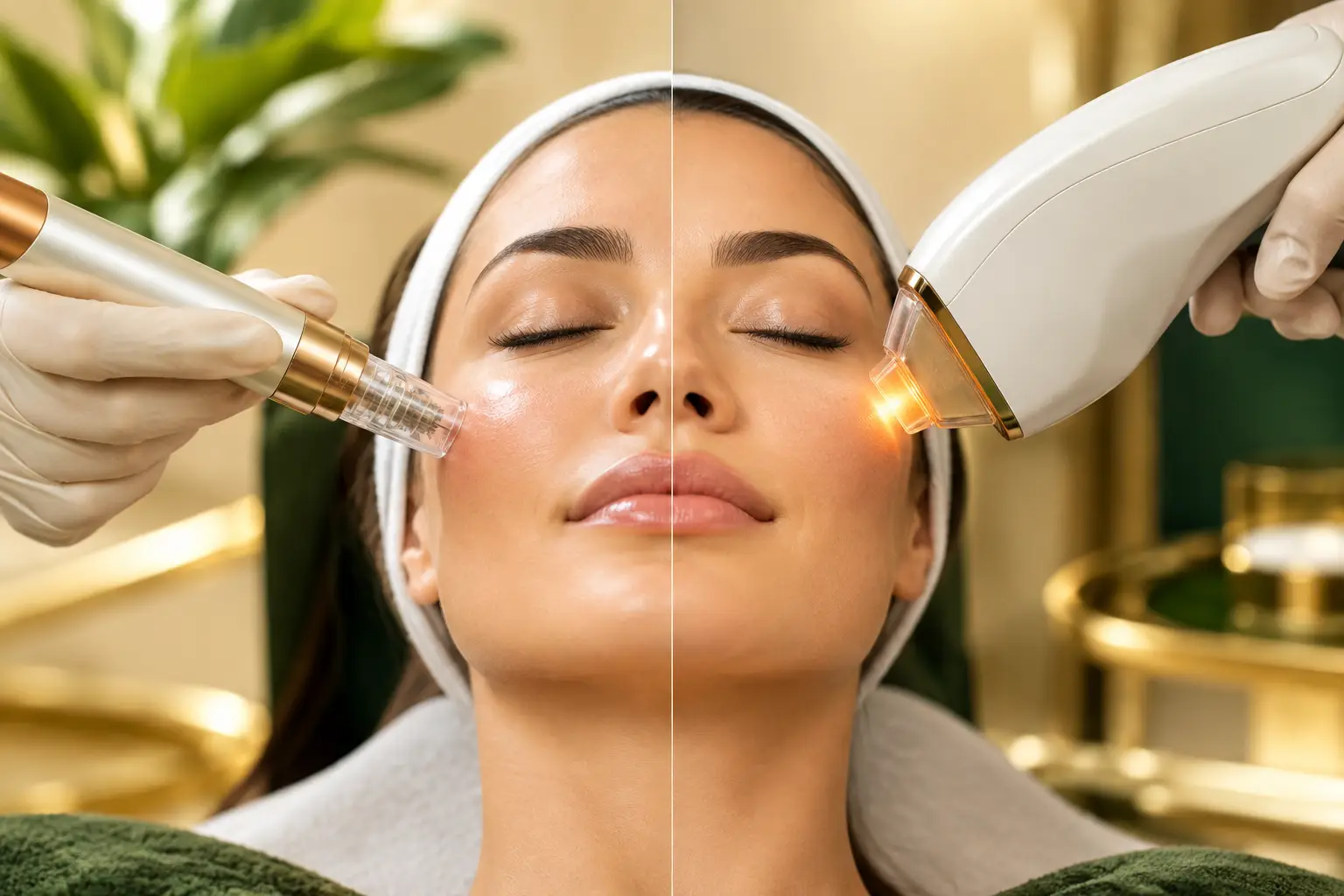
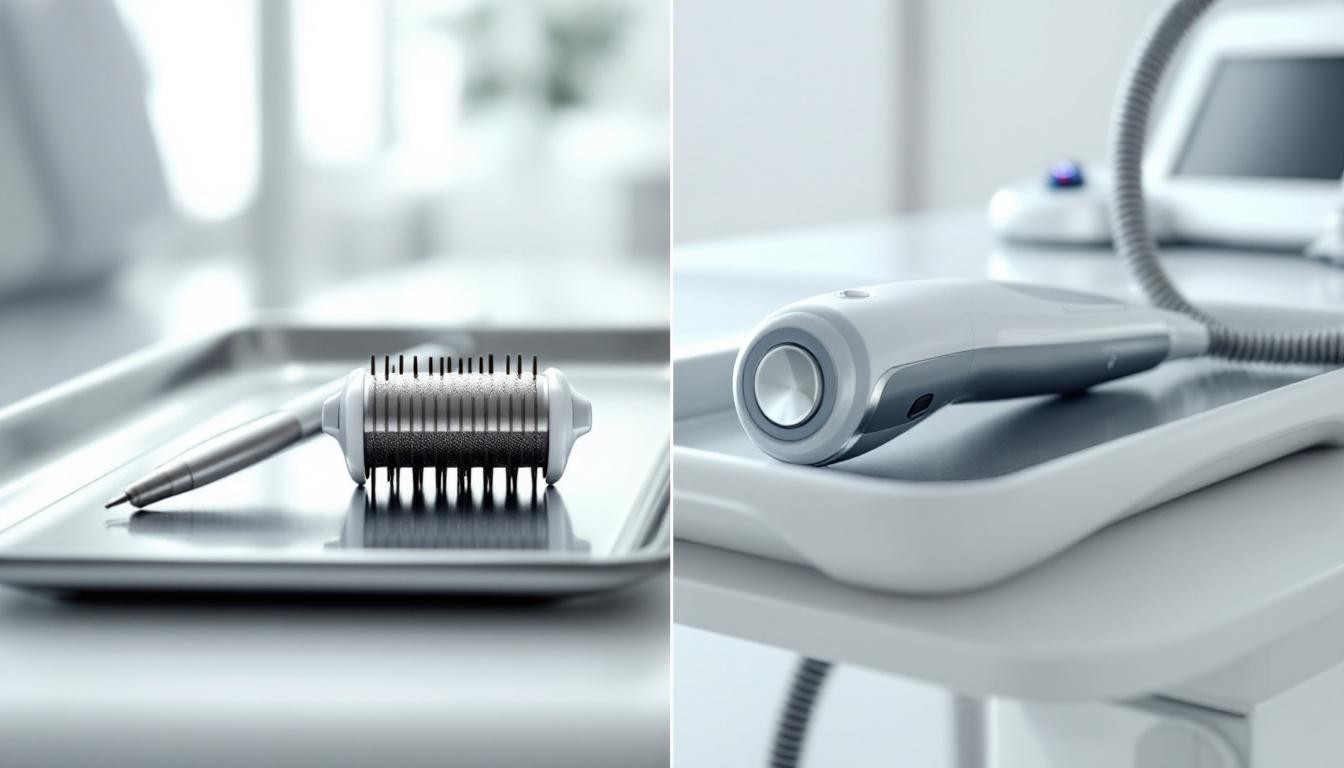
Your skin deserves a treatment that actually works. At YouShine Med Spa, we help patients navigate the choice between microneedling and laser options-two powerful approaches that deliver real results, but in different ways.
Both treatments stimulate your skin’s natural healing response, yet they work through distinct mechanisms. Understanding how each one functions helps you pick the right solution for your specific concerns.
 Now that you understand how each technology works and what recovery looks like, the real decision comes down to comparing these two approaches directly-examining which one actually fits your specific skin concerns, budget, and lifestyle.
 Microneedling requires more sessions but delivers gradual improvements that work across all skin tones without the hyperpigmentation risks that darker complexions face with aggressive laser heat. For people with deeper skin tones, microneedling becomes the more cost-effective choice because it eliminates the need for conservative energy settings or priming treatments that experienced practitioners recommend before ablative laser use on darker skin.
How Microneedling Triggers Real Skin Improvement
Microneedling works through controlled micro-injuries across your skin using tiny needles that penetrate to depths of up to 2.5 millimeters. This mechanical process isn’t random damage-it’s precision stimulation. When your skin experiences these micro-injuries, your body’s natural wound-healing response activates immediately, producing new collagen and elastin fibers. Research from the American Academy of Dermatology confirms that this collagen induction process delivers measurable improvements in skin texture and appearance. The depth of needle penetration matters significantly because it determines how deeply the healing response reaches into your skin layers.Results You Actually See Within Weeks
Most patients notice visible improvements within two to four weeks, though full results develop over six weeks as new collagen continues building beneath the surface. For acne scars, microneedling works exceptionally well on rolling scars and shallow boxcar scars because it thickens the dermis underneath depressed tissue. If you have ice-pick scars or very deep scarring, you may need adjunctive techniques like punch excision first, but microneedling still plays a role in blending texture afterward. Fine lines, enlarged pores, and general skin texture respond consistently across all skin tones-this is where microneedling’s real strength lies. Unlike some laser treatments, you won’t face the pigment complications that darker skin tones sometimes experience with heat-based therapies.Downtime That Fits Your Life
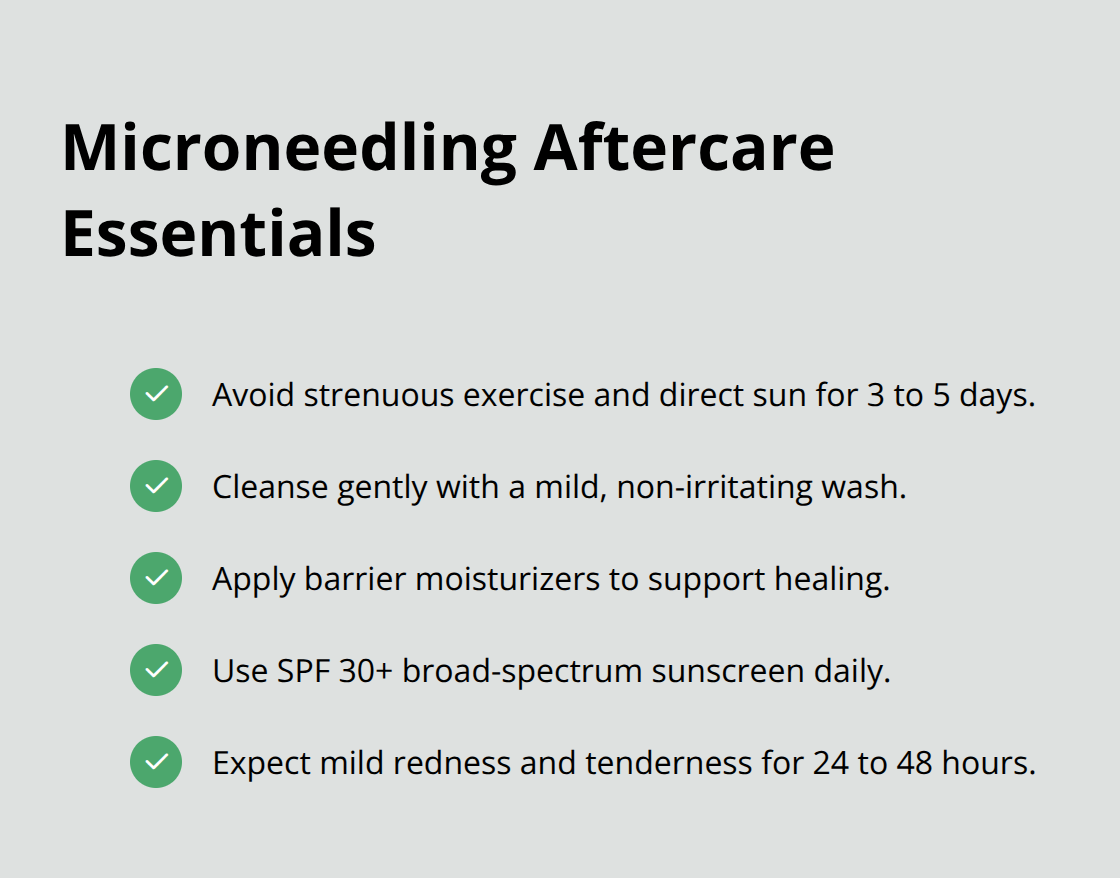
Your skin will show redness and mild tenderness for 24 to 48 hours post-treatment, with some patients experiencing light peeling for a few days. You can return to normal activities immediately, though you’ll need to avoid strenuous exercise and direct sun exposure for at least three to five days. Most people schedule treatments on Friday to manage any visible redness over the weekend. Aftercare is straightforward: gentle cleansing, barrier moisturizers, and strict SPF 30 or higher sunscreen. Infection risk stays low when treatments occur in a clinical setting with proper sterilization, but at-home rollers carry substantially higher contamination risks and produce weaker results, so professional sessions deliver better outcomes.Why Microneedling Suits Nearly Everyone
This treatment works safely across all skin types and tones, making it an accessible option for people who worry about adverse reactions. The mechanical nature of the procedure (rather than heat-based energy) means you avoid the post-inflammatory hyperpigmentation risks that can occur with aggressive laser therapies on darker complexions. Your provider calibrates needle depth based on your specific concerns, whether you’re targeting surface texture issues or deeper scar structures. This customization is what separates effective treatment from mediocre results. Now that you understand how microneedling works and what to expect, laser treatments operate on an entirely different principle-one that harnesses light energy to reach deeper skin layers and address concerns that needles alone cannot solve.How Laser Treatments Reshape Your Skin
Laser treatments operate on a fundamentally different principle than microneedling. Instead of mechanical puncturing, lasers deliver concentrated light energy that penetrates skin at varying depths depending on the technology. Non-ablative lasers heat the dermis without removing the epidermis, making them gentler with minimal downtime. Fractional lasers treat a grid pattern of tiny zones rather than the entire surface, allowing faster healing while still triggering collagen remodeling. Ablative lasers like CO2 and Erbium actually remove the epidermis layer, delivering more aggressive results for deeper wrinkles and significant sun damage, but they require 2 to 4 weeks of downtime with potential crusting and oozing.Choosing the Right Laser Technology for Your Goals
The choice between these approaches depends entirely on what you’re trying to fix and how much recovery time you can tolerate. Non-ablative options like Laser Genesis reduce redness and shrink enlarged pores with zero downtime, while fractional CO2 laser to microneedling for post-acne scarring shows CO2 delivers superior results, but this comes at the cost of higher adverse event potential and substantially longer recovery. Pigment-specific lasers target brown spots and vascular lasers reduce persistent redness, giving you precision treatment for color-related concerns that microneedling handles more gradually.How Skin Tone Affects Laser Safety and Results
Skin tone significantly impacts laser outcomes in ways that differ sharply from microneedling. Darker complexions face real risks with aggressive heat-based therapies, including post-inflammatory hyperpigmentation that can persist for months. Experienced practitioners often recommend microneedling as the safer starting point for deeper skin tones, or they use conservative energy settings with specialized priming techniques like chemical peels before ablative treatment. Lighter skin tones generally tolerate lasers well and see dramatic improvements in fine lines, texture, and pigmentation.Understanding Laser Treatment Costs and Recovery Timelines
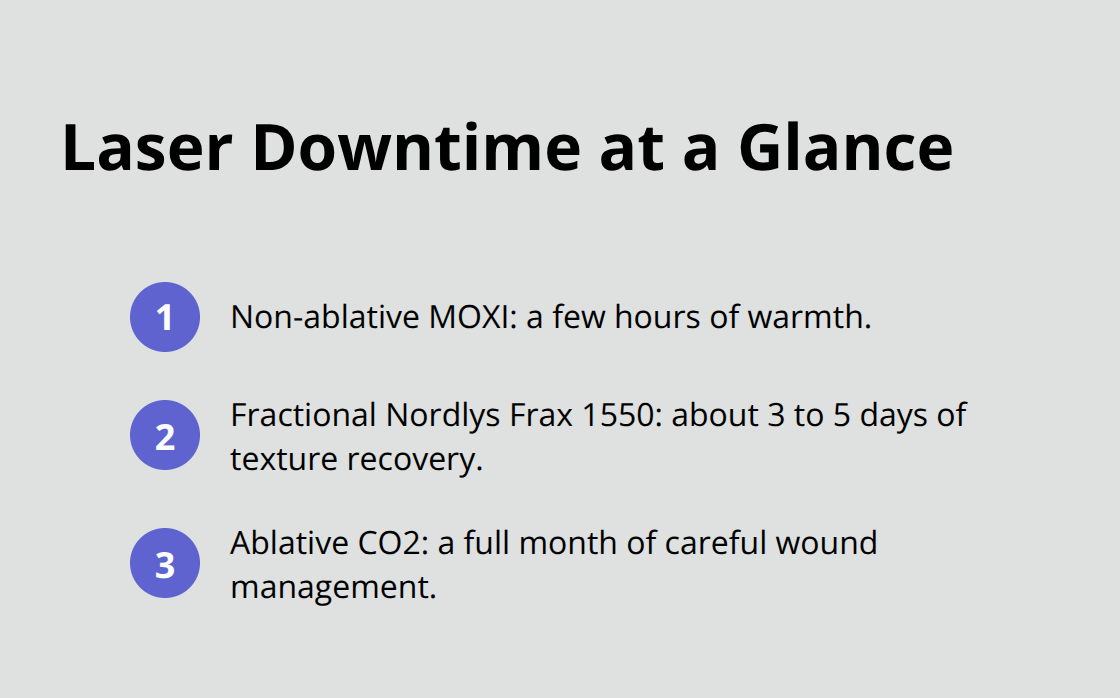
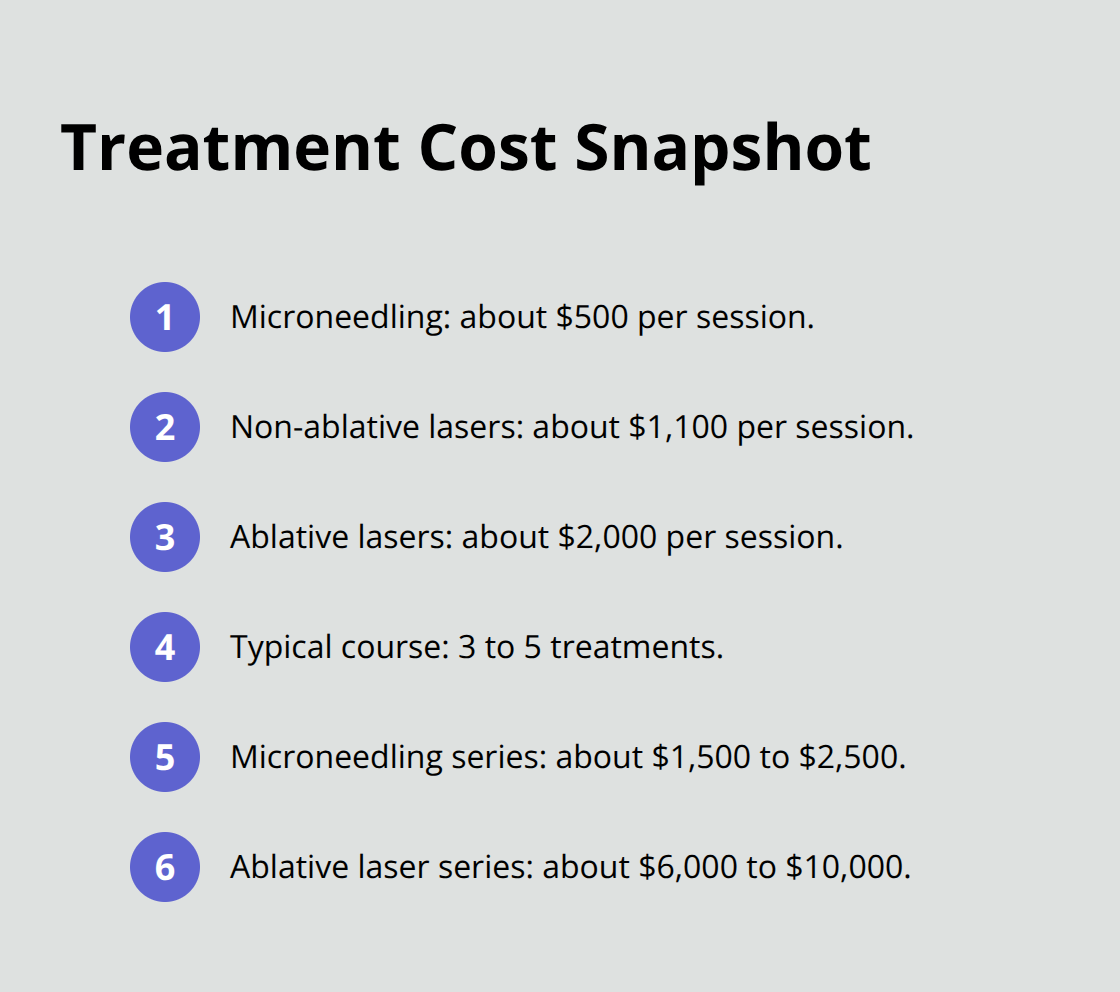
Treatment cost ranges widely: non-ablative lasers run roughly $1,100 per session, while ablative options average around $2,000 per session, and most people need 3 to 5 treatments for optimal results. Downtime also varies dramatically. Non-ablative MOXI causes only a few hours of warmth, while fractional Nordlys Frax 1550 requires about 3 to 5 days of texture recovery, and ablative CO2 demands a full month of careful wound management. These recovery differences matter significantly when you plan your treatment schedule around work and social commitments.Key Differences Between Microneedling and Laser Treatments
Recovery Time Shapes Your Treatment Choice
Recovery time separates microneedling and laser treatments most dramatically, and this difference alone determines whether a treatment fits your actual life. Microneedling produces 24 to 48 hours of visible redness and tenderness, so you can schedule Friday appointments and return to work Monday without anyone noticing anything unusual. Laser treatments require far more planning. Non-ablative options like Laser Genesis cause only a few hours of warmth, but fractional lasers like Nordlys Frax 1550 require recovery time of 1 to 2 weeks where your skin displays noticeable texture and flaking. Ablative CO2 lasers are the most aggressive, demanding a full month of careful wound management with crusting and oozing that makes returning to a client-facing job impossible for weeks. If you work in sales, customer service, or any role where your appearance matters professionally, microneedling lets you maintain your schedule while laser treatments force you to take substantial time off. This practical reality often tips the decision in favor of microneedling for people with demanding work environments.Cost Differences Across Treatment Modalities
Microneedling typically costs around $500 per session, while non-ablative lasers run approximately $1,100 per session and ablative options average around $2,000 per session. Most people need 3 to 5 treatments for optimal results regardless of which path they choose, so a full microneedling series costs roughly $1,500 to $2,500 while a complete ablative laser series reaches $6,000 to $10,000. However, laser treatments often produce more dramatic results per session, potentially requiring fewer total sessions for deeper concerns like significant sun damage or persistent wrinkles.