Hair loss affects over 50 million Americans, yet surgical procedures aren’t the only solution. Non surgical hair restoration treatment options have advanced significantly, offering effective alternatives without downtime or invasive procedures.
We at YouShine Med Spa see remarkable results with modern techniques like PRP therapy, microneedling, and targeted topical treatments. These methods work by stimulating natural hair growth processes and can restore both density and confidence.
PRP Hair Restoration Treatment
The Science Behind Platelet-Rich Plasma
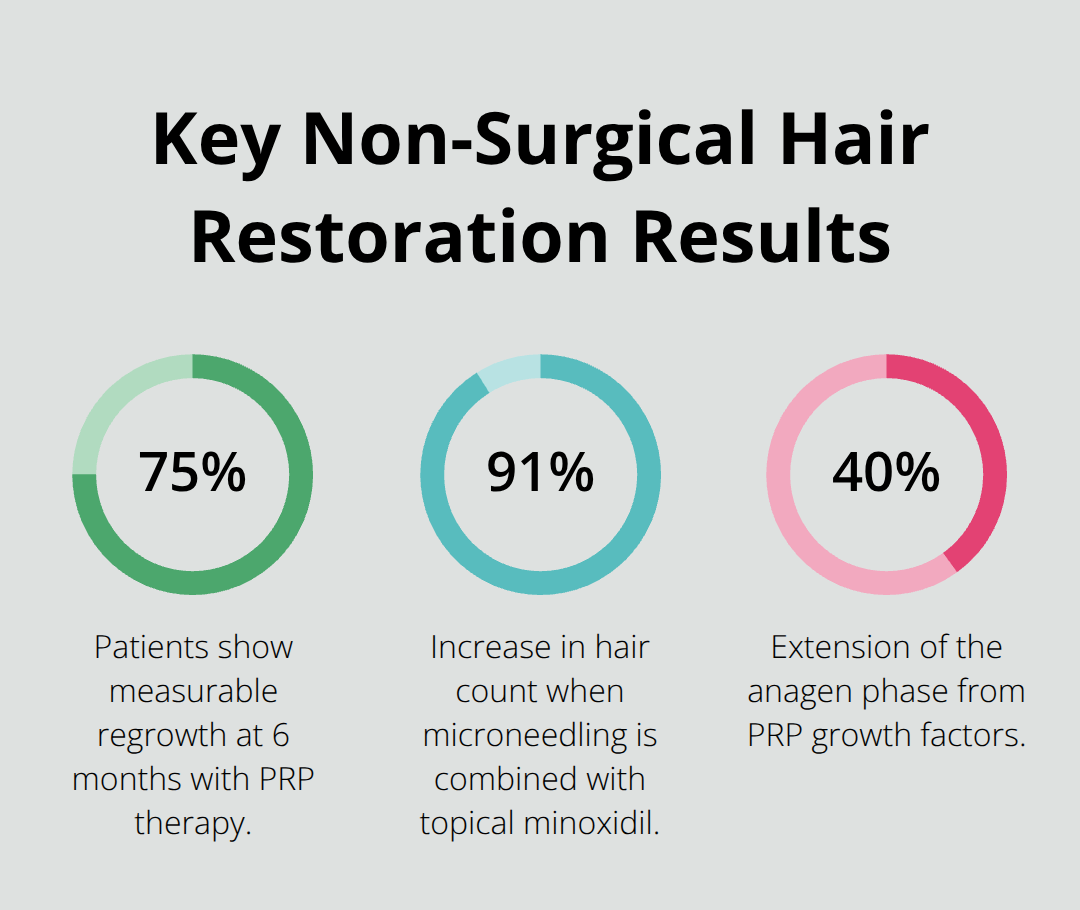
PRP hair restoration uses your blood’s natural healing properties through concentrated platelets that contain over 30 growth factors. These growth factors stimulate dormant hair follicles and extend the anagen phase of hair growth by up to 40%. A study published in the Journal of Cutaneous and Aesthetic Surgery showed >75% hair regrowth at 6 months for all subjects in the PRP group. The concentrated platelets release cytokines that increase blood flow to follicles and promote cellular regeneration at the scalp level.
Treatment Protocol and Patient Experience
The treatment begins with a standard blood draw of 30-60ml, which we process in a centrifuge for 10 minutes to separate plasma from red blood cells. We inject the concentrated PRP into areas of hair loss with fine needles spaced 1cm apart across the scalp. Most patients need three initial sessions spaced 4-6 weeks apart, followed by maintenance treatments every 6 months.
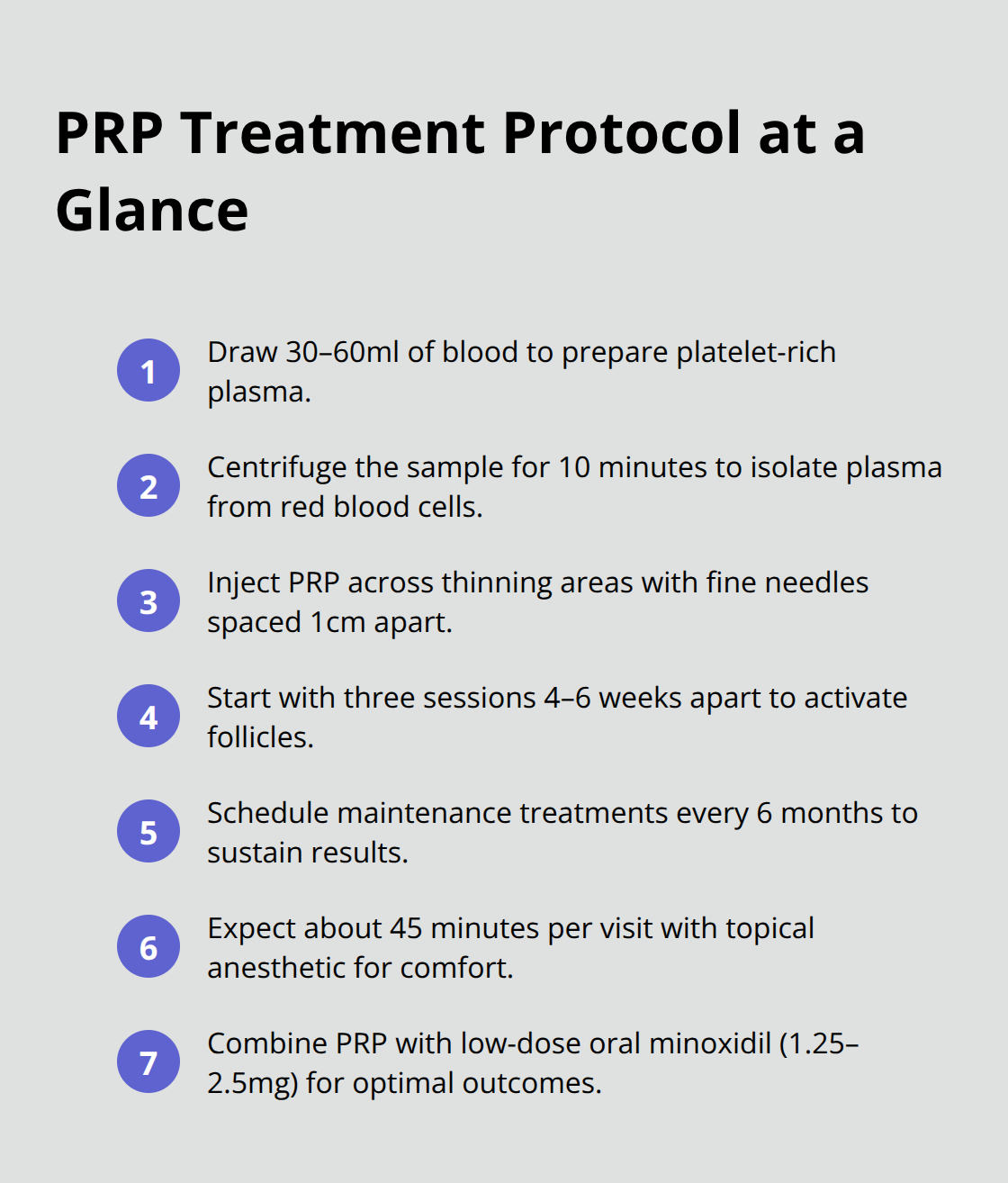
The procedure takes 45 minutes total, with minimal discomfort due to topical anesthetic application. Studies indicate optimal results occur when patients combine PRP with low-dose oral minoxidil at 1.25-2.5mg daily.
Results Timeline and Realistic Expectations
Hair regrowth typically becomes visible at 3-4 months post-treatment, with peak results at 6-12 months. Clinical data shows 10-20% improvement in hair density when PRP combines with complementary treatments. For patients undergoing PRP with microneedling, hair count rose from 14.71 ± 3.988 before treatment to 27.71 ± 4.499 after treatment. Results last 12-18 months before patients require booster sessions. PRP works best for patients with androgenetic alopecia in early to moderate stages (showing limited effectiveness in completely bald areas where follicles have permanently miniaturized).
While PRP therapy offers excellent results for many patients, scalp microneedling provides another powerful approach that enhances treatment outcomes through different mechanisms.
Microneedling for Hair Loss
Mechanical Stimulation Creates Hair Growth Signals
Microneedling creates controlled micro-injuries with needles between 0.5-1.5mm depth, which triggers your scalp’s natural wound response. This process releases growth factors including VEGF, PDGF, and FGF-2 that directly stimulate hair follicle stem cells. Research from the Indian Journal of Dermatology demonstrates that microneedling increases hair count by 91% when combined with topical minoxidil compared to minoxidil alone. The mechanical trauma activates the Wnt/β-catenin pathway, which controls hair follicle cycles and extends the anagen growth phase. Deeper needle penetration at 1.5mm produces superior results because it reaches the hair bulb region where stem cells reside.
Strategic Serum Integration Maximizes Treatment Impact
The micro-channels created during treatment allow better penetration of topical growth factors compared to intact skin. Copper peptides, adenosine, or caffeine-based serums work best when applied immediately post-treatment while channels remain open for 4-6 hours. Studies show that microneedling combined with 5% minoxidil increases treatment effectiveness by 4-fold versus minoxidil application on untreated scalp. Plant-derived growth factor serums (like those with apple stem cells or redensyl) penetrate deeper and remain active longer when applied during this absorption window. Weekly treatments for 12 weeks followed by monthly maintenance sessions produce optimal results, with visible improvement typically starting at week 8-10.
Treatment Protocols Determine Long-Term Success
Professional microneedling sessions every 4 weeks combined with at-home dermaroller use twice weekly at 0.5mm depth creates the ideal treatment frequency. Patients require 6 initial sessions to establish follicle activation, then quarterly maintenance treatments to sustain results. Research shows that consistent treatment protocols maintain hair density improvements for extended periods. Treatment works best for patients with diffuse thinning rather than complete baldness, as active follicles must be present for stimulation to occur.
While microneedling offers excellent mechanical stimulation for hair growth, this safe and effective procedure strengthens hair follicles, reduces hair thinning, and promotes thicker, healthier hair. Topical treatments and medical solutions provide the chemical foundation that supports and enhances these physical interventions.
Topical Treatments and Medical Solutions
FDA-Approved Medications That Deliver Measurable Results
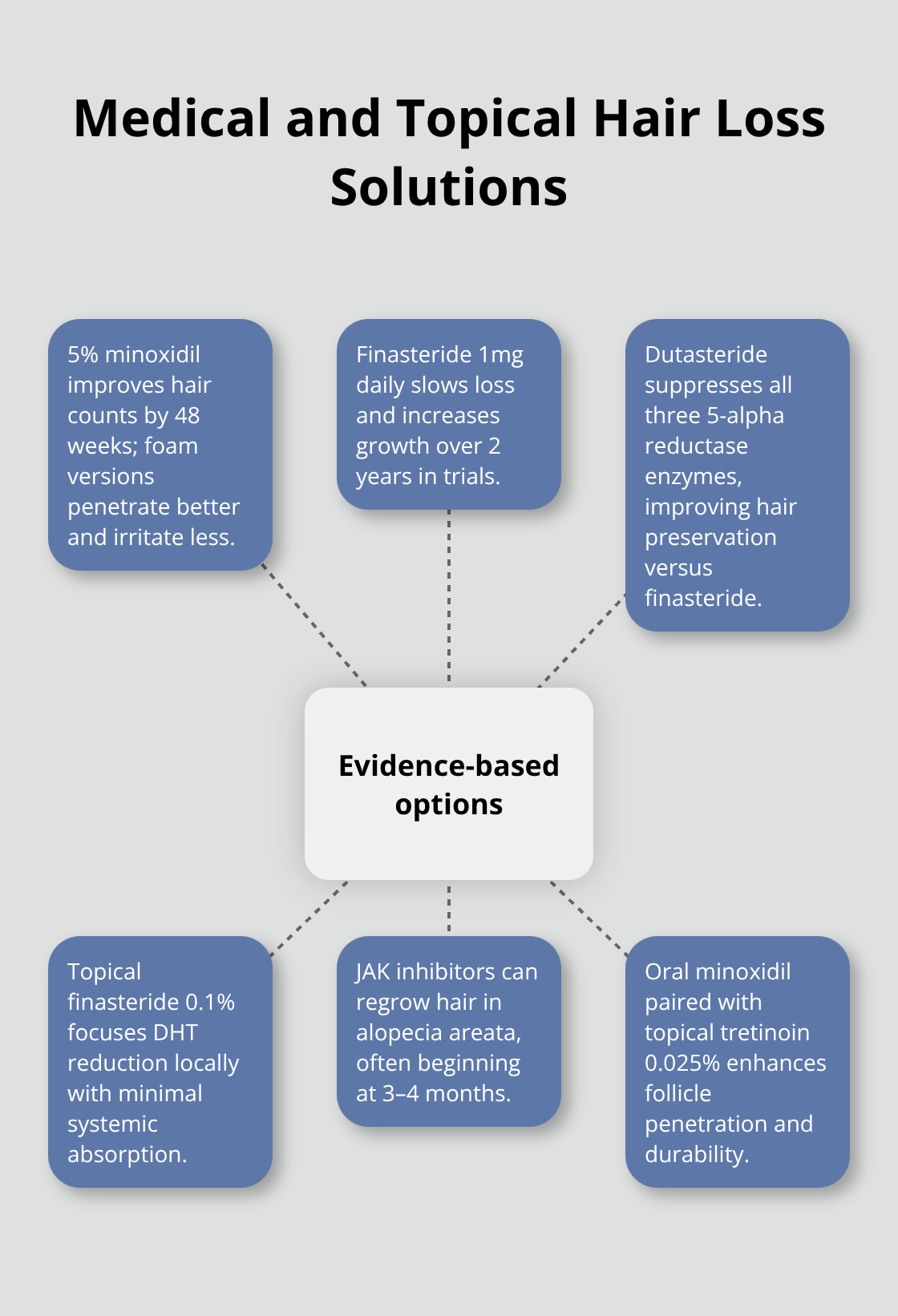
Minoxidil remains the gold standard for topical hair regrowth, with 5% formulations showing significant improvement in hair count after 48 weeks according to clinical research. The foam version penetrates scalp tissue better than liquid formulations and causes less scalp irritation. Finasteride at 1mg daily slows hair loss progression and increases hair growth in clinical trials over 2 years.
Women with androgenetic alopecia respond well to spironolactone at 100-200mg daily, which blocks androgen receptors and reduces hair miniaturization. Low-dose oral minoxidil at 0.25-2.5mg daily shows strong response rates for both men and women with pattern hair loss (though blood pressure monitoring is required during treatment).
Prescription Combinations That Maximize Treatment Success
Dutasteride blocks all three 5-alpha reductase enzymes compared to finasteride’s single enzyme inhibition, which reduces DHT levels more effectively. This superior DHT suppression translates to better hair preservation over 2 years in comparative studies. Topical finasteride at 0.1% concentration provides localized DHT suppression with minimal systemic absorption, which makes it suitable for patients who experience side effects from oral versions.
JAK inhibitors like tofacitinib show good efficacy and safety for alopecia areata patients, with hair regrowth that begins at 3-4 months of treatment. Oral minoxidil combined with topical tretinoin 0.025% enhances follicle penetration and extends treatment effectiveness. Patients who use multi-drug approaches see better outcomes than single medication protocols (though medical supervision becomes essential for monitoring interactions and side effects).
At-Home Care Products That Support Hair Health
Caffeine-based shampoos stimulate blood flow to follicles and extend the anagen phase when used daily for 12 weeks or longer. Ketoconazole 2% shampoo reduces scalp inflammation and DHT levels locally, with studies showing hair density improvement after 6 months of twice-weekly use. Copper peptide serums activate hair follicle stem cells and work best when applied to clean, dry scalp before bedtime.
Saw palmetto supplements at 320mg daily provide natural DHT suppression with fewer side effects than prescription alternatives. Biotin and collagen supplements support hair structure, though they only benefit patients with actual nutritional deficiencies rather than genetic hair loss patterns.
Final Thoughts
Non-surgical hair restoration treatment effectiveness depends on your hair loss pattern and treatment stage. PRP therapy produces the strongest results for early to moderate androgenetic alopecia, with 75% of patients showing measurable regrowth at 6 months. Microneedling combined with topical treatments increases hair count by 91% compared to standalone approaches, while FDA-approved medications like minoxidil and finasteride provide consistent baseline improvement.
Patients with diffuse thinning respond best to combination protocols that use PRP, microneedling, and topical medications together. Those with alopecia areata benefit most from JAK inhibitors or targeted corticosteroid treatments. Complete baldness requires realistic expectations, as dormant follicles cannot be reactivated through non-surgical methods (though existing follicles can still be strengthened and preserved).
Professional evaluation identifies your specific hair loss type and creates a personalized treatment plan. We at YouShine Med Spa offer comprehensive hair restoration consultations and advanced treatment protocols that deliver natural results. Early intervention produces better outcomes than advanced hair loss treatment.