Hair loss affects millions of people, and many are turning to PRP hair restoration as a potential solution. At YouShine Med Spa, we’ve seen growing interest in this treatment, and for good reason-the science behind it is compelling.
But does it actually work? We’ll walk you through the clinical evidence, real patient outcomes, and how PRP stacks up against other hair loss treatments.
How PRP Actually Works
The Blood Processing and Growth Factor Concentration
Platelet-rich plasma starts with your own blood. We draw about 15 milliliters, roughly the amount in a tablespoon, and place it into a centrifuge for 8 to 10 minutes. This spinning process separates your blood into layers, concentrating the platelets to roughly 5 to 6 times higher than normal blood levels. Those concentrated platelets contain growth factors including PDGF, VEGF, IGF-1, and FGF-2-biological messengers that signal your hair follicles to wake up and grow.
A 2015 study published in Stem Cells Translational Medicine used a half-head design where researchers injected PRP into one side of the scalp and saline into the other. The PRP side gained an average of 33.6 additional hairs compared to the placebo side, which actually lost 3.2 hairs. Hair density increased by 45.9 hairs per square centimeter on the treated side.
What matters for real results is platelet concentration. Research indicates that 1.48 million platelets per microliter produces the best results for maximizing angiogenesis and hair growth. Lower concentrations won’t deliver enough growth factors, while excessively high concentrations can actually reduce effectiveness. Different centrifugation systems and processing kits produce different platelet counts and purity levels, which is why preparation method matters enormously.
How Growth Factors Stimulate Hair Follicles
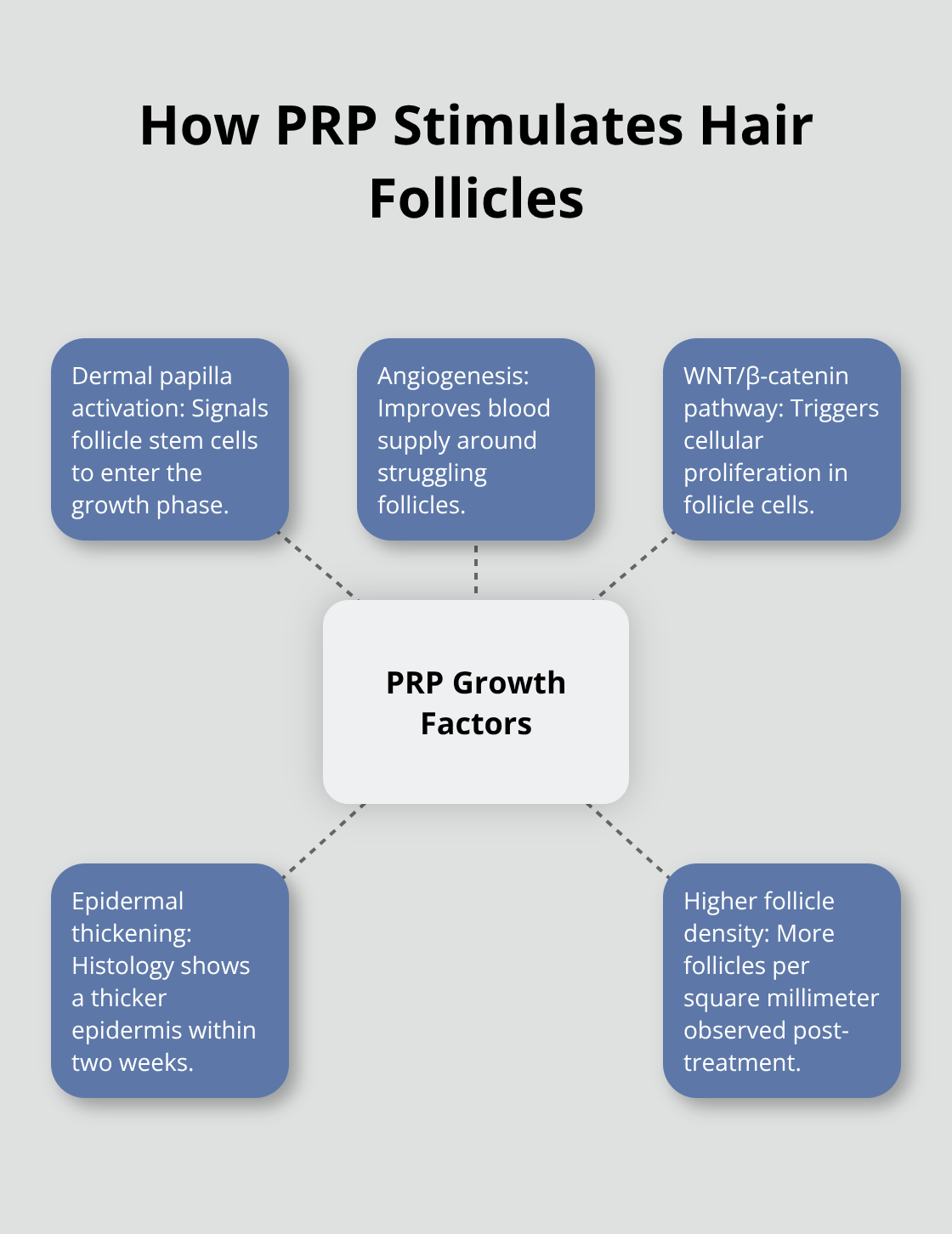
The growth factors work through multiple pathways simultaneously. They stimulate the dermal papilla cells at the base of your follicles, boost blood vessel formation around struggling follicles, and activate a cellular signaling pathway called WNT/β-catenin that pushes follicle cells into proliferation mode. The histology from the 2015 study showed increased epidermal thickness and more follicles per square millimeter just two weeks after treatment.
The Injection Procedure and Timeline
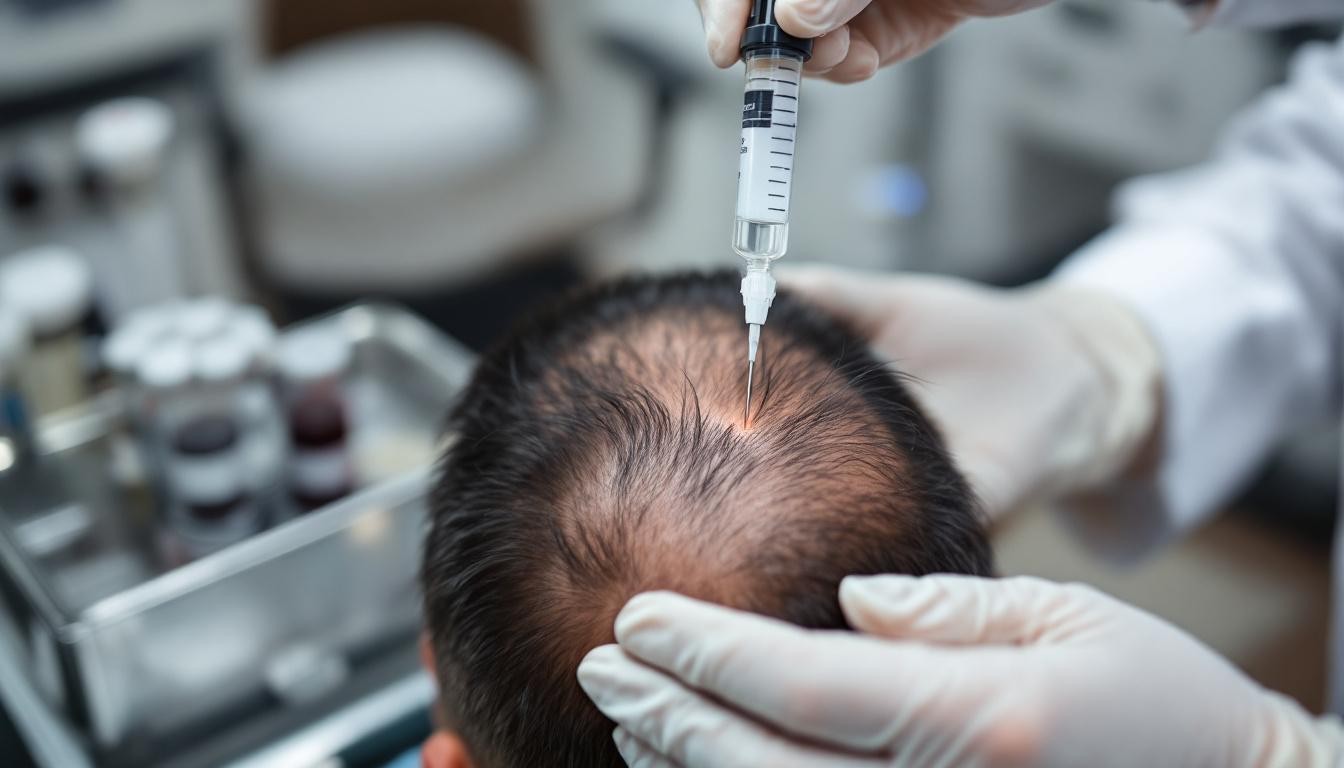
The actual injection procedure takes 15 to 30 minutes after your blood is processed. Your scalp gets cleansed, and we can apply topical numbing cream if you prefer, though most people find the discomfort minimal. We inject approximately 0.1 milliliters of PRP per square centimeter at a depth of 1.5 to 2.5 millimeters between the hair follicles. You’ll feel mild pressure and occasional pinches, but nothing severe enough to prevent you from returning to work or normal activities immediately afterward. Expect mild redness or slight swelling for a few hours.
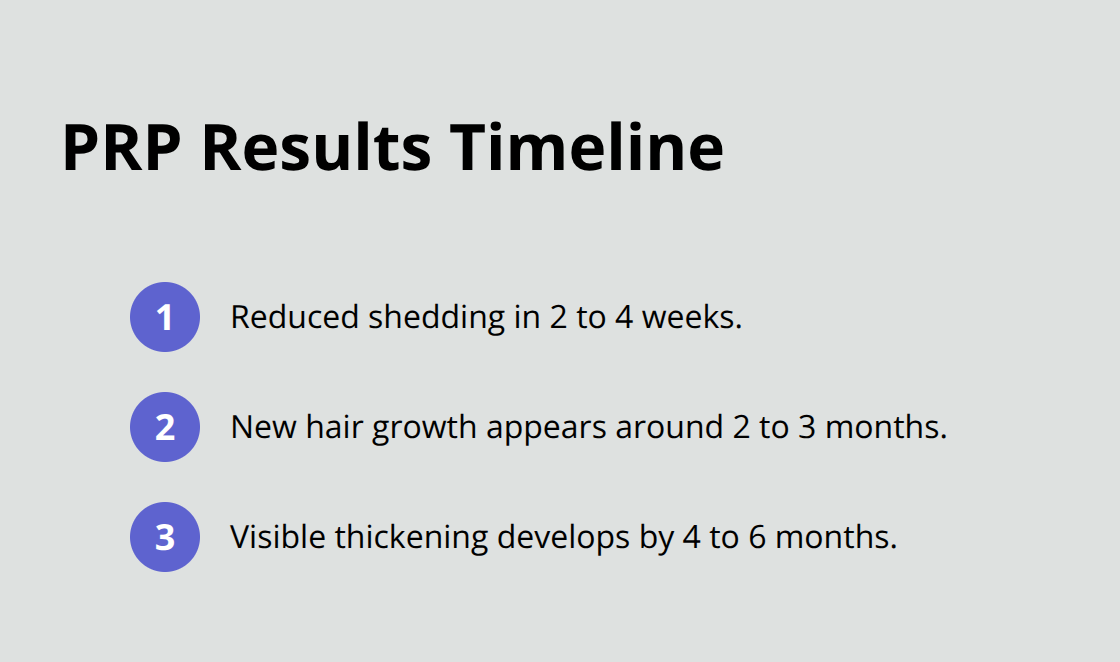
The standard protocol involves three injections spaced one month apart. Studies show that spacing treatments 4 to 6 weeks apart allows your follicles time to respond and enter the growth phase. You’ll typically notice reduced shedding within 2 to 4 weeks, and new hair growth usually appears around 2 to 3 months. Visible thickening develops by 4 to 6 months.
Results in Androgenetic Alopecia
In the androgenetic alopecia population, PRP increased hair count by approximately 62.4% and hair thickness improved significantly after treatment according to clinical trials. Starting early makes a significant difference-the moment you notice thinning, PRP works better because more of your follicles are still active and responsive. Once follicles become completely dormant, no treatment (PRP, minoxidil, or anything else) can revive them.
Understanding how PRP works at the cellular level explains why results vary from person to person. The next section examines what clinical studies actually show about PRP effectiveness and which patients see the best outcomes.
Clinical Evidence and Real Results
The Gold Standard Study That Proves PRP Works
A 2015 half-head study in Stem Cells Translational Medicine remains the gold standard for PRP evidence because it eliminated bias through rigorous design. Researchers injected PRP into one scalp hemisphere and saline into the other, measuring outcomes objectively. The PRP side showed a mean increase of 33.6 hairs while the untreated side lost 3.2 hairs. Hair density increased by 45.9 hairs per square centimeter on the treated side. Histological analysis revealed increased epidermal thickness and higher follicle density just two weeks post-treatment, proving PRP creates measurable biological changes, not placebo effects.
What Recent Research Shows About PRP Effectiveness
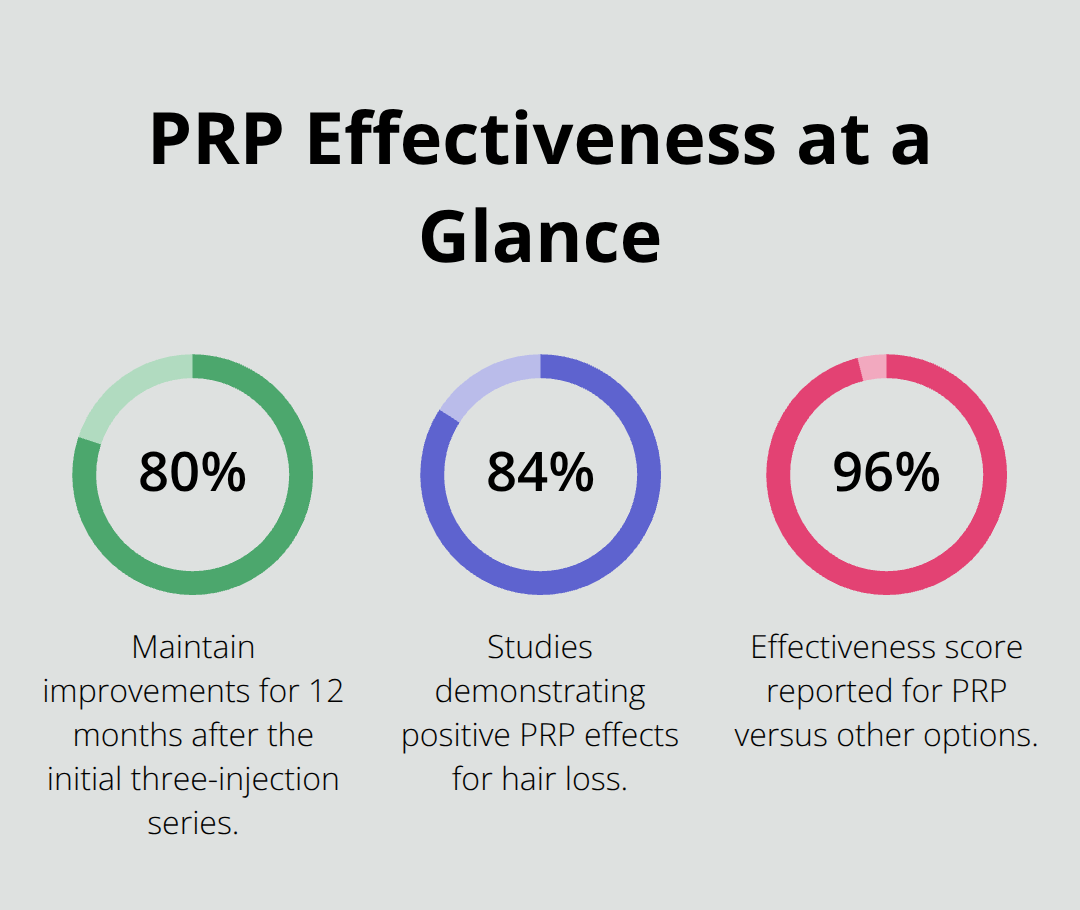
A 2025 systematic review found that 84% of studies demonstrate positive PRP effects for hair loss, with patients reporting denser hair and reduced shedding. For androgenetic alopecia specifically, the evidence shows hair count increases of 22% to 30% after three to six months, while hair thickness gains range from 31% to 46%. In one trial comparing treatments directly, PRP increased hair shaft diameter approximately 6.3 times more effectively than minoxidil alone. Among men treated with three monthly PRP sessions, 87.5% reported satisfaction with their results at the crown compared to only 37.7% satisfaction with minoxidil monotherapy.
Timing and Follicle Status Determine Your Results
The critical factor determining whether you’ll see results comes down to timing and follicle status. Starting PRP early, when you first notice thinning, dramatically improves outcomes because active follicles respond better than dormant ones. Men who begin treatment during Norwood-Hamilton stages IIa through IV see the most consistent density improvements. Patients with completely miniaturized or scarred follicles won’t benefit because no current treatment can revive dead follicles.
Platelet Concentration and Long-Term Maintenance
Platelet concentration directly correlates with success-the optimal range is approximately 1.48 million platelets per microliter, and clinics using centrifugation systems that achieve this concentration consistently report better results than those using lower-concentration systems. About 80% of patients maintain improvements for twelve months after completing their initial three-injection series, though four out of twenty patients in the major trial experienced progressive hair loss around sixteen months and required maintenance treatments. This means maintenance injections every six to twelve months become essential for sustained results. Understanding these maintenance patterns helps you plan realistic expectations and budget for ongoing care as you consider whether PRP fits your hair restoration goals.
How PRP Stacks Up Against Other Hair Loss Treatments
The Mechanism That Sets PRP Apart
PRP occupies a distinct position in the hair loss treatment landscape because it works through a fundamentally different mechanism than pharmaceutical options. Minoxidil and finasteride operate by either stimulating blood flow to follicles or blocking the hormone that shrinks them, whereas PRP directly delivers growth factors that activate follicle cells and promote new blood vessel formation. A 2019 meta-analysis found that PRP increased hair shaft diameter approximately 6.3 times more effectively than minoxidil alone. Satisfaction rates tell the real story: PRP showed a 96% effectiveness score compared to just 37.7% satisfaction with minoxidil monotherapy. The practical advantage is that PRP works on a cellular level rather than systemically, meaning you avoid the potential side effects associated with daily medications.
Why PRP Beats Pharmaceutical Alternatives
Finasteride carries risks of sexual dysfunction and requires ongoing use indefinitely, while minoxidil demands daily application and stops working the moment you discontinue treatment. PRP requires maintenance injections every six to twelve months, but you introduce no pharmaceutical compounds into your body continuously. This distinction matters for patients who want to avoid systemic side effects or prefer a treatment that doesn’t demand daily compliance. You can pause PRP without losing previous gains immediately, whereas stopping minoxidil reverses results within weeks.
Combining PRP With Other Treatments
Combining PRP with minoxidil or finasteride actually produces superior results compared to either treatment alone, which makes PRP an excellent addition if you already take these medications or want to amplify their effects. This combination approach allows you to leverage multiple mechanisms simultaneously-pharmaceutical support plus cellular activation-for faster and more dramatic density improvements than monotherapy achieves.
PRP Versus Hair Transplants
Hair transplants operate on completely different principles by moving existing hair from dense areas to thinning zones, making them suitable only when you have sufficient donor hair available. PRP shines as a pre-transplant treatment because it accelerates recovery, improves graft uptake, and activates dormant follicles surrounding transplanted hair, delivering faster density return and better overall results. The cost-effectiveness calculation favors PRP early: a standard package of three sessions runs roughly $1,500 to $4,500 depending on location and provider expertise, while hair transplants typically cost $4,000 to $15,000 or more and represent a permanent investment. Starting PRP during early hair loss stages prevents the progression that makes transplants necessary, effectively saving thousands in future procedures.
Who Benefits Most From PRP
The realistic assessment is that PRP works best for men in Norwood-Hamilton stages IIa through IV who still have active follicles, want to avoid daily medications, and prefer non-surgical options that you can combine with other treatments for enhanced results.
Final Thoughts
PRP hair restoration delivers measurable results for the right candidates, backed by clinical evidence showing 84% of studies demonstrate positive effects. You’ll see hair density improvements of 22% to 30% within three to six months, with thickness gains reaching 31% to 46%. The treatment works because it activates your follicles at the cellular level through growth factors, not through systemic medications that carry side effects or demand daily compliance.
The best candidates are men experiencing early to moderate hair loss who still have active follicles and want to avoid finasteride’s sexual dysfunction risks or minoxidil’s daily application requirements. Starting early matters significantly-the moment you notice thinning, your follicles respond better because they haven’t yet become completely dormant. Combining PRP with minoxidil or finasteride amplifies results beyond what either treatment achieves alone, making it an excellent addition if you’re already using these medications.
PRP requires three initial injections spaced one month apart, with maintenance treatments every six to twelve months to sustain results (about 80% of patients maintain improvements for a full year after their initial series). The investment typically ranges from $1,500 to $4,500 for an initial package, making it significantly more affordable than hair transplants while preventing the progression that makes transplants necessary. Contact YouShine Med Spa to schedule a consultation and take the first step toward addressing your hair loss.