PRP therapy cost often surprises people-not because it’s expensive, but because it delivers results that justify the investment. We at YouShine Med Spa see patients choosing PRP over costlier alternatives year after year.
This guide breaks down exactly what you’ll pay, what influences pricing, and how to get the most from your treatment budget.
Understanding PRP Therapy Pricing
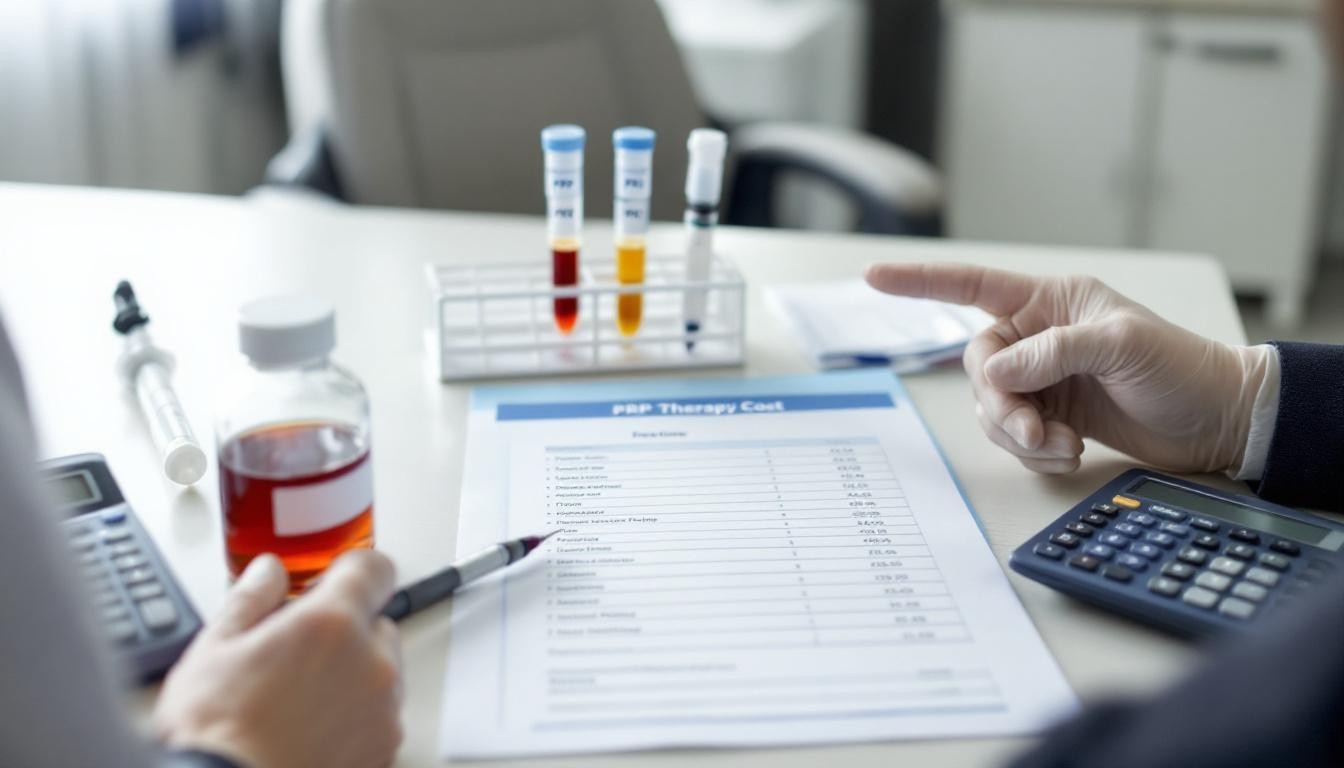
PRP pricing breaks down into specific components, and knowing what you’re paying for matters. The average PRP injection costs between $500 and $2,500, with most clinics settling around $630 to $1,000 per session, according to data from sports medicine practices surveyed in 2019 and orthopedic claims analyzed through 2024. The variation isn’t random-your location affects cost significantly. Clinics in major cities charge more, with Western practices averaging $778 compared to Southern clinics at $654. Population density pushes prices upward; PRP costs increase roughly $18.90 per million people in your city. Income levels in your area also raise prices, adding about $18 per $10,000 increase in median household income. Board-certified orthopedic surgeons with regenerative medicine training command higher fees than less specialized practitioners, and that’s worth paying for. The specific area treated influences cost as well-ankle injections averaged $711.65 annually while hip injections reached $1,711.63, reflecting the complexity and precision required.
What’s Bundled Into Your PRP Cost
When you pay for a PRP injection, the fee typically covers blood draw, centrifuge processing, platelet concentration, ultrasound-guided injection, and post-procedure guidance. Some clinics itemize these separately while others package them together.
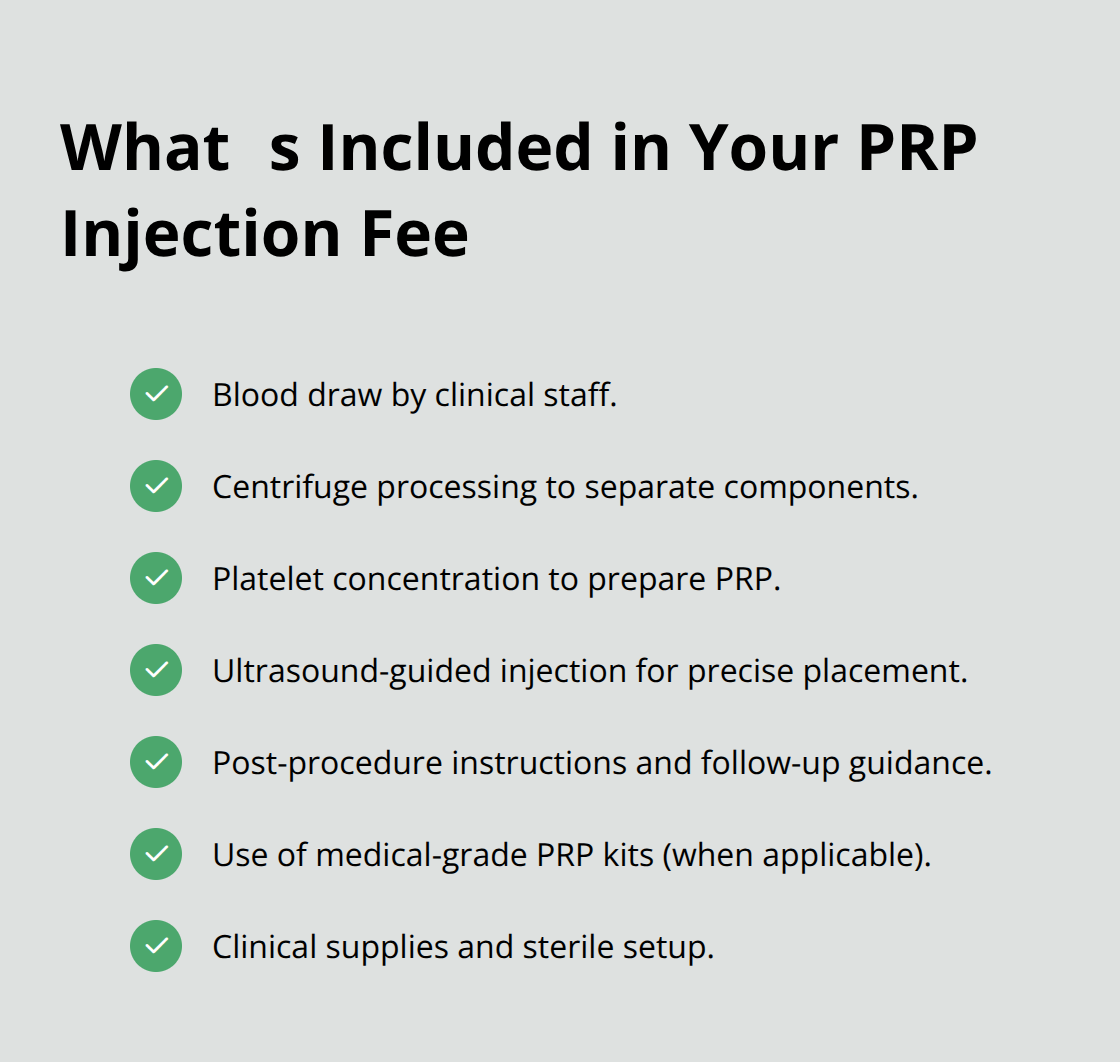
Ultrasound-guided injection technology deserves emphasis here-it’s not a luxury add-on. This technology ensures precise needle placement directly into damaged tissue, dramatically improving outcomes. Ask specifically whether your provider uses ultrasound guidance before committing. The quality of equipment matters considerably. Medical-grade centrifuges and high-quality PRP kits produce better platelet concentrations, potentially improving healing potential. Cheaper clinics sometimes cut corners on equipment, which translates to weaker results. Most patients need one or two injections, though chronic conditions like arthritis sometimes require a series spaced weeks or months apart. Pre-treatment assessments using ultrasound add clarity about your condition’s severity but may carry additional costs depending on the clinic’s structure.
Why Location and Provider Selection Drive Real Price Differences
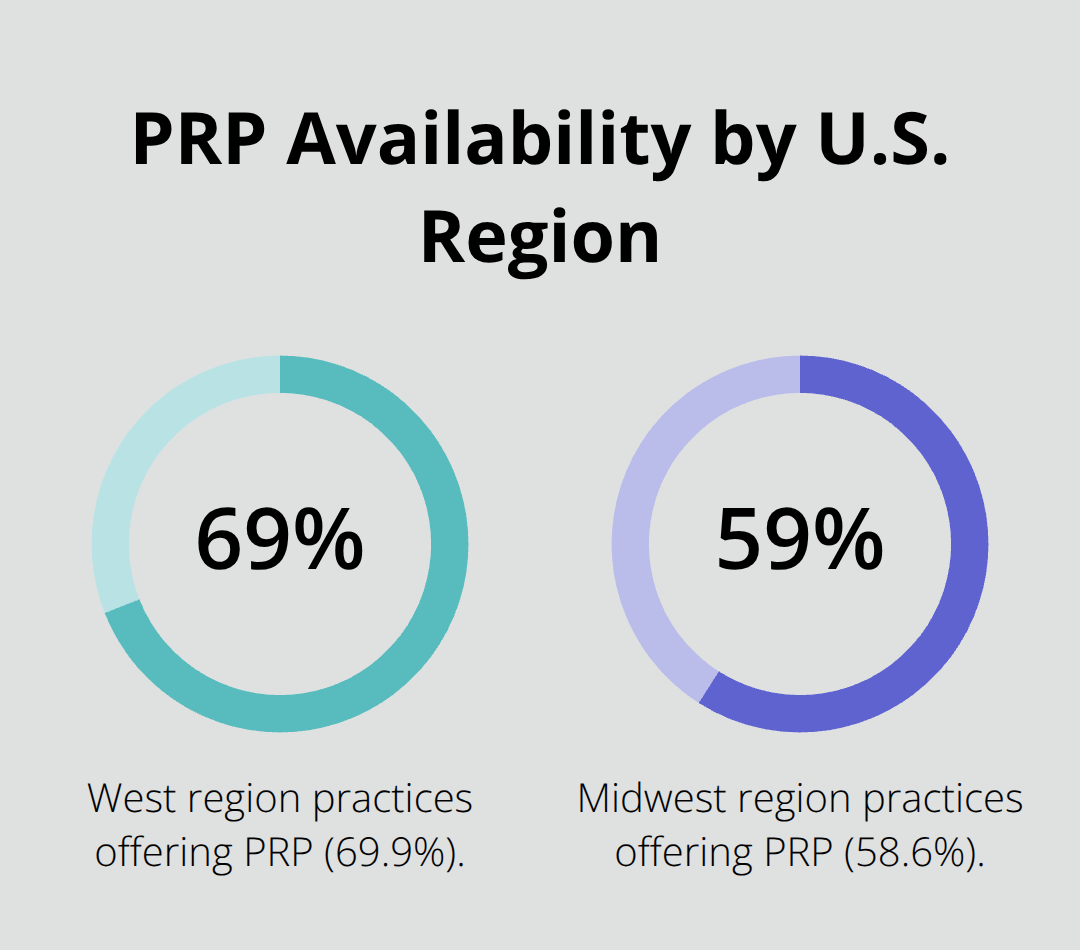
A 2019 analysis of 1,325 orthopedic sports medicine practices found that 41.5% offered only PRP injections, while 20.2% offered both PRP and stem cell treatments. Practices offering these treatments tend to be larger, with PRP-offering practices averaging 12 physicians compared to smaller practices without these services. This matters because larger practices typically have better equipment, more specialized training, and stronger track records. Price variation remains substantial-ranging from $175 to $4,973 in documented cases-signaling huge quality differences. Geographic availability clusters by income level. PRP availability was statistically higher in areas with median household incomes of $67,454 compared to $64,283 where it wasn’t offered. This access gap means you might need to travel or research further if you live in lower-income regions. Regional differences are significant and statistically proven. The West leads with 69.9% PRP availability while the Midwest trails at 58.6%.
When you evaluate providers, comparing long-term outcomes and potential surgery avoidance matters far more than chasing the cheapest upfront price. A $1,000 injection from an experienced surgeon often costs less overall than a $500 injection from someone with minimal regenerative medicine training.
How to Compare True Value Across Providers
Price alone tells you nothing about what you’ll actually achieve. Two clinics charging identical fees may produce vastly different results based on provider expertise, equipment quality, and treatment precision. Request detailed, all-inclusive quotes that itemize the consultation, procedure, imaging guidance, and any additional charges. This transparency lets you compare providers accurately. Ask about the provider’s specific experience with your condition and how many procedures they’ve performed. Board-certified specialists with regenerative medicine training typically deliver superior outcomes. Verify whether the clinic uses ultrasound guidance during injection-this single factor dramatically improves accuracy and results. Talk to past patients if possible, or read reviews that mention specific outcomes rather than just satisfaction. The cheapest option rarely represents the best value; instead, try to find providers who balance reasonable pricing with proven expertise and modern equipment. Your next step involves scheduling consultations with qualified providers to discuss your specific condition and receive personalized cost estimates.
How PRP Stacks Up Against Your Other Options
Cortisone injections cost less upfront-typically $100 to $300 per shot-but they mask pain rather than repair tissue. You’ll need repeated injections every few months, turning a seemingly cheap option into an expensive cycle that leaves the underlying damage untouched. Surgery for joint damage or tendon tears runs $10,000 to $50,000+ depending on complexity, plus weeks or months of recovery time and lost work productivity. PRP at $630 to $1,000 per injection sits between these extremes, but the comparison ends there.
A 2024 analysis of 23,716 PRP patients showed knee injections increased significantly from 2010 through 2019, with shoulder and elbow treatments rising as well-suggesting doctors and patients recognize PRP’s effectiveness for conditions where cortisone fails and surgery feels premature. The real financial advantage emerges over time. Cortisone provides temporary relief lasting weeks; PRP promotes tissue healing that can last a year or longer. One patient might spend $400 annually on cortisone shots for three years ($1,200 total) while still facing eventual surgery, while another invests $1,000 in PRP and avoids surgery entirely.
The Hidden Costs of Other Treatments
Physical therapy costs money too, but PRP often reduces how much you need. Many patients report reduced reliance on pain medications after treatment, cutting pharmacy and doctor visit expenses. Surgery carries hidden costs: anesthesia fees, facility charges, post-operative imaging, physical therapy, and time away from work. Even a straightforward arthroscopic procedure easily exceeds $15,000 when you total everything. PRP’s transparent $630-to-$1,000 pricing looks dramatically different when you calculate what you’re actually avoiding.
Why Insurance Won’t Cover PRP-And Why That Matters
Insurance companies classify PRP as investigational, meaning Medicare, Medicaid, and most commercial plans refuse coverage. This frustrates patients, but it reflects insurance company conservatism rather than medical evidence. PRP lacks a dedicated CPT code, which keeps it off insurance radar entirely. The FDA hasn’t approved PRP broadly for most orthopedic conditions, so insurers use that as their excuse to deny claims. This means you’ll pay out of pocket, but consider what you’re actually receiving: a procedure that works despite lacking insurance coverage, performed by specialists who chose to offer it because they see results.
Making PRP Affordable Through Smart Payment Strategies
Practices offering PRP tend to be larger, better-equipped facilities with multiple physicians and stronger track records. Since insurance won’t cover it anyway, clinics can focus on outcomes rather than maximizing billable procedures. Payment plans exist to make PRP more accessible. Many clinics accept HSA and FSA funds, which means you use pre-tax dollars to reduce your actual cost. Some practices offer multi-injection bundles at discounted rates, recognizing that chronic conditions often benefit from multiple treatments spaced weeks apart. External medical financing through companies like CareCredit can spread costs over months.
The absence of insurance coverage actually works in your favor-you pay a fair market price directly to providers who specialize in regenerative medicine rather than subsidizing insurance company overhead. Understanding your true financial options positions you to make the right choice about whether PRP fits your budget and health goals. The next step involves learning how to select a qualified provider who delivers results that justify your investment.
Maximizing Your PRP Therapy Investment
Selecting a qualified PRP provider determines whether you waste $630 or invest it wisely. Board-certified orthopedic surgeons with regenerative medicine training outperform general practitioners offering PRP as a side service, yet many patients choose based solely on location or cost. A 2019 survey of 1,325 orthopedic sports medicine practices revealed that 41.5% offered only PRP while 20.2% offered both PRP and stem cell treatments. These practices averaged 12 physicians compared to smaller clinics without these services. Larger practices typically maintain better equipment, stricter quality control on platelet concentration, and physicians with higher procedure volumes.
Evaluating Provider Qualifications and Experience
During your consultation, ask directly how many PRP procedures the provider performs annually and what their specific experience involves with your condition. Request documentation of their board certification status and any regenerative medicine fellowship training. Ultrasound-guided injection capability matters enormously. Ask whether they use ultrasound during your procedure to visualize tissue damage and guide needle placement. This technology transforms PRP from a blind injection into precision medicine. Many providers skip ultrasound to reduce costs, which directly compromises your results. Verify the clinic uses medical-grade centrifuges and quality PRP kits, as cheaper equipment produces lower platelet concentrations that heal more slowly. Before committing, ask how many patients with your specific condition they’ve treated and whether you can speak with past patients about outcomes. Testimonials mentioning returned function-running without pain, overhead reaching without limitation, instrument playing-signal genuine competence rather than generic satisfaction comments.
Preparing Your Body for Treatment Success
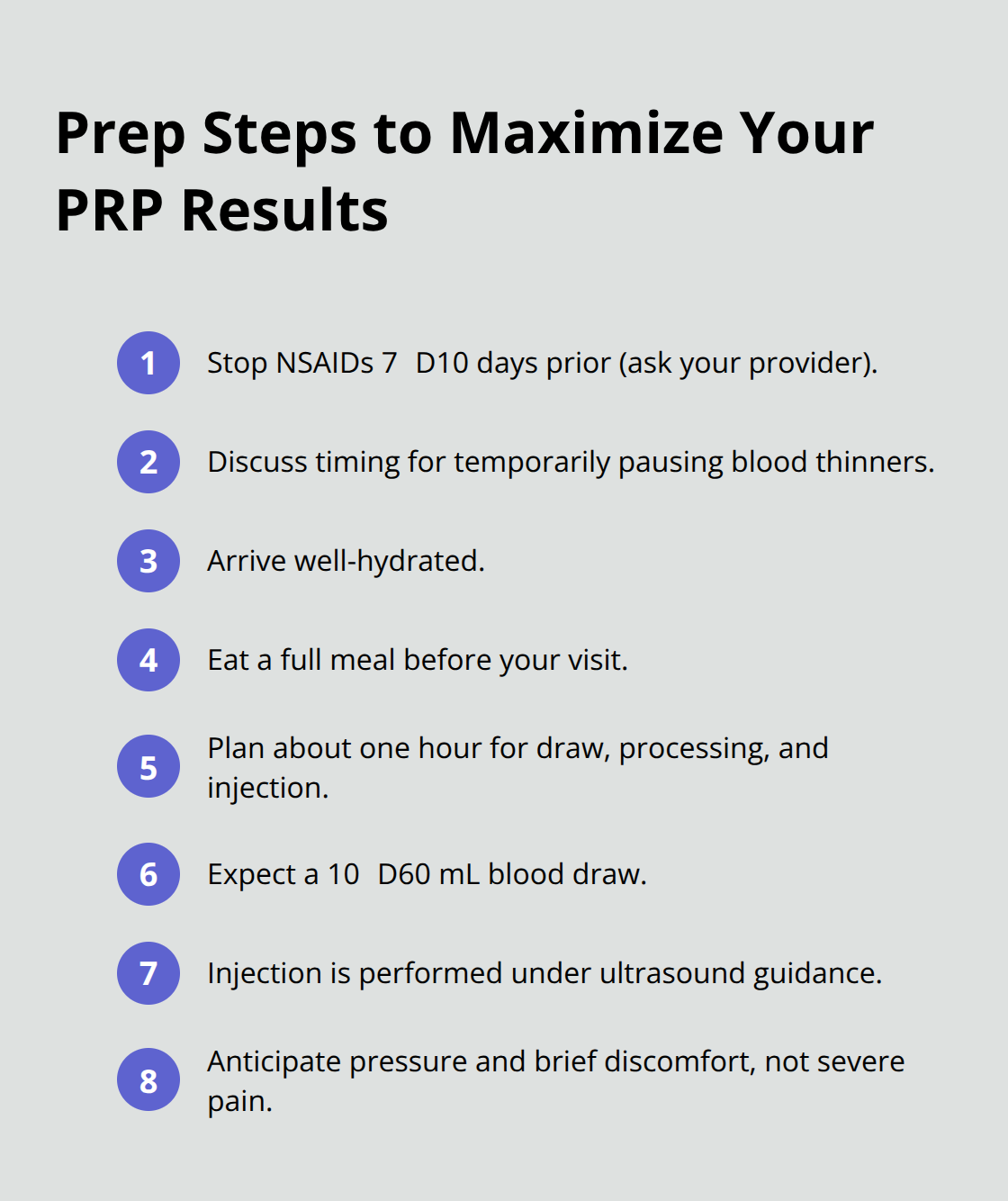
Your PRP journey begins weeks before the injection with specific preparation steps. Stop taking NSAIDs like ibuprofen seven to ten days before treatment, as NSAIDs suppress the inflammatory response PRP activates for healing. Blood thinners need temporary cessation as well, though discuss timing with your provider based on your specific medications. Arrive hydrated and eat a full meal beforehand to prevent lightheadedness during blood draw. The procedure itself takes roughly one hour from blood draw through injection. Your provider draws 10-60 milliliters of blood, spins it in a centrifuge to concentrate platelets, then injects the resulting serum directly into the damaged area under ultrasound guidance. You’ll feel pressure and brief discomfort but not severe pain.
Understanding Your Recovery Timeline
Recovery is remarkably mild compared to surgery. Most patients resume normal activities within days, though strenuous exercise should wait 48 hours. Expect gradual improvement starting around week three or four, with continued healing progressing over months. Some patients report rapid relief within days while others experience slower but steady progress. Pain reduction and functional improvement typically peak between weeks six and twelve as tissue repair accelerates. A follow-up visit around six weeks allows your provider to assess healing and determine whether a second injection helps, since chronic conditions sometimes benefit from multiple treatments spaced weeks apart.
Optimizing Healing Through Post-Treatment Care
Your post-treatment behavior directly influences whether PRP delivers year-long relief or disappoints within months. Physical therapy accelerates healing when appropriate for your condition, yet many patients skip it thinking rest alone suffices. Discuss with your provider whether targeted exercises would benefit your specific injury. Continue avoiding NSAIDs for at least two weeks post-injection, as they interfere with the inflammatory cascade that drives tissue repair. Cold therapy reduces swelling in the first 48 hours while heat after that point improves circulation. Stay well-hydrated because platelets function optimally when your body has adequate fluid. Sleep quality matters substantially for tissue healing, so prioritize seven to nine hours nightly. If a second injection becomes recommended, space treatments four to six weeks apart to allow sufficient healing between sessions while maintaining momentum. Track your progress systematically-note pain levels, what activities you can do, and functional improvements-because healing occurs gradually and easy to overlook incremental gains. Some patients experience setbacks if they resume intense activity too quickly, undoing early progress. Patience during the healing window separates successful outcomes from disappointing ones.
Final Thoughts
PRP therapy cost represents an investment in tissue repair rather than a temporary symptom mask. The $630 to $1,000 per injection you’ll spend targets the underlying damage driving your pain, positioning PRP between expensive surgery and the endless cycle of cortisone shots that never address root causes. A qualified provider using ultrasound-guided precision and medical-grade equipment justifies higher fees through superior results that last months or longer.
Your decision hinges on three critical factors: provider expertise, treatment precision, and realistic expectations about healing timelines. Board-certified specialists with regenerative medicine training consistently outperform general practitioners offering PRP as a side service, and ultrasound guidance during injection separates precision medicine from guesswork. Gradual improvement starting around week three or four, with continued gains through month three, means patience during the healing window determines success.
Schedule consultations with qualified providers who itemize costs transparently and discuss your specific condition thoroughly. Ask about their experience, equipment quality, and whether ultrasound guidance is standard practice, then request references from past patients with conditions similar to yours. Contact YouShine Med Spa today to explore whether PRP therapy cost fits your health goals and budget, and let our team help you position yourself for better outcomes and genuine relief.