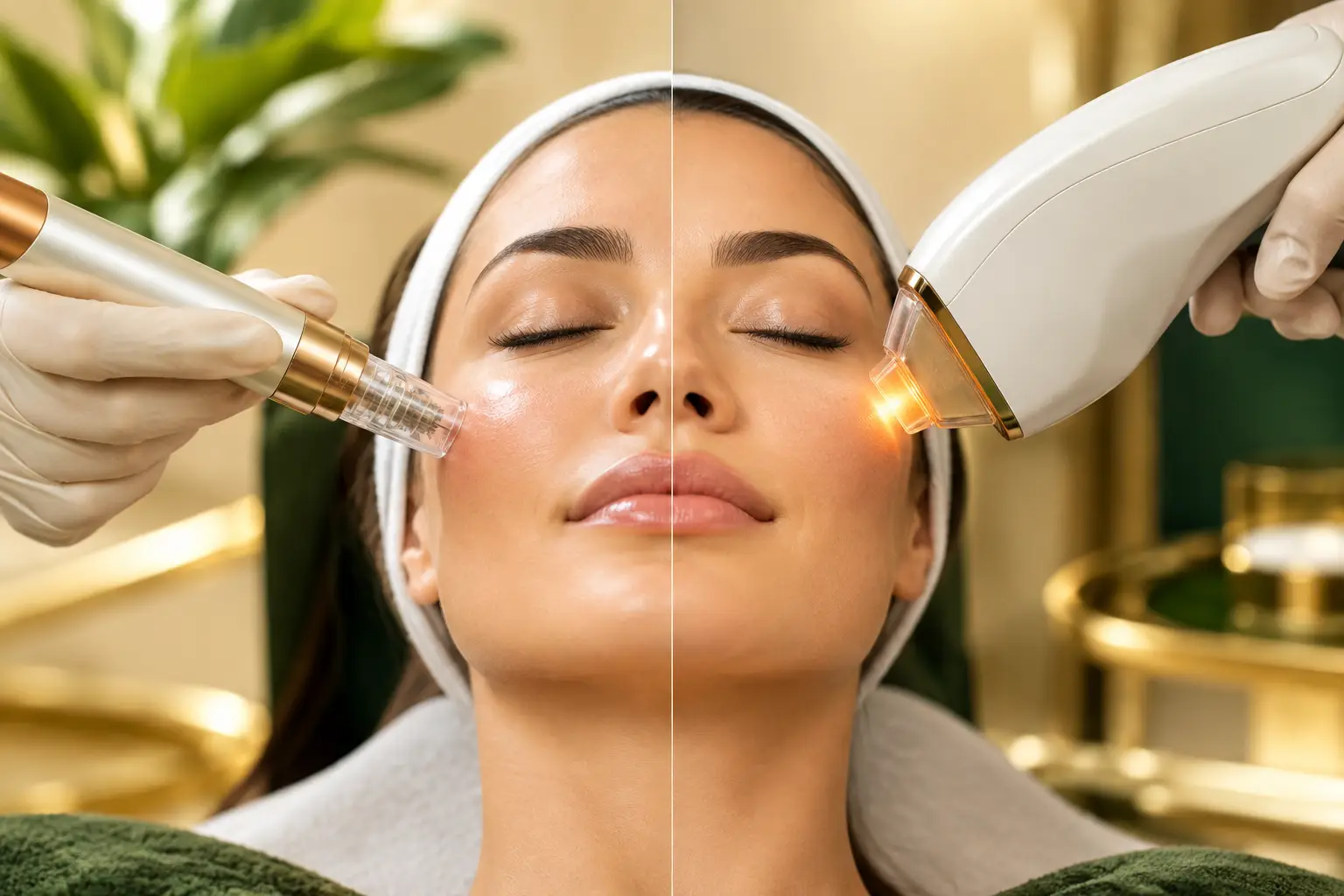
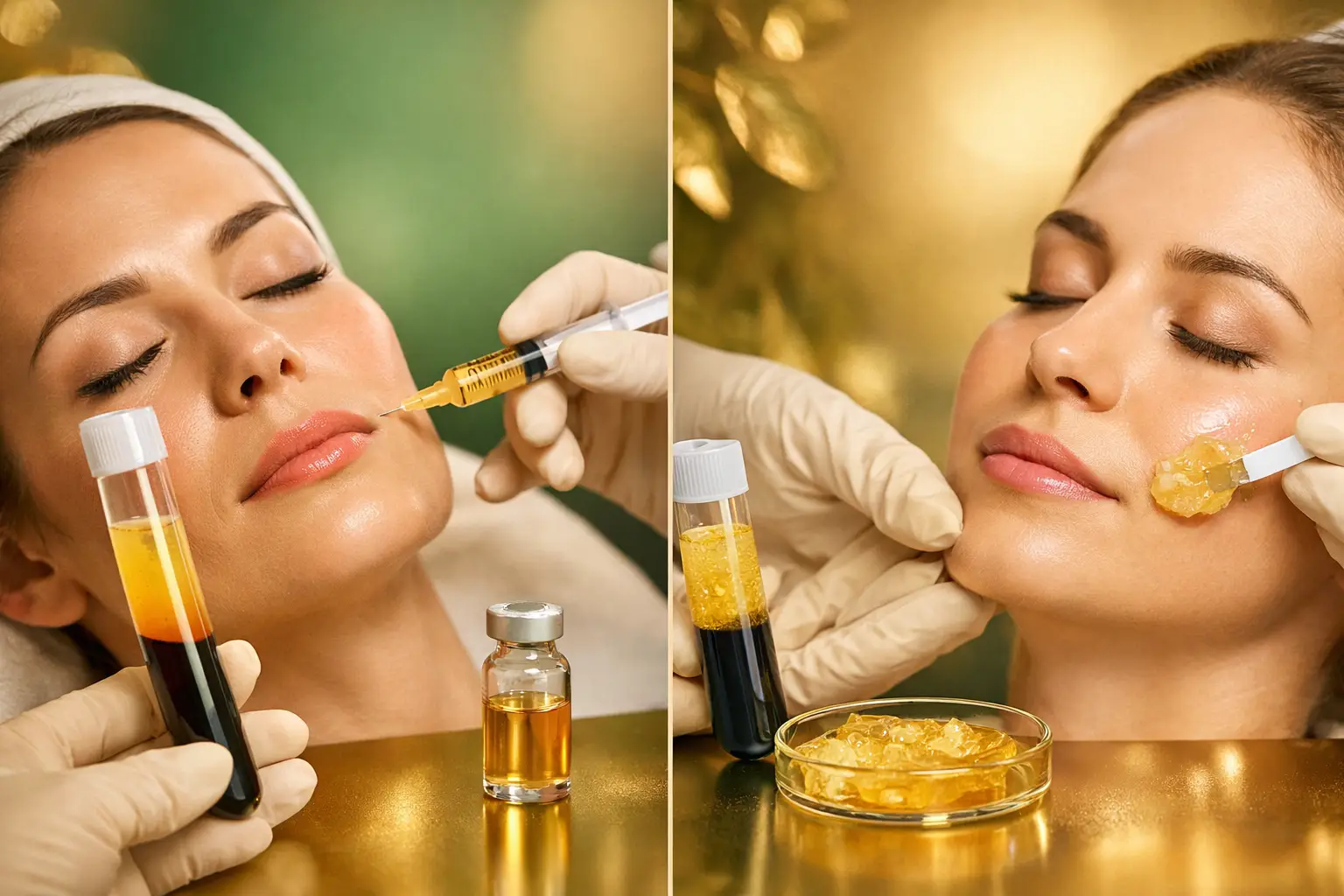
A PRP vs PRF facial is not simply a choice between two trend-driven treatments. Both use concentrated components from your own blood to support healthier-looking skin, but they differ in preparation, texture, and how they may be used in a personalized rejuvenation plan. The better option depends on your concerns, your comfort level, and whether your skin would benefit most from surface renewal, targeted volume support, or a thoughtful combination of treatments.
For clients who want a fresher, more rested appearance without changing the character of their face, regenerative treatments can be especially appealing. They are designed to work with your skin’s natural processes, making them a beautiful fit for refined, natural-looking results.
What Is a PRP Facial?
PRP stands for platelet-rich plasma. During treatment, a small amount of blood is drawn and placed in a centrifuge to separate the platelet-rich portion from other blood components. Platelets contain growth factors that play a role in the body’s healing response.
In a PRP facial, the platelet-rich plasma is most often applied to the skin during or immediately after microneedling. Microneedling creates controlled microchannels in the skin, allowing the PRP to be used alongside a treatment that already encourages collagen production and skin renewal. Depending on the treatment plan and provider recommendation, PRP may also be used in other ways.
The experience is often chosen for concerns such as dullness, early fine lines, uneven texture, enlarged-looking pores, and the lingering appearance of acne scars. Think of it less as a one-time glow treatment and more as an investment in gradual skin quality. As collagen remodeling takes place, skin may look smoother, brighter, and more refined over the following weeks.
What Is PRF and How Is It Different?
PRF means platelet-rich fibrin. Like PRP, it begins with a small blood draw and uses your own concentrated blood components. The key distinction is the way it is processed. PRF is typically prepared without an anticoagulant, which allows it to form a fibrin matrix – a soft, gel-like network that can hold platelets, white blood cells, and other regenerative components.
That fibrin structure is why PRF tends to have a thicker consistency than PRP. It may release growth factors more gradually and can be especially useful when a provider wants a more substantial regenerative material for carefully selected areas. PRF is frequently discussed for delicate concerns such as crepey under-eye skin, fine lines around the mouth, or areas that look tired but do not necessarily need traditional filler.
The term “PRF facial” can describe different services from one practice to another. Sometimes it refers to PRF paired with microneedling for overall complexion renewal. In other cases, it may refer to PRF injections placed strategically to improve the look of hollowness, fine lines, or skin quality. A consultation matters because the technique shapes the treatment experience and expected outcome.
PRP vs PRF Facial: The Differences That Matter
PRP and PRF share the same central appeal: they use your body’s own regenerative resources. Still, their processing and behavior in the skin are not identical.
PRP is generally more liquid, making it a natural pairing for microneedling and topical application. It is a popular option for clients focused on overall tone, texture, and glow. PRF is thicker because of its fibrin matrix. This makes it particularly versatile for providers who are considering targeted treatment in areas where skin quality and subtle support are both priorities.
Processing also differs. PRP usually involves an anticoagulant to keep the material in liquid form, while PRF is prepared without one. Neither distinction automatically makes one treatment superior. Instead, it gives your provider different tools to match your goals.
Another difference is timing. With either option, results are gradual. You may notice a healthy post-treatment radiance once early redness settles, but deeper improvements in texture and firmness develop over several weeks as the skin responds. PRF may be selected when a slower-release regenerative effect is desirable, while PRP may be ideal in a series of microneedling sessions designed around full-face rejuvenation.
Which Treatment Is Best for Your Skin Goals?
If your primary concern is a lack of radiance, uneven texture, mild acne scarring, or early signs of aging across the face, PRP with microneedling may be an excellent starting point. It supports a polished, luminous complexion without adding volume or creating a dramatically different look.
If your concern is concentrated in a delicate area, such as under the eyes or around the mouth, PRF may deserve a closer look. It can be a thoughtful alternative for clients who want to improve the appearance of tired-looking skin with a regenerative approach. It is not a replacement for filler in every situation, however. Significant volume loss, deep folds, and more established facial changes may respond better to a plan that combines regenerative care with dermal filler, neuromodulators, or other aesthetic treatments.
For many people, the best answer is not strictly PRP or PRF. A customized plan may use microneedling and PRP to improve overall skin texture while reserving PRF for a specific area that needs more focused attention. This is where expert assessment makes the difference between a treatment that sounds appealing and one that truly aligns with your face, skin, and lifestyle.
Downtime, Comfort, and Treatment Timing
Both PRP and PRF treatments are generally well suited to clients seeking visible refinement without surgical downtime. When microneedling is involved, expect temporary redness, warmth, and mild swelling similar to a sunburn. These effects often improve within a day or two, though some clients experience lingering pinkness or dryness for several days.
With PRF injections, mild swelling, tenderness, redness, or bruising can occur at the treatment sites. The under-eye area is particularly prone to temporary swelling or bruising because the skin is thin and delicate. Planning treatment at least one to two weeks before an important event is a sensible choice, especially if you tend to bruise easily.
Your provider will give you specific aftercare instructions. In general, skin should be treated gently after a regenerative facial. Avoid heat, strenuous exercise, active skincare ingredients, and makeup for the period your provider recommends. Sun protection is essential as the skin recovers.
How Many Sessions Will You Need?
A single session can offer a lovely refreshed look, but collagen-focused treatments usually deliver their best results as a series. Many clients begin with three sessions spaced several weeks apart, then move to maintenance based on their skin goals and response. The right schedule depends on whether you are addressing texture, acne scarring, early laxity, or a specific concern such as under-eye crepiness.
Results are personal. Age, skin condition, sun exposure, smoking, nutrition, sleep, and skincare habits can all influence how your skin responds. A regenerative treatment is most rewarding when it is part of consistent, well-rounded aesthetic care rather than treated as a shortcut.
Who Should Pause or Choose Another Option?
PRP and PRF are not right for everyone at every moment. Your provider should review your medical history, medications, active skincare concerns, and treatment expectations before proceeding. Active acne infections, skin infections, certain blood or bleeding disorders, low platelet counts, pregnancy-related considerations, and some medications may require postponement or a different approach.
Honest communication is part of safe, beautiful treatment. Tell your provider about supplements, blood-thinning medications, recent procedures, history of cold sores, and any prior reactions to cosmetic treatments. The goal is always to protect your comfort while creating results that look naturally at home on your face.
At YouShine Med Spa, a consultation can help clarify whether PRP, PRF, microneedling, or a tailored combination is the right next step for your skin. The most beautiful choice is the one that supports your confidence gradually, thoughtfully, and in a way that still looks unmistakably like you.