Regenerative medicine offers two powerful treatment options that are transforming how we approach healing and recovery. Both PRP and stem cell therapy show remarkable results for various conditions.
At YouShine Med Spa, we frequently get asked which is better PRP or stem cell therapy. The answer depends on your specific needs, condition severity, and treatment goals.
How Do These Treatments Actually Work
The PRP Process Explained
PRP therapy extracts blood from your arm and spins it in a centrifuge to concentrate platelets 3-5 times above normal levels. Medical professionals then inject this concentrated solution directly into damaged areas. The concentrated platelets release growth factors that accelerate your body’s natural response to injury. This entire process takes about 30 minutes from blood draw to injection. Research from the American Journal of Sports Medicine shows PRP speeds recovery for musculoskeletal injuries significantly compared to traditional methods.
The Science Behind Stem Cell Therapy
Stem cell therapy harvests undifferentiated cells from your bone marrow or fat tissue through a quick procedure under anesthesia. These cells can transform into 200 different cell types and directly replace damaged tissue rather than just stimulate repair. The harvested material gets processed in a lab to concentrate and purify the stem cells before injection. Studies indicate patients see tissue restoration within one month, with stem cell therapies becoming a promising treatment option for musculoskeletal disorders.
Treatment Selection Based on Condition Severity
PRP works best for mild to moderate injuries where your body can heal naturally but needs stimulation. Stem cell therapy targets severe damage and degenerative diseases where tissue replacement becomes necessary. PRP benefits last 6-12 months and costs around $707 per treatment (with geographic variations affecting price), while stem cell injections average $2,728 but provide longer-lasting results. Mayo Clinic research suggests stem cells offer superior outcomes for chronic pain conditions.
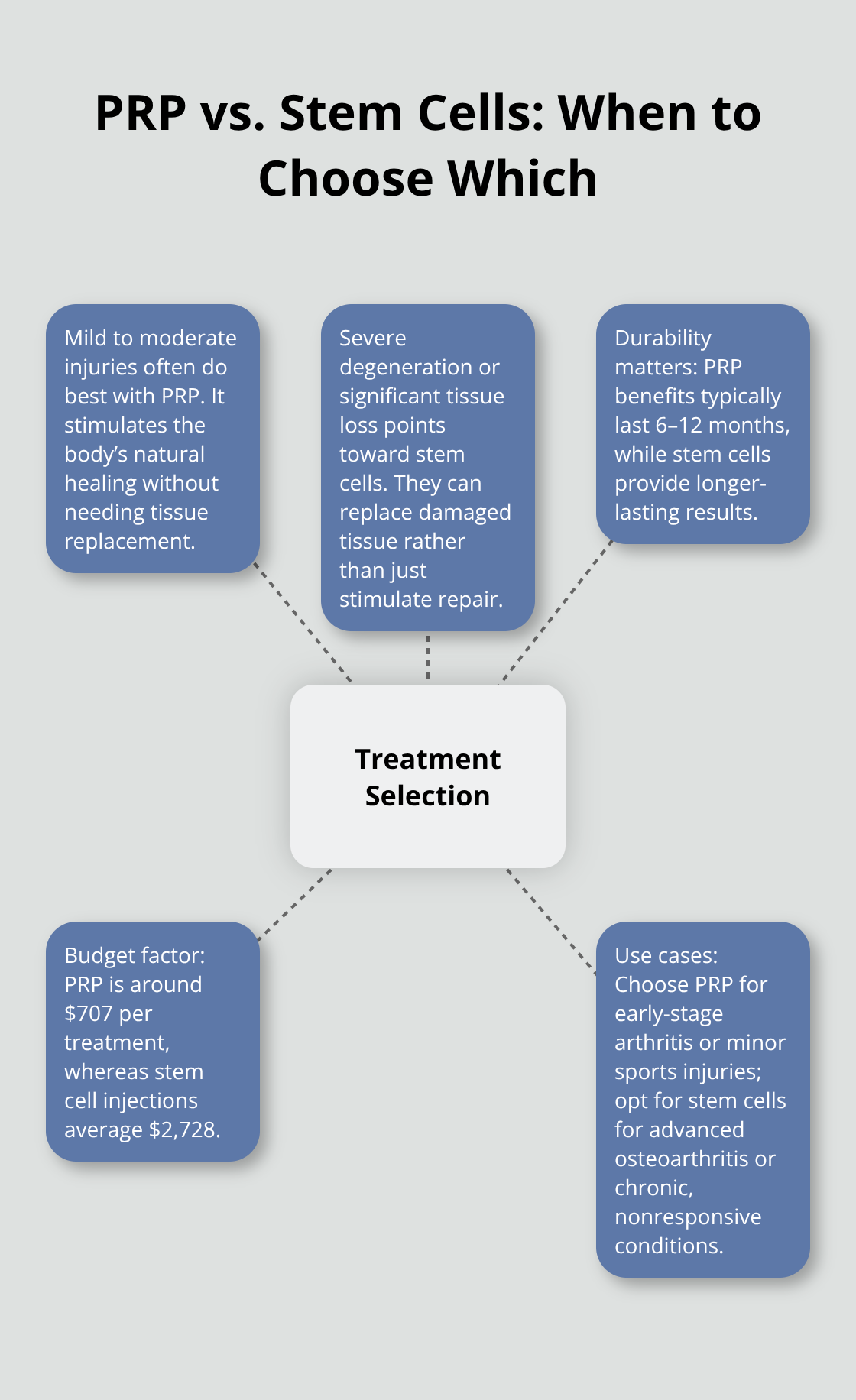
Choose PRP for early-stage arthritis or minor sports injuries. Opt for stem cells when you face advanced osteoarthritis, significant tissue damage, or chronic conditions that haven’t responded to other treatments.
The effectiveness of each treatment varies significantly based on several factors that determine your success rate and overall satisfaction with results.
Which Treatment Shows Better Results
Success Rates Tell the Real Story
PRP therapy demonstrates success rates between 60-80% for knee osteoarthritis according to multiple clinical studies, with particularly strong outcomes for mild to moderate cases. Stem cell therapy shows higher success rates of 75-90% for severe degenerative conditions, but these numbers drop significantly when inexperienced providers perform the procedures. The key factor that determines success isn’t just the treatment type but provider expertise and injection technique. Ultrasound-guided injections achieve greater rates of success compared to landmark-based injections. Academic institutions report better outcomes than many private clinics, which highlights the importance of choosing qualified physicians over non-physician providers who run inferior stem cell clinics.
Recovery Patterns and Treatment Duration
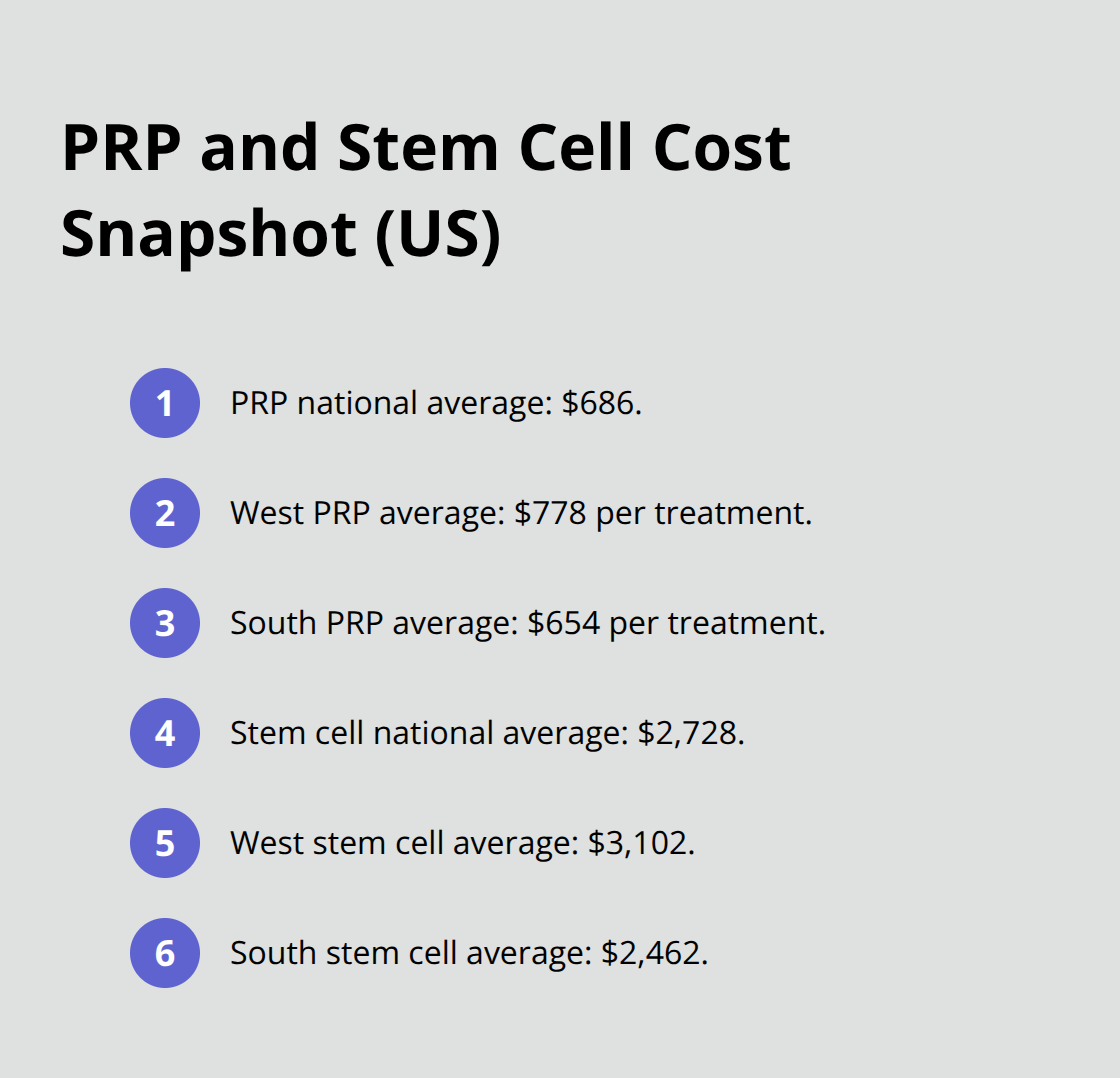
PRP patients typically return to normal activities within days and experience initial improvements in 2-4 weeks with peak benefits at 6-12 weeks. Stem cell therapy requires longer recovery periods with tissue regeneration that occurs over 1-3 months, but results last significantly longer. Most PRP patients need repeat treatments every 6-12 months to maintain benefits, while stem cell therapy often provides relief for 2-3 years or more. Geographic location affects treatment frequency too – western US providers charge $778 for PRP and $3,102 for stem cells compared to southern providers at $654 and $2,462 respectively. Patients with higher household incomes in expensive areas often receive better quality treatments with superior kits that process 50-60cc of blood instead of inferior 10cc kits that many providers still use.
Treatment Effectiveness Factors
Provider qualifications significantly impact your treatment outcomes more than the therapy type itself. Many providers still utilize inferior kits and lack proper training in advanced injection techniques.
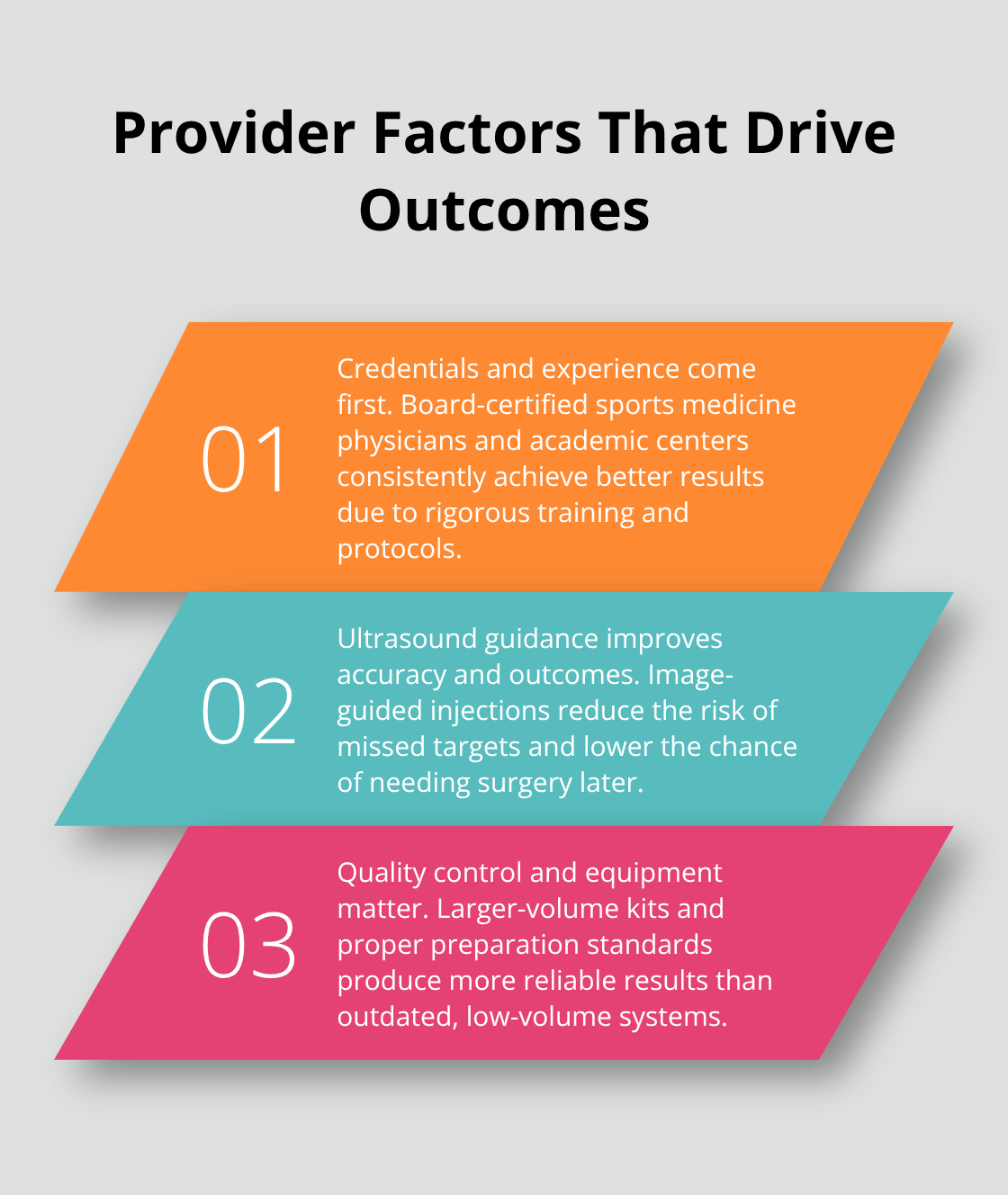
The field of orthobiologics evolves rapidly, which necessitates providers to stay updated on the latest clinical trials and protocols. Patients who receive ultrasound-guided injections have substantially better outcomes and face lower chances of subsequent knee replacement surgery compared to those who receive landmark-based injections. Quality control varies dramatically across different clinics, with some facilities lacking proper standards for stem cell preparation and administration. PRP with microneedling shows 10-20% improvement in hair density when combined with complementary treatments.
Understanding these effectiveness patterns helps you make informed decisions, but cost considerations play an equally important role in treatment selection.
What Will These Treatments Cost You
The Real Price Breakdown
PRP injections average $686 nationally with significant geographic variations that directly impact your budget. Western states charge the highest prices at $778 per treatment, while southern providers offer the most affordable rates at $654. Stem cell therapy costs substantially more at an average of $2,728 nationally, with western providers charging $3,102 compared to $2,462 in the south.
Academic institutions consistently charge higher fees than private practices for both treatments, but they often provide superior outcomes that justify the premium. Areas with higher median household incomes correlate with more expensive treatments, but these locations typically offer better quality care with advanced equipment and experienced providers.
Insurance and Payment Options
Most treatments receive limited insurance coverage, which makes out-of-pocket payment your primary option. Most providers require full payment upfront, though some offer finance plans through third-party companies. The total cost includes consultation fees, image guidance, and follow-up visits that can add $200-500 to your treatment expense. PRP patients need repeat treatments every 6-12 months, which creates costs of $1,400-1,800 annually. Stem cell therapy requires fewer repeat treatments but involves higher upfront investment with potential touch-ups every 2-3 years.
Provider Quality Standards
Provider qualifications matter more than treatment type for successful outcomes. Many stem cell clinics operate with non-physician healthcare providers who lack proper training and use inferior methods. Sports medicine physicians with board certification provide the best results for both treatments, but they charge premium rates for their expertise. Academic medical centers offer the highest quality standards but have longer wait times and higher costs. Private practices vary dramatically in quality, with some that use outdated 10cc blood kits instead of superior 50-60cc systems that produce better results. Ultrasound guidance capability separates excellent providers from mediocre ones (with guided injections that show 63-100% accuracy compared to landmark-based methods that achieve only 39-100% success rates). For PRP treatments, choosing an experienced provider ensures optimal results and value for your investment.
Final Thoughts
The question of which is better PRP or stem cell therapy depends entirely on your specific condition and treatment goals. PRP offers an affordable solution at $686 nationally for mild to moderate injuries with 60-80% success rates and quick recovery times. Stem cell therapy costs $2,728 but delivers superior 75-90% success rates for severe degenerative conditions with longer-lasting results that span 2-3 years.
Provider expertise matters more than treatment type when you evaluate outcomes. Academic institutions and board-certified sports medicine physicians achieve better results than non-physician clinics that use inferior equipment. Geographic location significantly affects costs, with western providers who charge 20% more than southern alternatives (making location a key factor in your treatment budget).
The future looks promising for both treatments as research continues to advance injection techniques and processing methods. New protocols improve effectiveness while they reduce costs for patients nationwide. We at YouShine Med Spa specialize in advanced PRP treatments that include facial rejuvenation and hair restoration with expert techniques.