Hair loss affects millions of people, and many are turning to PRP therapy as a solution. At YouShine Med Spa, we understand that cost is often the first question patients ask when considering this treatment.
This guide breaks down PRP therapy for hair cost so you can make an informed decision about whether it’s right for you. We’ll cover what influences pricing, how it compares to other options, and what you can realistically expect to invest.
How PRP Actually Works for Hair Loss
The PRP Treatment Process
A technician draws blood from your arm and places it into a centrifuge machine that spins at high speed to separate platelets from other blood components. This creates platelet-rich plasma, which contains growth factors that stimulate hair follicles. The technician then injects this plasma directly into your scalp at the level of hair follicles, typically targeting areas where thinning is most noticeable. The entire process from blood draw to injection takes about 30 to 45 minutes. What makes PRP different from topical treatments is that it works from inside the scalp, activating dormant follicles and increasing blood flow to nourish hair roots.
Results You Can Expect
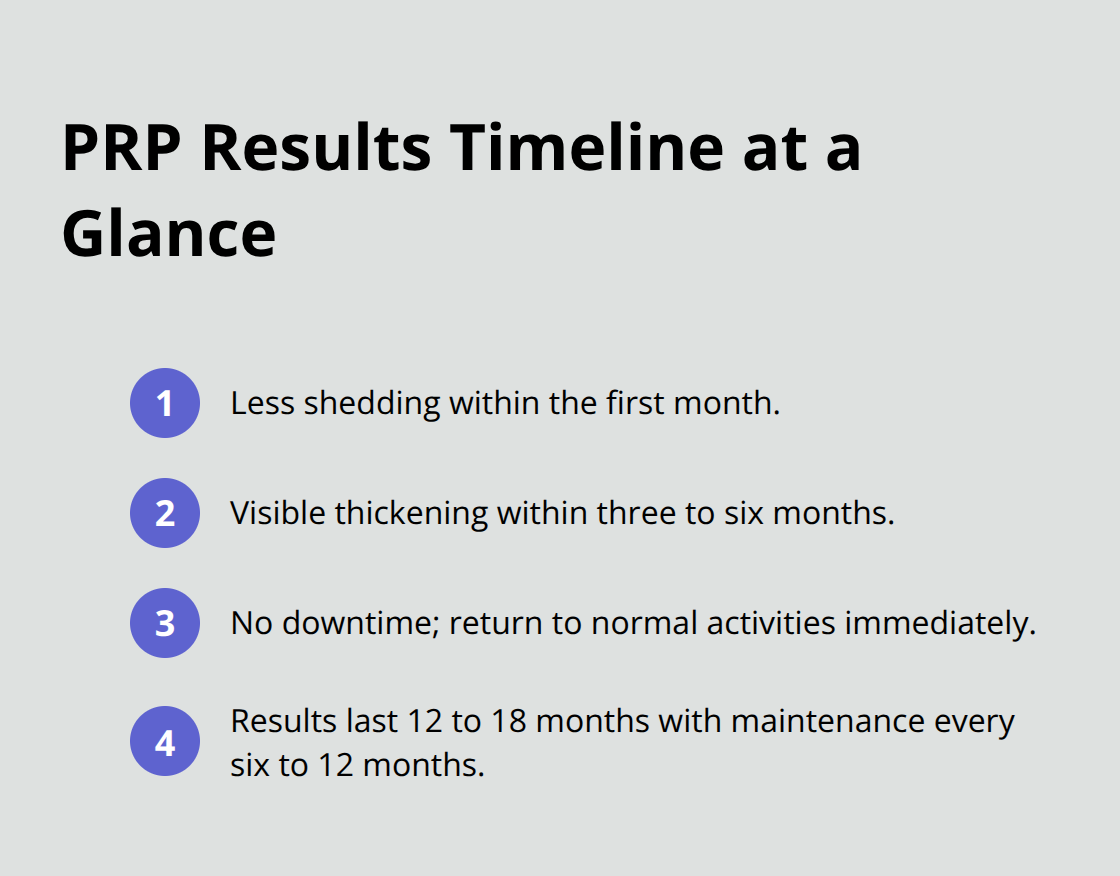
Studies show that roughly 70 to 90 percent of patients experience improved hair density after completing a treatment course, though individual results vary based on genetics, age, and overall health. Most people notice less shedding within the first month and visible thickening within three to six months. The treatment requires no downtime, so you can return to normal activities immediately after your appointment. Results typically last 12 to 18 months, which is why maintenance injections every six to 12 months sustain improvements.
Why PRP Works on Hair Loss
Hair loss happens when follicles shrink due to genetics and hormonal sensitivity, a condition called androgenetic alopecia. PRP addresses this by releasing growth factors that communicate with dermal papilla cells at the base of follicles, essentially telling them to produce thicker hair again. This is why PRP works best on early-stage hair loss rather than complete baldness. You’ll need three to six sessions spaced four to six weeks apart to see meaningful results, making this a commitment that requires patience and consistency.
Safety and Side Effects
The treatment is non-invasive with minimal side effects beyond mild redness or swelling that disappears within hours, making it far safer than surgical alternatives while delivering real, measurable improvements in hair thickness and density. Since PRP uses your own blood, the risk of adverse reactions remains low. This safety profile makes PRP an attractive option for people who want to avoid surgery but need stronger results than topical solutions alone.
Understanding how PRP works sets the stage for examining what actually drives the cost of these treatments-and why prices vary so dramatically from clinic to clinic.
What Actually Drives PRP Hair Treatment Costs
Session Count and Initial Investment
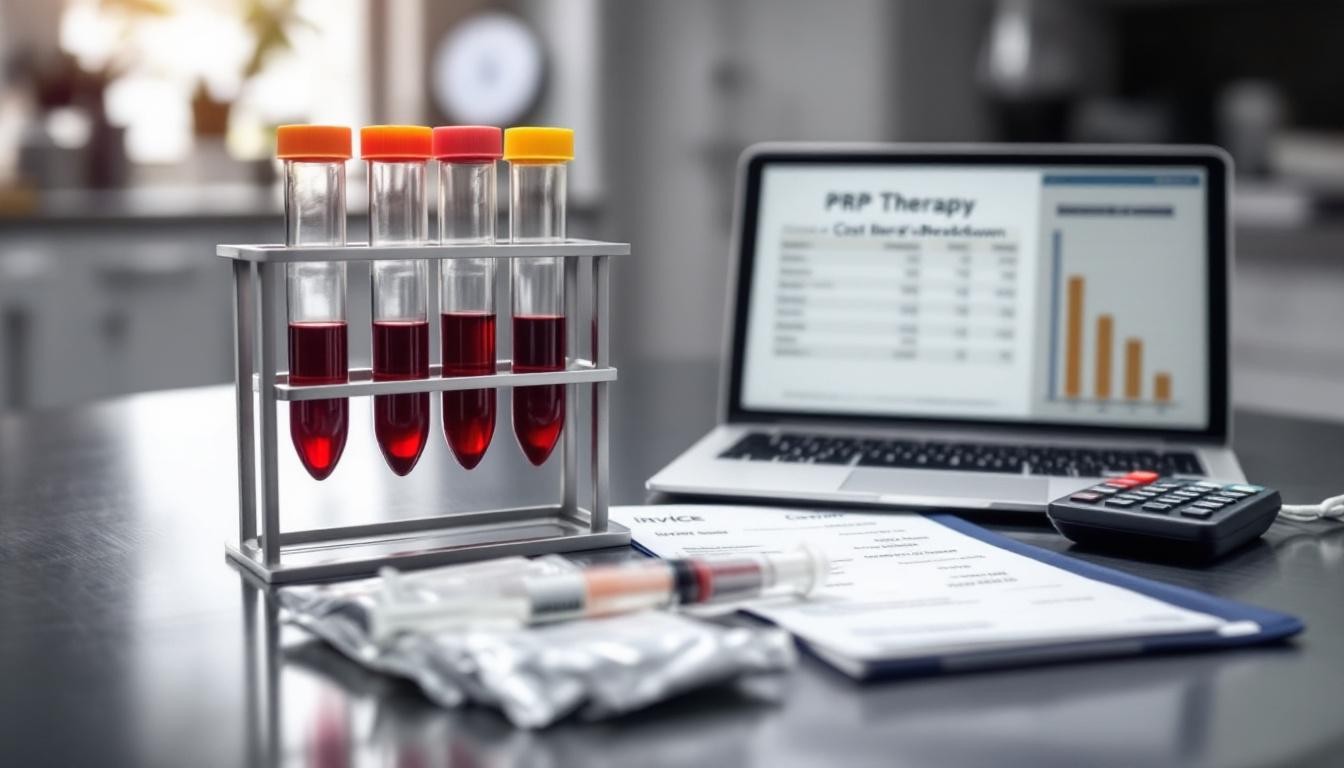
The price you pay for PRP hair treatment isn’t random, and understanding what moves the needle on pricing helps you spot real value from inflated quotes. The most obvious cost driver is the number of sessions required, which typically ranges from three to six treatments spaced four to six weeks apart. A single PRP session runs between $400 and $1,500 depending on where you live and who performs the treatment, meaning your initial course could cost anywhere from $1,200 to $9,000. This wide range exists because clinics in major metropolitan areas charge substantially more than smaller cities. New York clinics commonly charge $1,200 to $1,500 per session, while the same treatment in less competitive markets might cost $500 to $800 per session.
Geographic Location and Overhead Costs
Geographic location matters because overhead costs differ dramatically-rent, staff salaries, and equipment maintenance in Manhattan aren’t comparable to costs in suburban areas. A clinic operating in a high-rent district must charge more to cover those expenses, and that cost gets passed directly to you. Smaller cities and rural areas typically offer lower per-session rates because the clinic’s operational expenses are substantially lower. When you compare quotes across different regions, factor in these location-based differences rather than assuming a cheaper clinic delivers inferior care.
Provider Expertise and Equipment Quality
Provider expertise significantly impacts pricing. Board-certified dermatologists and experienced hair restoration specialists charge more than technicians with basic training, and frankly, you should expect to pay more for proven results. A clinic with documented patient outcomes and years of PRP experience deserves higher fees than one relying on marketing claims alone. The equipment used also influences cost.
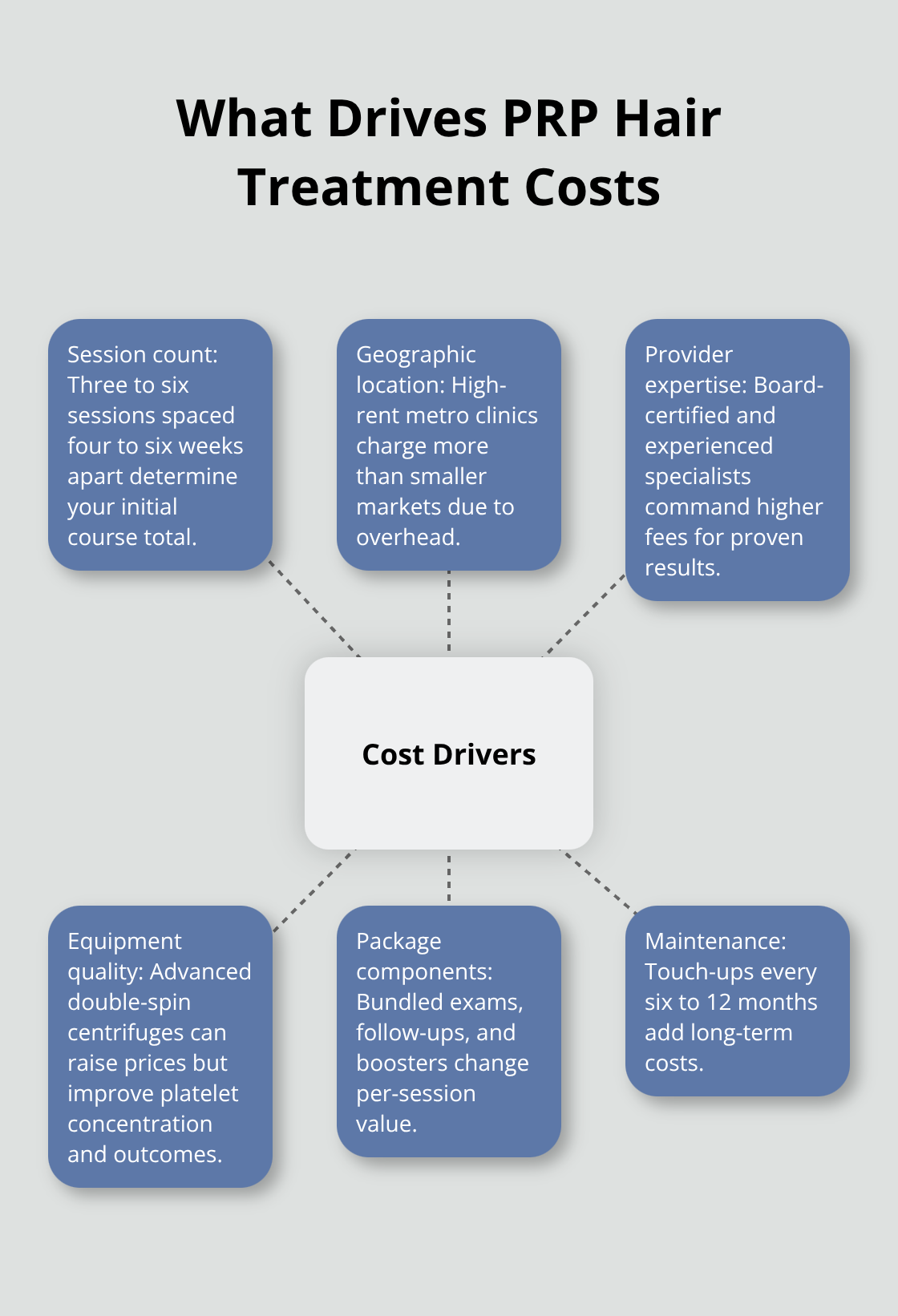
Clinics using high-quality double-spin centrifuges that concentrate platelets more effectively may charge premium prices, but this investment in better equipment often translates to superior plasma concentration and hair density improvement.
Package Components and Hidden Costs
When comparing quotes, ask specifically what’s included in the stated price-some clinics bundle scalp exams, follow-up visits, and booster injections into their packages, effectively lowering your per-session cost, while others charge separately for each component. A thorough consultation should include a scalp examination and honest assessment of how many sessions you’ll realistically need based on your hair loss severity and health profile. Some clinics are upfront about realistic timelines and expected outcomes, while others oversell results to justify higher prices. Ask whether the initial consultation is complimentary and what exactly happens during that appointment.
Maintenance and Long-Term Investment
Maintenance represents an ongoing cost most patients underestimate. After your initial series concludes, you’ll need touch-up sessions every six to 12 months at $500 to $1,000 each to sustain results, and this commitment spans years, not months. Many clinics offer payment plans or financing options to spread costs, which makes sense given that a complete treatment course with maintenance over two years could exceed $5,000 or more. When evaluating a clinic’s pricing, look for transparency around the total investment required for meaningful results rather than focusing solely on per-session rates.
Understanding these cost drivers positions you to evaluate clinics fairly and identify which options deliver genuine value. The next section compares PRP therapy directly to other hair restoration methods so you can weigh whether this investment makes sense for your specific situation.
PRP vs Hair Transplants and Topical Solutions
Understanding Your Hair Loss Stage
Hair transplants cost between $6,000 and $12,000 upfront with surgical risks including infection, scarring, and extended recovery time, making them a permanent but invasive option best suited for advanced hair loss where follicles are already dead. PRP therapy costs between $500 and $1,500 per session and requires ongoing maintenance, but it remains non-surgical with zero downtime and works on early-to-mid stage hair loss by reactivating dormant follicles rather than moving existing ones. Topical treatments like minoxidil cost $20 to $60 monthly and take months to show results, often producing modest improvements that disappear once you stop application. The real distinction isn’t just price-it’s what stage of hair loss you’re actually treating. If you’ve got significant baldness with no hair in affected areas, a transplant is your only realistic option because no follicles remain to stimulate.
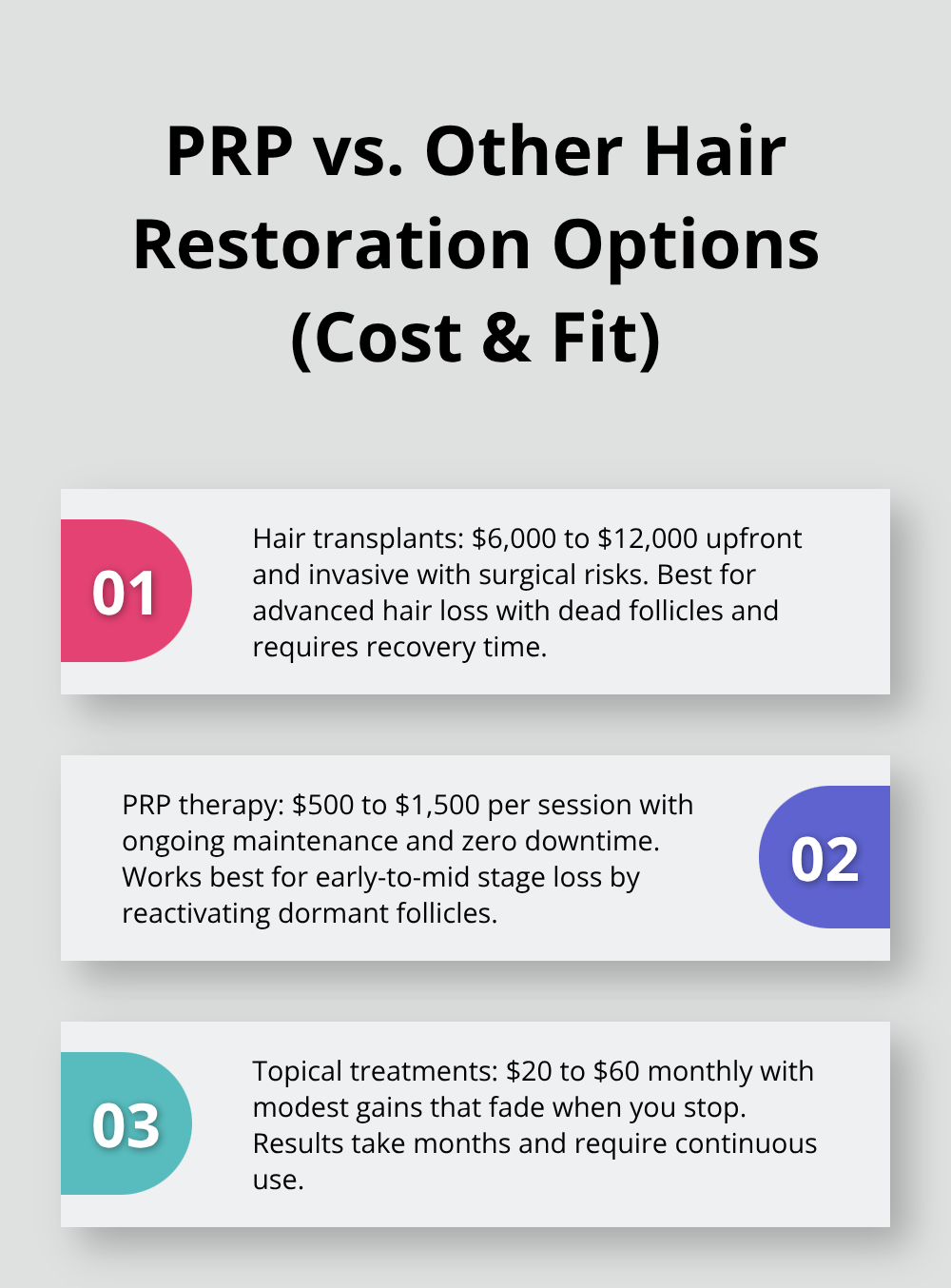
If you’re in early-to-moderate thinning, PRP delivers faster and more dramatic results than topicals alone, typically showing visible improvements within three to six months compared to topicals which require six to twelve months of consistent use.
Why Combination Therapy Outperforms Single Treatments
Combining treatments produces superior outcomes compared to any single approach. Many clinics now recommend starting PRP therapy while simultaneously using prescription medications like finasteride or topical minoxidil, which work synergistically-PRP stimulates growth while medications prevent further loss. Patients combining PRP with medications experience 20 to 30 percent better density improvements than those using either treatment alone. Some practices even combine PRP with hair transplants, injecting PRP around transplanted grafts to accelerate healing and improve graft survival rates. The cost of combination therapy is higher upfront, but the results justify the investment if you’re serious about reversing hair loss rather than simply slowing it.
Making the Right Treatment Choice
The worst financial decision is choosing the cheapest single treatment and discovering six months later it wasn’t aggressive enough for your needs, forcing you to restart with a different strategy and doubling your total spending. Your specific hair loss pattern and severity determine whether PRP alone, PRP with medications, or a combination approach makes sense for your situation. A qualified provider evaluates your scalp condition, medical history, and realistic expectations during consultation to recommend the most effective path forward. This personalized assessment prevents costly mistakes and positions you for actual results rather than false economy.
Final Thoughts
PRP therapy for hair cost breaks down into several components, but the real value emerges when you compare results against alternatives. A complete treatment course with maintenance over two years typically costs between $3,000 and $6,000, positioning PRP as significantly cheaper than surgical hair transplants while delivering faster, more dramatic results than topical treatments alone. The investment makes sense because you pay for a non-invasive procedure that reactivates your own hair follicles without downtime or surgical risks.
What separates smart spending from wasted money is selecting a provider who delivers documented results rather than marketing promises. Board-certified professionals using high-quality equipment charge more upfront, but their expertise prevents costly mistakes and guarantees you actually see the hair density improvements you’re paying for. A thorough consultation that honestly assesses your hair loss stage and realistic expectations matters far more than a discount from a clinic cutting corners on equipment or provider training.
Hair loss won’t reverse itself, and delaying treatment only makes the problem worse. If you’re experiencing early-to-moderate thinning and want faster results than topicals provide without surgical intervention, PRP therapy represents a legitimate investment in your appearance and confidence. Contact YouShine Med Spa today to schedule your consultation and receive a transparent cost breakdown tailored to your needs.