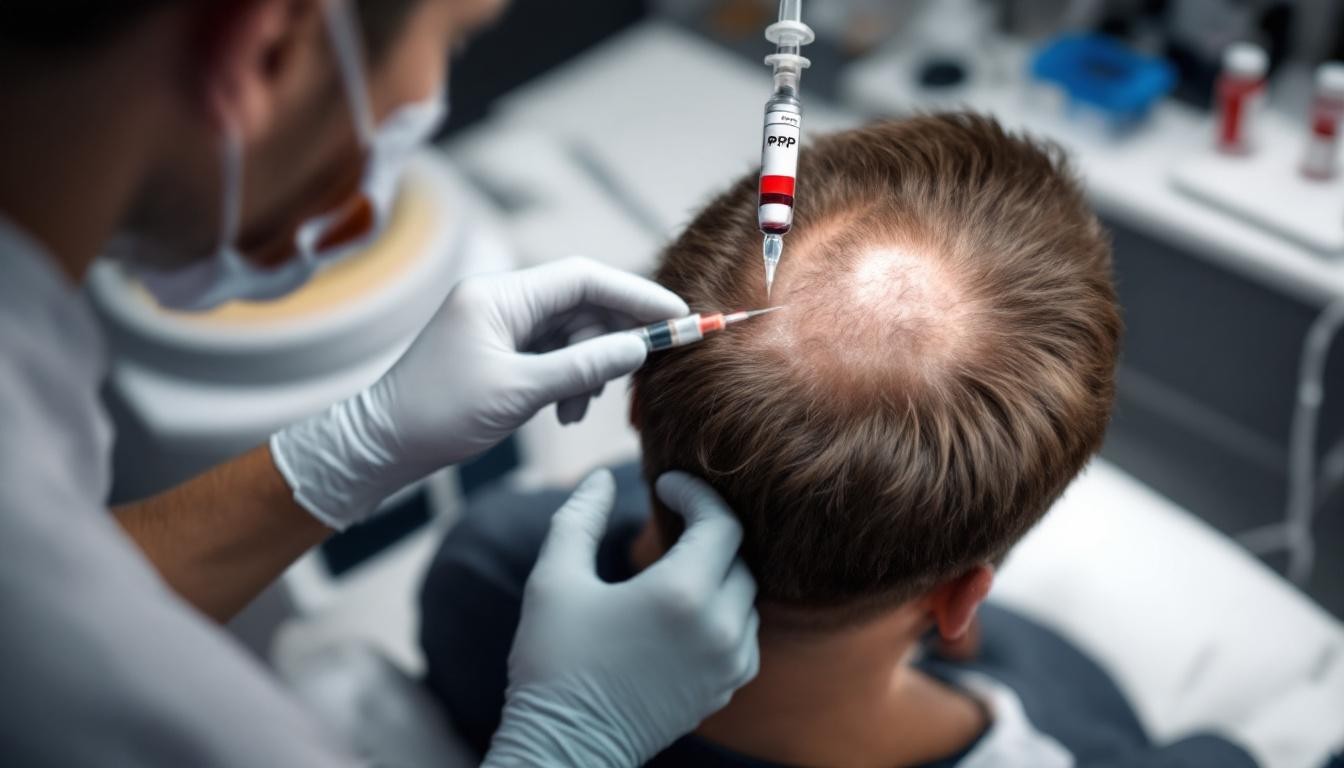
Hair loss affects roughly 50 million men and 30 million women in the United States. At YouShine Med Spa, we’ve seen firsthand how PRP hair restoration therapy offers real results for people frustrated with traditional treatments.
This guide walks you through how PRP works, what the science shows, and whether it’s right for your hair loss.
How PRP Actually Works
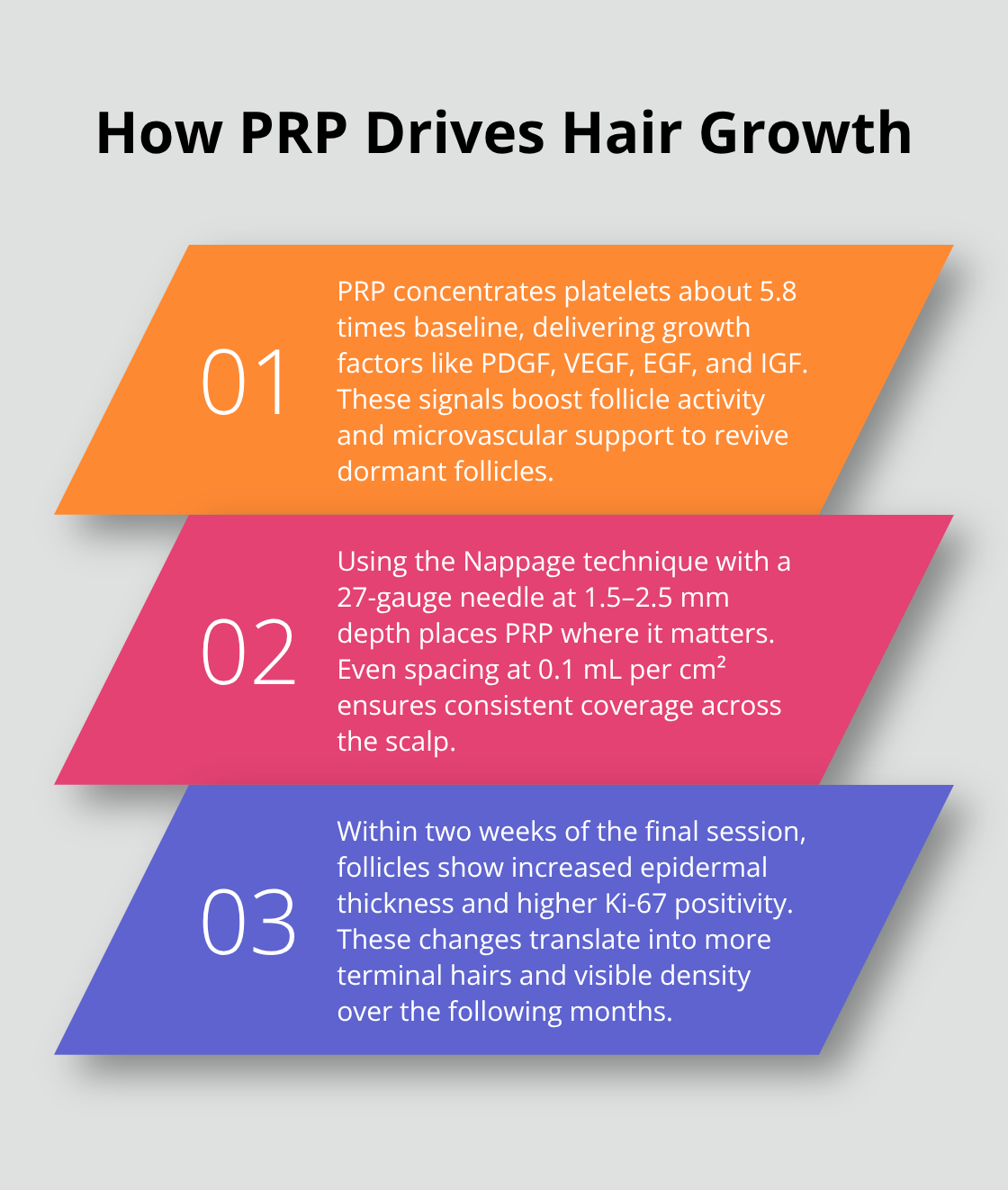
PRP starts with your own blood. We draw a small sample, usually about 10-15 milliliters, and place it in a centrifuge that spins at high speed to separate the layers. What emerges is platelet-rich plasma, concentrated to roughly 5.8 times the platelet level of your regular blood. This matters because platelets aren’t just clotting cells-they’re packed with growth factors including PDGF, VEGF, EGF, IGF that directly stimulate hair follicle activity. A 2015 study published in Stem Cells Translational Medicine showed that PRP-treated scalp areas gained an average of 33.6 additional hairs within three months, while the control side actually lost 3.2 hairs. That’s not a marginal difference. The growth factors in PRP activate dormant follicles and increase blood vessel density around the hair bulb, essentially waking up follicles that have stopped producing thick terminal hair.
The injection technique determines your results
The depth and spacing of injections determine whether the growth factors reach the dermal papilla, the structure at the base of each follicle that controls hair growth. Medical professionals inject PRP using the Nappage technique with a 27-gauge needle at a depth of 1.5 to 2.5 millimeters, spacing injections 0.1 milliliters per square centimeter across the scalp. This precision matters far more than most people realize. A typical plan involves three sessions spaced four to six weeks apart. After the last injection, cellular changes happen quickly: within two weeks, hair follicles show increased epidermal thickness and higher Ki-67 positive cells, indicating active cell proliferation. Terminal hair density increased by 40.1 hairs per square centimeter in treated areas versus a 5.6 decline on the untreated control side. You’re not just receiving a surface treatment-you’re triggering microscopic changes that favor thick, visible hair growth over fine vellus hair.
Why maintenance sessions prevent relapse
The study tracked patients for two years and found that four participants showed progressive hair loss around the 16-month mark and needed booster treatments. This tells us PRP isn’t permanent, but neither is minoxidil or finasteride. Maintenance sessions every four to six months help sustain the results because hair follicles need continued stimulation to stay in active growth phase. No major adverse effects appeared in the clinical data, making PRP far safer than oral medications that affect hormone levels. The procedure uses your own blood, eliminating allergy risks. Mild swelling or bruising at injection sites typically resolves within days, and you can return to normal activity immediately.
What happens next in your treatment journey
The real question isn’t whether PRP works-the clinical evidence answers that. The question is whether your specific hair loss pattern responds well to PRP, and that depends on understanding the different types of hair loss and how PRP performs against them.
What Results Can You Actually Expect from PRP Hair Treatment
The 2015 randomized controlled trial in Stem Cells Translational Medicine remains the gold standard for PRP efficacy data, and the numbers are worth examining closely. Twenty male patients with androgenetic alopecia received three monthly PRP injections using standardized protocols, and the results showed terminal hair density increased by 40.1 hairs per square centimeter on treated scalp areas. That translates to measurable thickening you’d notice in the mirror, not a microscopic improvement. The untreated control side lost 5.6 hairs per square centimeter during the same period, proving PRP actively reverses the thinning process rather than just slowing it.
The Numbers Behind Visible Density Gains
Total hair density jumped 45.9 hairs per square centimeter in PRP zones, while the placebo side dropped 3.8 hairs per square centimeter. These aren’t marketing claims-they’re peer-reviewed outcomes from a half-head controlled design where each patient served as their own control. If you have 100 hairs per square centimeter at baseline, PRP treatment could realistically bring you to 145 hairs per square centimeter within months. That’s the difference between noticeable thinning and fuller-looking hair.
Timeline for Visible Hair Thickening
Most patients notice the first signs of improvement between three and six months, though the cellular machinery starts working immediately. Within two weeks of your final injection, histological analysis showed increased hair follicles per square millimeter and elevated Ki-67 positive cells indicating active growth. However, your eyes won’t detect changes that fast-hair growth happens gradually. Fine vellus hairs often become noticeably thicker terminal hairs around month three. Density improvements become visible to anyone who knows you well around month six.
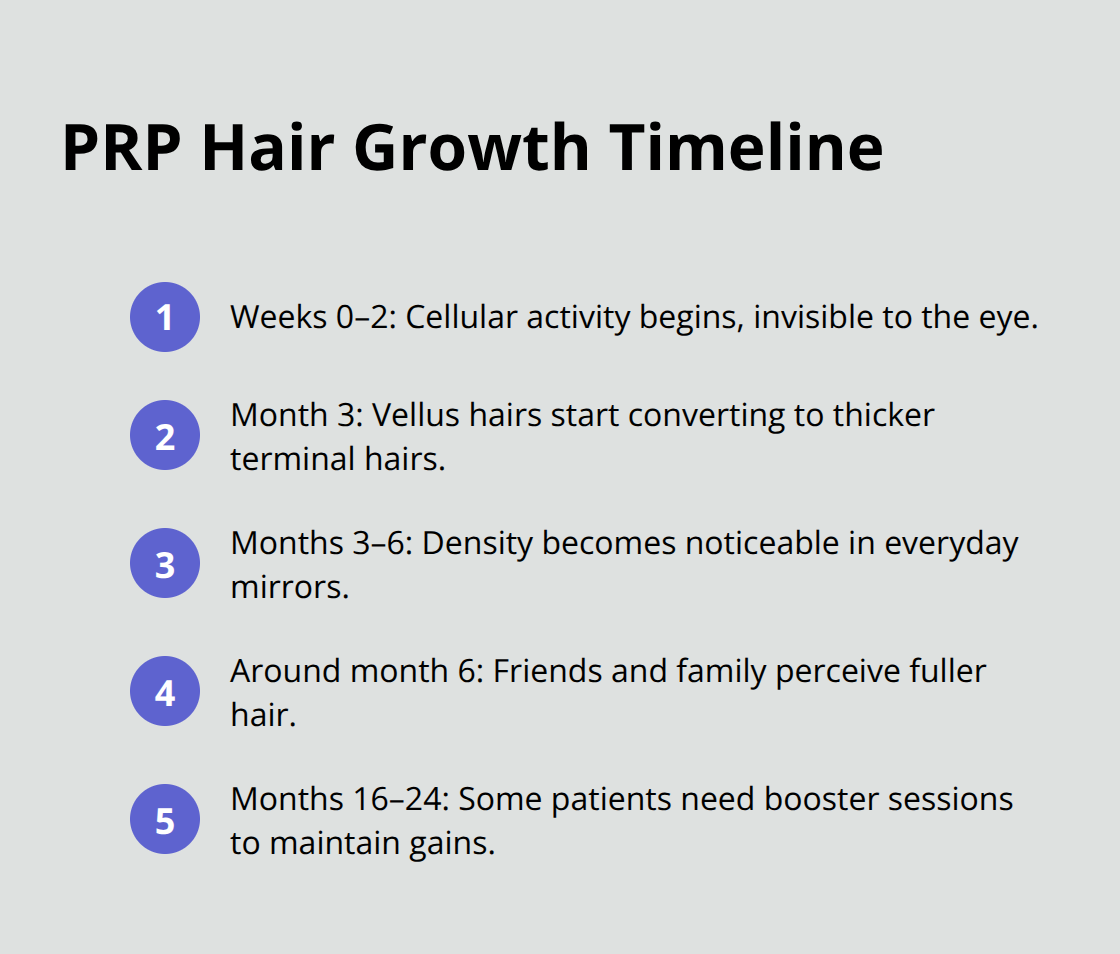
The study tracked patients to 24 months, revealing that four of the twenty participants experienced progressive hair loss around the 16-month mark and required booster injections.
Why Maintenance Sessions Keep Results Strong
This matters because it tells you PRP isn’t a permanent fix-maintenance sessions every four to six months sustain results. Your hair follicles need periodic stimulation to stay in active growth phase rather than returning to dormancy. Androgenetic alopecia responds best to PRP when caught early, ideally when you notice thinning but still have substantial hair density. Late-stage hair loss where follicles have completely miniaturized may not respond as robustly because there’s less biological tissue to stimulate. Starting treatment sooner rather than later dramatically improves your odds of meaningful density gains that actually change your appearance.
How Your Hair Loss Type Affects Your Outcome
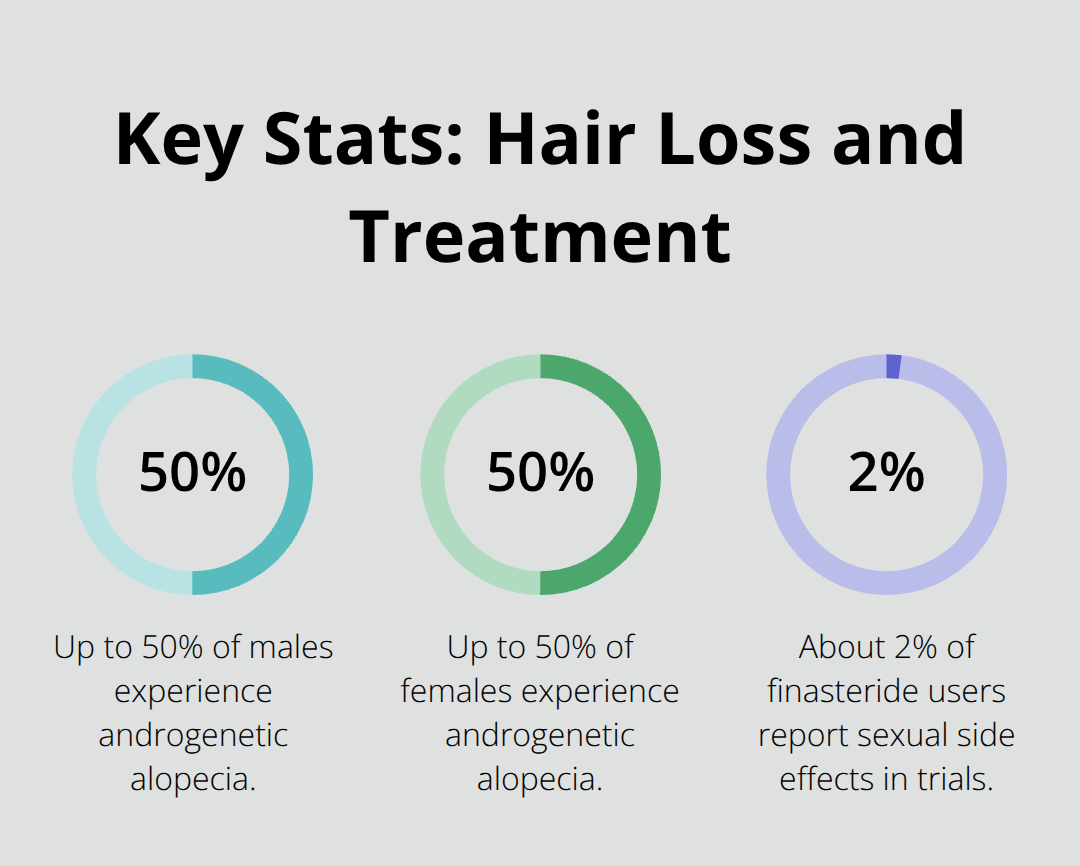
The strength of PRP results depends heavily on which type of hair loss you’re experiencing. Androgenetic alopecia affects up to 50 percent of males and females and responds most predictably to PRP therapy. Other conditions like telogen effluvium, alopecia areata, or scarring alopecia show insufficient evidence for PRP effectiveness, meaning your dermatologist needs to confirm your diagnosis before treatment. Women with androgenetic alopecia often see results comparable to men, though the pattern differs (thinning at the crown and widening center part rather than receding hairline). The clinical evidence strongly supports PRP for androgenetic alopecia specifically, which is why accurate diagnosis matters before you commit to a treatment plan.
PRP Stacks Up Against Minoxidil and Finasteride
Minoxidil and finasteride remain the only FDA-approved medications for androgenetic alopecia, and they work through entirely different mechanisms than PRP. Minoxidil is a topical vasodilator that you apply twice daily to your scalp, costing roughly $20 to $50 monthly, while finasteride is an oral medication that blocks DHT conversion and runs $10 to $40 per month depending on whether you use generic or brand-name versions. Both require indefinite use because hair loss resumes within months of stopping treatment.
How PRP Differs from Medications
PRP operates differently: it stimulates your follicles through growth factors rather than fighting hormones or expanding blood vessels chemically. The clinical data shows PRP produces measurable density gains within three months, comparable to what minoxidil achieves, but PRP doesn’t require daily application for the rest of your life. The trade-off is that PRP demands an upfront commitment of $1,500 to $3,000 for three sessions spaced monthly, then maintenance injections every four to six months costing $500 to $1,000 each. If you’re willing to commit to daily topical application indefinitely, minoxidil costs less overall. If you want to avoid daily medication and prefer a natural approach using your own blood, PRP makes financial sense after two to three years because you stop purchasing expensive products monthly.
Safety Profile: PRP vs. Finasteride
Finasteride presents a different calculation entirely. It works systemically to reduce DHT throughout your body, which means it can produce side effects like erectile dysfunction, reduced libido, or gynecomastia in roughly 2 percent of users according to clinical trials. These effects typically resolve after discontinuation, but they’re genuine concerns for many men. PRP carries no hormonal side effects because it uses your own growth factors. The Stem Cells Translational Medicine study documented no major adverse effects across the entire treatment period, with only mild temporary swelling or bruising at injection sites.
That safety profile matters enormously when you’re choosing between a treatment affecting your entire endocrine system and a localized injection stimulating your own biological healing response. Women cannot use finasteride during pregnancy due to teratogenic effects, whereas PRP safety data doesn’t show pregnancy-related contraindications, though discussion with your dermatologist remains essential.
Combining Treatments for Better Results
The advantage of combining treatments shouldn’t be overlooked either: some dermatologists recommend using minoxidil alongside PRP because they target different pathways, potentially amplifying results beyond what either treatment achieves alone. However, adding daily minoxidil to a PRP plan adds complexity and cost, so that decision depends on your baseline hair loss severity and how aggressively you want to pursue regrowth.
Why PRP Feels Different Than Medication
Non-invasive PRP therapy offers psychological advantages that medications don’t. Taking a pill daily for hair loss feels like managing a medical condition, whereas PRP sessions feel like an active investment in your appearance. You’re undergoing a procedure with visible before-and-after documentation rather than hoping a medication works. The terminal hair density increases documented in clinical trials (40.1 hairs per square centimeter in the treated group versus a 5.6 decline in the control group) translate to tangible visual improvements that strengthen your confidence in the treatment. PRP also doesn’t interfere with other medications or supplements, making it ideal if you’re taking multiple prescriptions for unrelated conditions. The natural-looking results occur because PRP stimulates your existing follicles to produce thicker hair rather than introducing foreign chemicals into your system. Your hair grows at its normal rate from your own follicles, so the improvement appears gradual and authentic rather than sudden or chemically altered. That said, PRP isn’t universally superior-it works best for early-stage androgenetic alopecia caught before extensive follicle miniaturization, whereas minoxidil can help at any stage. Your dermatologist should evaluate your specific hair loss pattern and density to recommend whether PRP alone, medications alone, or a combination approach makes sense for your situation.
Final Thoughts
PRP hair restoration therapy delivers measurable density gains backed by clinical evidence, making it a legitimate option for anyone frustrated with traditional treatments. The 40.1 hairs per square centimeter increase in terminal hair density documented in peer-reviewed studies translates to real visual improvement you’ll notice in the mirror. Unlike daily medications, PRP requires an upfront commitment of three sessions, then maintenance every four to six months.
The best candidates for PRP are people in early-to-moderate stages of androgenetic alopecia who still have substantial hair density to work with. If you notice thinning but haven’t experienced extensive hair loss, PRP can reverse the process before follicles completely miniaturize. Starting treatment sooner rather than later dramatically improves your odds of meaningful results, since waiting typically means more follicles miniaturize.
Your next step involves scheduling a consultation with a qualified professional who can examine your scalp, review your hair loss pattern, and discuss realistic expectations based on your specific situation. A thorough consultation should include scalp examination, family history review, honest discussion of what results you can expect, and transparent pricing (including whether combining PRP with minoxidil or other treatments might accelerate your results). Contact a dermatologist today to explore whether PRP hair restoration is right for your hair loss.