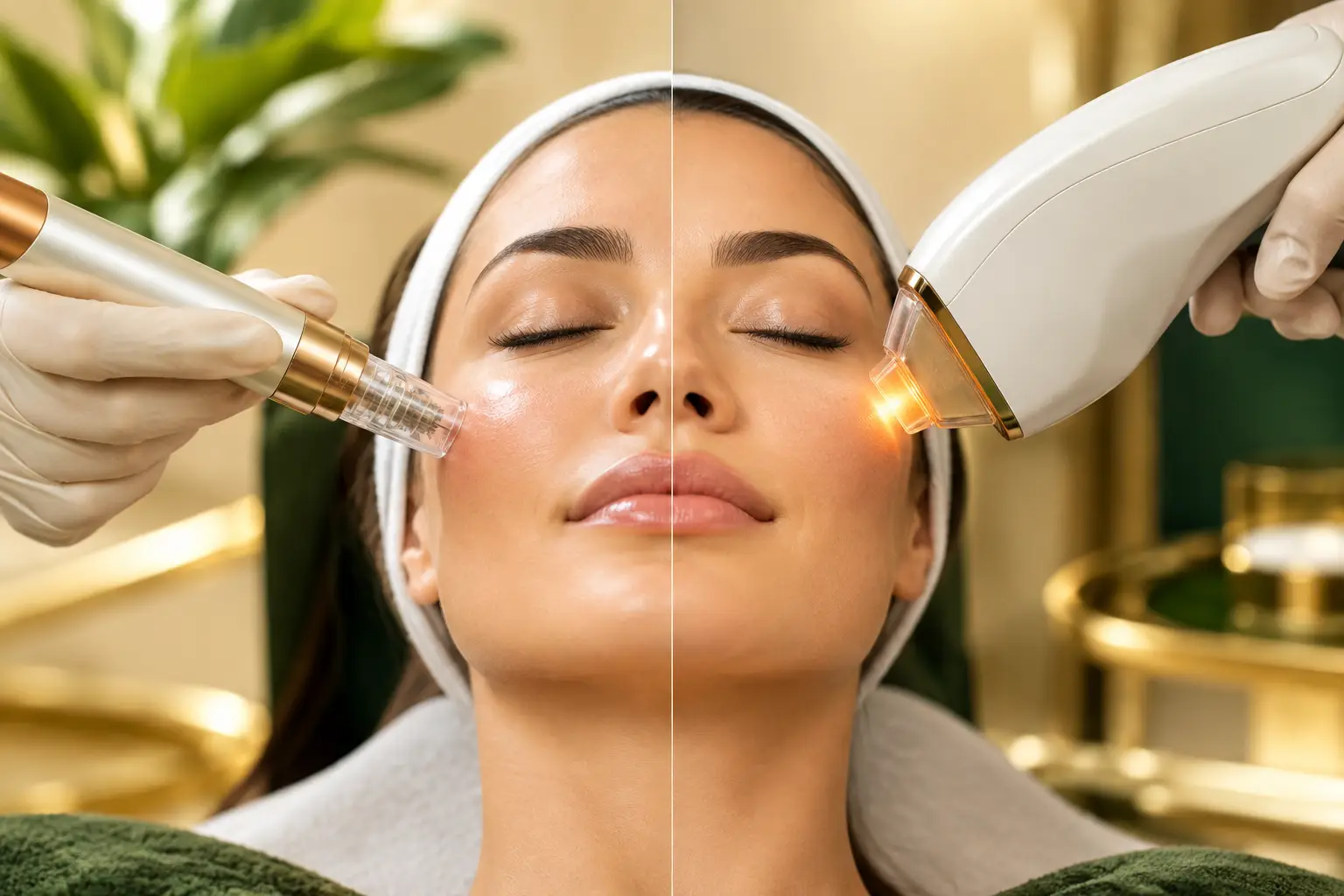

Hair loss affects roughly 40% of women by age 50, yet most solutions are marketed toward men. At YouShine Med Spa, we believe hair restoration for women deserves a completely different approach.
Your hair type, genetics, and lifestyle all play a role in how you experience hair loss. That’s why we’ve created this guide to help you find the treatment that actually works for your unique situation.
What Actually Causes Hair Loss in Women
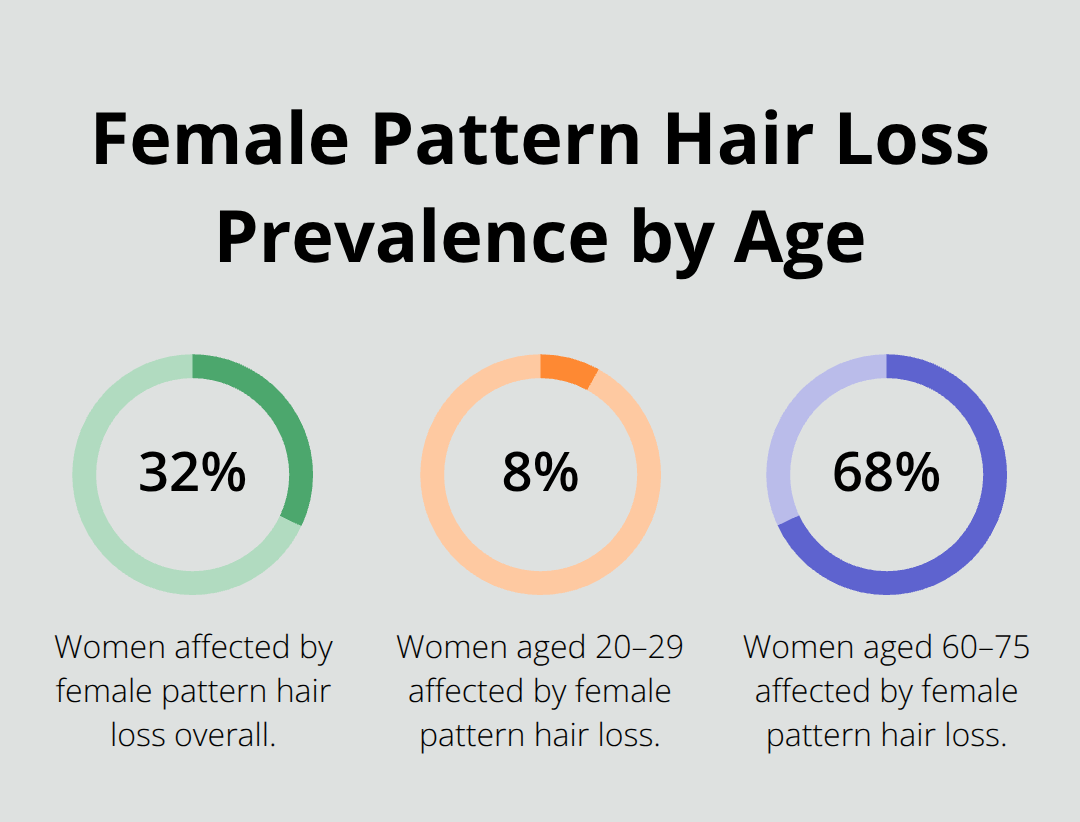
Hormonal shifts drive hair loss in most women, but the problem isn’t always what you’d expect. Female pattern hair loss affects roughly 32% of women overall, yet prevalence climbs dramatically with age-from about 8% in women aged 20–29 to 68% in women aged 60–75, according to research published in Anais Brasileiros de Dermatologia.
The culprit isn’t necessarily high testosterone; instead, hair follicles in genetically predisposed women become sensitive to androgens, which causes them to shrink over time. This process, called miniaturization, transforms thick terminal hairs into thin, barely visible vellus hairs. Thyroid disorders and polycystic ovary syndrome also trigger noticeable thinning because they disrupt the hormonal balance your scalp depends on.
If you’ve noticed increased shedding after pregnancy, during perimenopause, or following a medication change, hormonal fluctuation is almost certainly the cause. The key insight here is that you don’t need abnormally high hormone levels to experience significant hair loss-your follicles’ sensitivity to normal hormone levels matters far more.
Iron, Vitamin D, and Nutritional Gaps
Iron deficiency ranks among the most overlooked contributors to hair loss in women, yet it’s easily testable and correctable. Research shows that low iron stores and ferritin deficiency link to nonscarring hair loss, and the connection is particularly strong for women with heavy menstrual bleeding, vegetarians, or those with a history of anemia. Vitamin D deficiency also appears more common in patients experiencing alopecia than in the general population. Stress and significant weight loss compound these deficiencies by depleting nutrient stores and triggering telogen effluvium-a temporary but noticeable shedding phase where large numbers of hairs simultaneously enter the resting phase and shed 2–3 months later.
Ask your primary care physician for blood work measuring ferritin, iron, and vitamin D levels. If levels are low, supplementation may help stabilize your hair cycle, though supplementation alone won’t reverse established pattern hair loss.
Genetics Sets the Stage, But Timing Matters
Your genes determine whether your hair follicles will ever respond to hormonal changes, but age and life events determine when that response activates. Women with a family history of hair loss face higher risk, yet many don’t experience noticeable thinning until hormonal events like menopause trigger it. Traction alopecia commonly occurs in Afro-Caribbean hairstyles that involve tight braids and is reversible if caught early, making hairstyle choices surprisingly important for long-term scalp health.
Genetics loads the gun, but your hormones, stress levels, nutrition, and styling habits pull the trigger. Understanding this distinction means you have genuine control over several factors even if you can’t change your DNA. Once you identify what’s driving your hair loss, you can select a treatment approach that actually addresses your specific situation.
Which Hair Restoration Works Best for Your Hair Type
PRP Therapy Across All Hair Types
PRP therapy stands as the most versatile option across all hair types, and clinical evidence supports this approach. A randomized trial showed that platelet-rich plasma improved hair density outcomes versus saline over 24 months, with meta-analyses reporting density increases around 36.8 hairs per square centimeter. PRP works by concentrating your own growth factors and reinjecting them into thinning areas, triggering follicles to thicken and extend their growth phase. For fine and thinning hair, PRP delivers measurable results without the commitment of daily topical treatments or systemic medications. Sessions typically occur every six months to maintain gains, making this approach sustainable for women juggling work and family responsibilities.
Fine Hair and Topical Solutions
Minoxidil 2% topical solution remains the first-line treatment for fine hair. Expect results only after four to six months of consistent twice-daily application. Combining PRP with minoxidil addresses hair growth through two distinct mechanisms simultaneously-one triggers follicle activation while the other extends the growth phase-which typically yields better outcomes than either treatment alone.
Curly and Textured Hair Strategies
Curly and textured hair requires a different strategy because these hair types are more prone to breakage and traction damage from styling tension. Microneedling at depths of 0.5 to 1.5 millimeters stimulates growth factors and neovascularization in the scalp, and when combined with minoxidil, produces greater hair growth than minoxidil alone. For textured hair specifically, low-level laser therapy offers a non-invasive path-FDA-cleared devices can increase density, with most patients observing improvements around four months of consistent use.
Straight and Thick Hair Considerations
Straight and thick hair often responds well to oral minoxidil at low doses (0.25 to 1 milligram daily), which some dermatologists prescribe off-label when topical treatments underperform. Higher doses tend to yield greater effects, though cardiovascular monitoring becomes necessary at elevated levels. Thick, straight hair has the advantage of concealing early thinning, which means many women delay treatment until significant miniaturization has already occurred. Starting treatment earlier-whether topical minoxidil, PRP, or both-prevents you from reaching that advanced stage.
Advanced Options and Lifestyle Fit
If you’ve already experienced substantial loss, hair transplantation becomes viable for women with stable thinning patterns and adequate donor hair in resistant zones, though this requires careful surgical planning to avoid visible scarring and donor-area depletion. The treatment that works best is the one you’ll actually use consistently for six to twelve months. Your next step involves assessing your specific hair loss pattern and understanding how different treatments align with your daily routine and budget constraints.
Choosing the Right Hair Restoration Treatment
Cost Breakdown Across Treatment Options
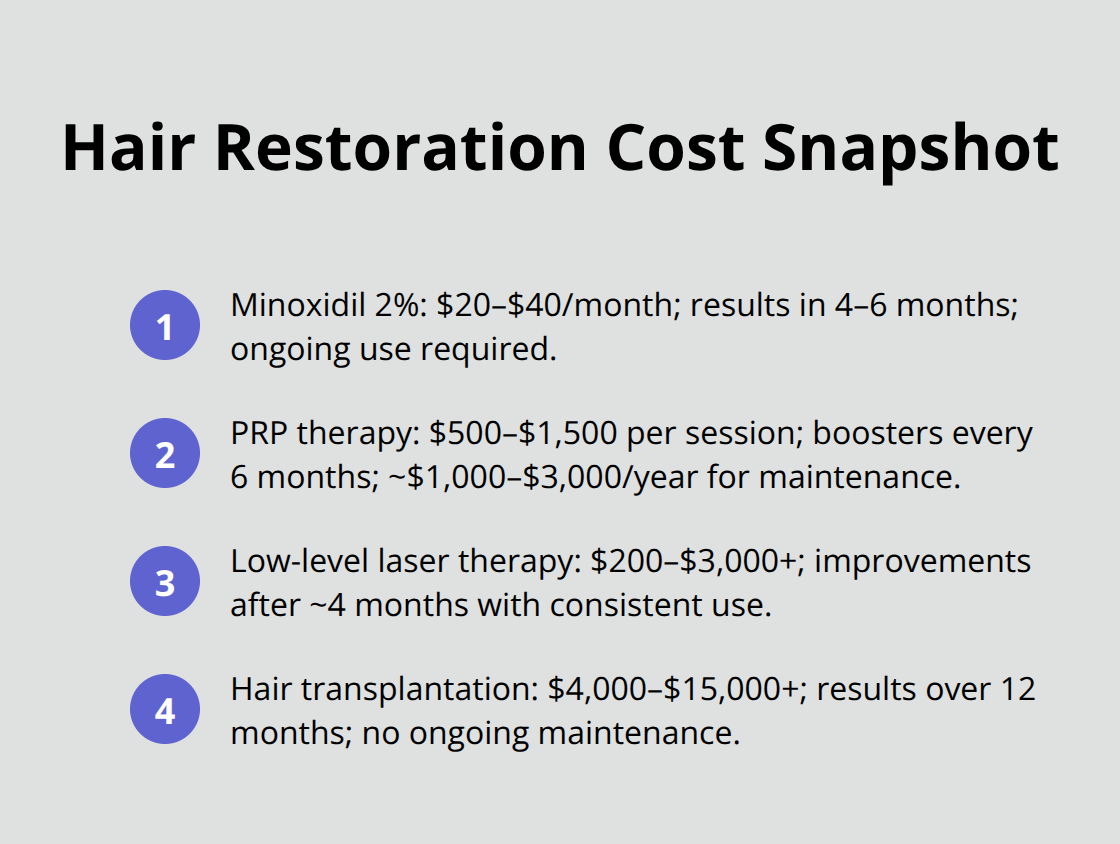
Topical minoxidil 2% costs roughly $20–$40 monthly and requires twice-daily application, with meaningful results appearing after four to six months. To maintain results, minoxidil must be continued indefinitely. PRP therapy costs between $500–$1,500 per session and requires booster sessions every six months to maintain density gains, which translates to $1,000–$3,000 annually once you factor in ongoing maintenance. Low-level laser therapy devices range from $200 for basic at-home units to $3,000+ for clinical-grade equipment, but most patients need four months of consistent weekly or bi-weekly use before noticing improvements. Hair transplantation runs $4,000–$15,000+ depending on graft count and technique, with results appearing gradually over twelve months and no maintenance costs afterward, making it genuinely permanent once healing completes.
Matching Your Hair Loss Pattern to Treatment
Your actual hair loss pattern determines whether you qualify for certain treatments. If you have diffuse thinning across your entire scalp with a widened part line typical of female pattern baldness, topical minoxidil or PRP works well. If your loss concentrates in small patches or along your hairline, transplantation becomes worth considering. Women with early-stage thinning see faster results from PRP combined with topical minoxidil than from either treatment alone, according to meta-analyses showing density increases around 36.8 hairs per square centimeter. Women with advanced thinning who delay treatment often find topical solutions disappointing because miniaturized follicles need more aggressive intervention.
Assessing Your Commitment Level
The treatment you choose depends far less on which option sounds best and far more on how much time you’re willing to invest and what you can realistically afford. If you struggle with daily routines or forget medications regularly, topical minoxidil will disappoint you. Most women succeed when they select one primary treatment and commit to it consistently for at least six months rather than switching between options every few weeks chasing immediate results that simply don’t exist in hair restoration.
Professional Assessment Before Treatment
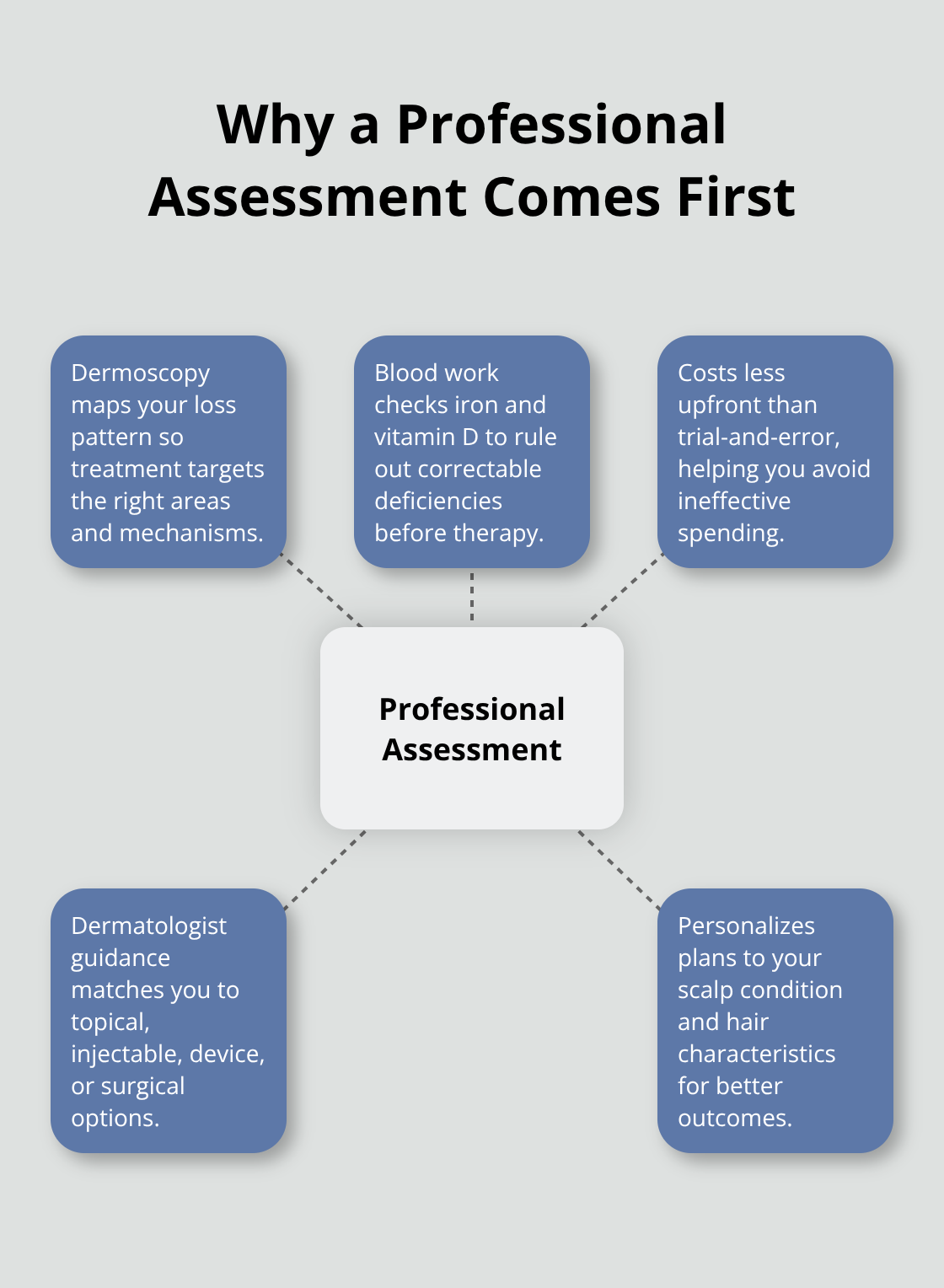
A professional scalp assessment that includes dermoscopy and blood work measuring iron and vitamin D levels helps you avoid costly mistakes before committing to any treatment plan. This costs far less upfront than trying multiple approaches blindly. Your dermatologist can identify whether your loss pattern responds better to topical solutions, injectable therapies, devices, or surgical intervention based on your specific scalp condition and hair characteristics.
Final Thoughts
Hair restoration for women requires matching your treatment to your specific situation rather than chasing whatever sounds most impressive. Blood work identifying iron and vitamin D levels removes the guesswork about whether nutritional deficiencies contribute to your thinning, while dermoscopy reveals your actual loss pattern and helps your dermatologist recommend treatments that address your condition. This upfront assessment prevents wasted time and money on approaches that won’t work for you.
Early-stage thinning responds well to topical minoxidil combined with PRP therapy, producing measurable density gains within four to six months. Advanced loss benefits from PRP sessions every six months paired with consistent topical treatment or low-level laser therapy, offering sustainable results without daily medication. Hair transplantation remains a permanent option for women with stable thinning patterns and adequate donor hair, though it requires careful surgical planning to avoid visible scarring.
The treatment that works best is the one you’ll actually use consistently for six to twelve months before evaluating results. We at YouShine Med Spa specialize in PRP hair restoration and other advanced treatments designed specifically for your needs, and our team can assess your scalp condition, discuss realistic timelines, and create a personalized plan that fits your budget and lifestyle. Long-term hair health requires ongoing maintenance whether you choose topical treatments, periodic PRP sessions, or surgical intervention, but the investment pays off when density returns and your confidence restores.