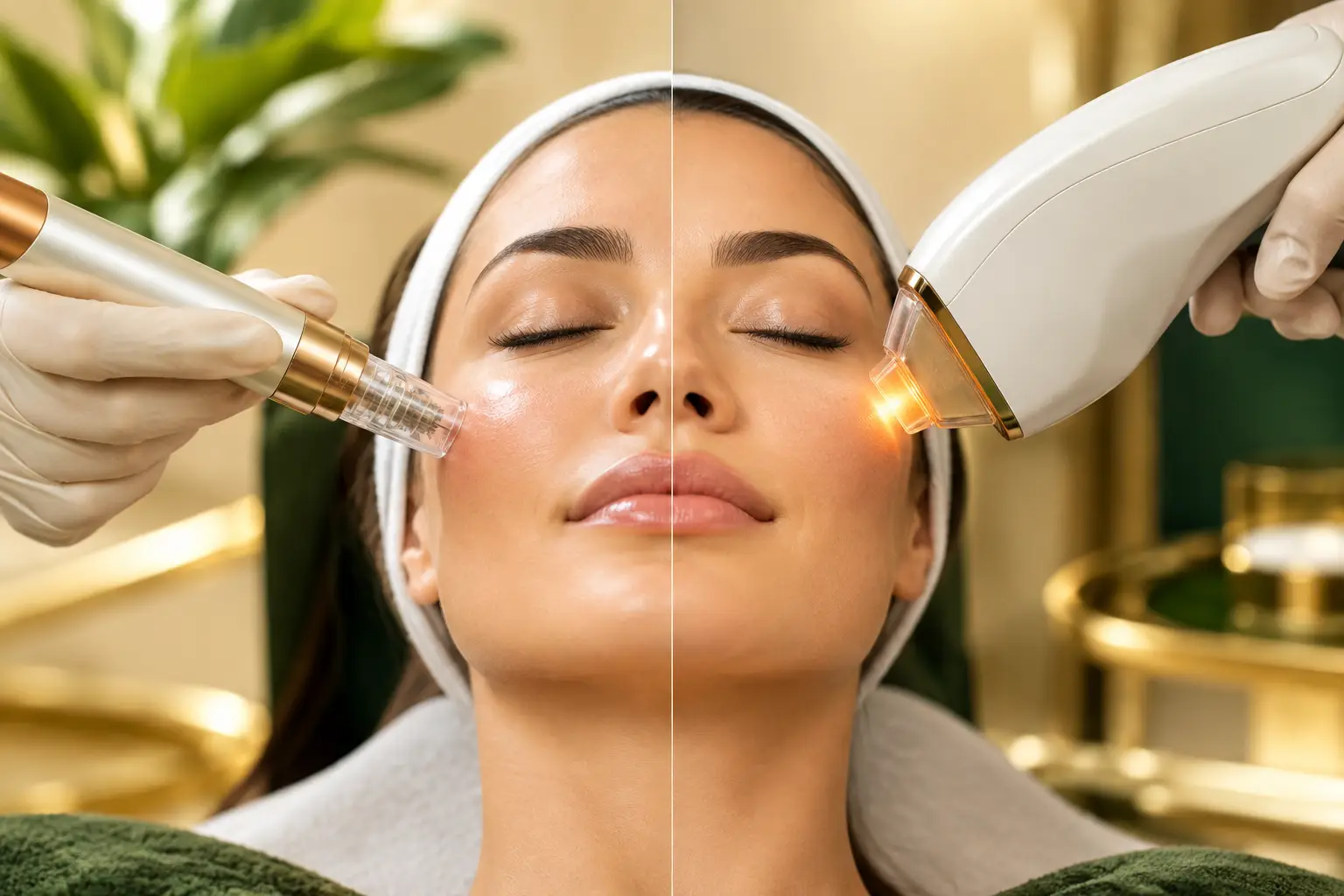
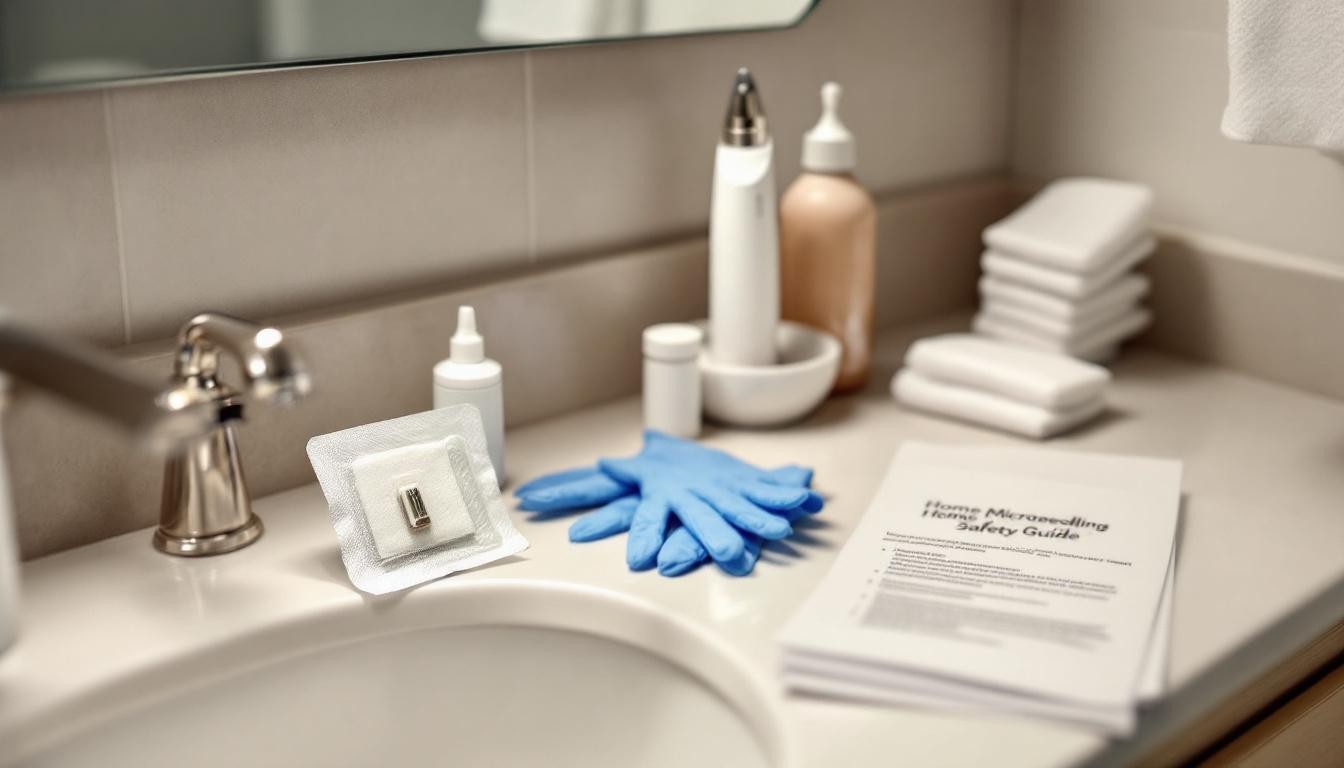
At-home microneedling can deliver real results, but one wrong move puts your skin at serious risk. Infection, scarring, and permanent damage happen when people skip the safety basics.
We at YouShine Med Spa created this home microneedling safety guide to show you exactly what works and what doesn’t. Follow these do’s and don’ts, and you’ll get the benefits without the complications.
How Microneedling Works and What Happens to Your Skin
Microneedling creates controlled micro-injuries in your skin’s surface, and your body responds with its natural repair mechanism. These micro-channels stimulate collagen and elastin production, which is why the FDA recognizes microneedling for improving facial acne scars, wrinkles, and abdominal scarring. The needle depth determines what happens next.
Needle Depth Changes Everything
At-home devices typically use needles between 0.25 and 0.5 millimeters, which primarily enhance product absorption and address surface-level texture issues. Professional treatments go deeper, sometimes reaching 1.0 millimeter or beyond, and target more significant scarring and structural skin changes. This depth difference explains why results vary so dramatically between home and professional treatments.
Expect Real Side Effects Beyond Redness
Most people experience redness and a sunburn-like sensation after treatment, which typically fades within a day or two according to FDA guidance. However, less common but serious complications include infection, stinging from certain products applied post-treatment, new facial spots, cold sore flare-ups, and pigmentation changes if technique is poor. Bleeding and bruising can occur, especially with deeper professional treatments. The infection risk is real and preventable. The FDA emphasizes that devices must be properly cleaned and disinfected between uses, with new needle cartridges used for each session. At-home users who skip sterilization or reuse cartridges dramatically increase infection risk since the micro-channels you create become direct pathways for bacteria into deeper skin layers.
Professional Practitioners Control Variables You Cannot Match at Home
Professional practitioners customize needle depth based on your specific skin type, goals, and skin condition. They control pressure, speed, and treatment patterns with medical-grade equipment that home devices simply cannot match.
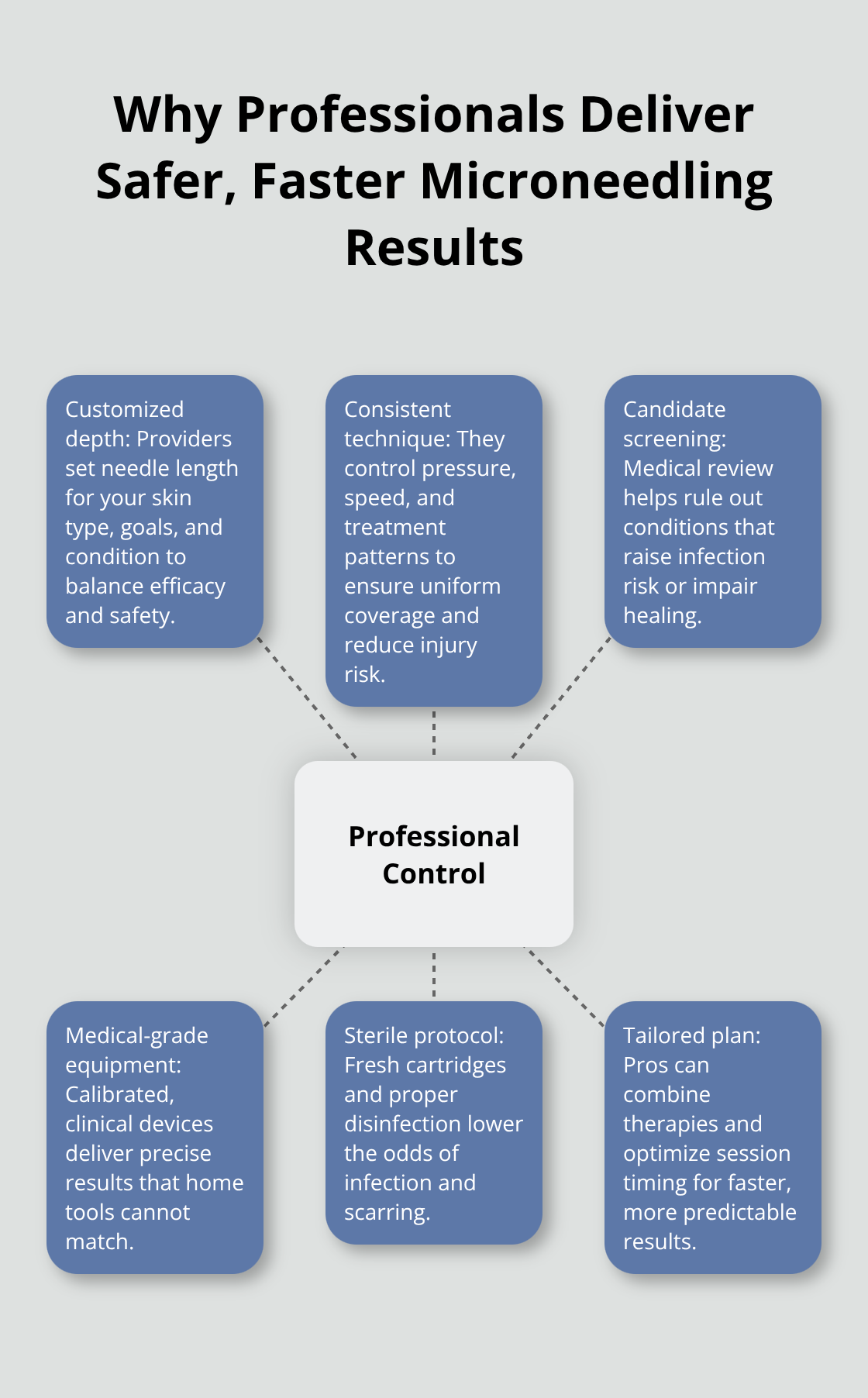
They also assess whether you’re a suitable candidate by reviewing your medical history and checking for bleeding disorders, active eczema, rosacea, psoriasis, compromised immunity, or uncontrolled diabetes. These conditions contraindicate microneedling because they increase infection risk or prevent proper healing. At-home users often skip this assessment entirely, treating skin that shouldn’t be treated.
Combination Therapies Accelerate Results
Professional treatments allow combination therapies that at-home treatments cannot replicate. Practitioners combine microneedling with chemical peels, laser resurfacing, or LED therapy to maximize results in fewer sessions. At-home treatments stand alone, which means longer timelines to visible results. Most people need four to six weeks to see improvements as collagen remodeling occurs, requiring multiple sessions spaced three to eight weeks apart over three to six months for noticeable foundation-building results. This extended timeline is why understanding what you can and cannot safely do at home matters so much before you start.
How to Prepare Your Skin and Choose the Right Treatment Frequency
Start With Proper Skin Preparation
Preparation separates safe at-home microneedling from skin damage. Start with a cleanser that removes oil and debris without stripping your skin barrier. A gentle, pH-balanced cleanser works best because microneedling creates thousands of micro-channels that become pathways for bacteria if your skin isn’t properly cleaned first. After cleansing, apply an antimicrobial product within 15 seconds to protect those freshly created channels. This timing matters because bacteria colonize open micro-perforations quickly.
Once your skin is prepped, apply a thin layer of hyaluronic acid or a meso-glide serum designed for microneedling. This serum improves the device’s glide across your skin and allows actives penetrate deeper into those micro-channels you’re creating. Without proper glide, you’ll press the device too hard into your skin, increasing irritation and infection risk.
Treat Your Face in Structured Zones
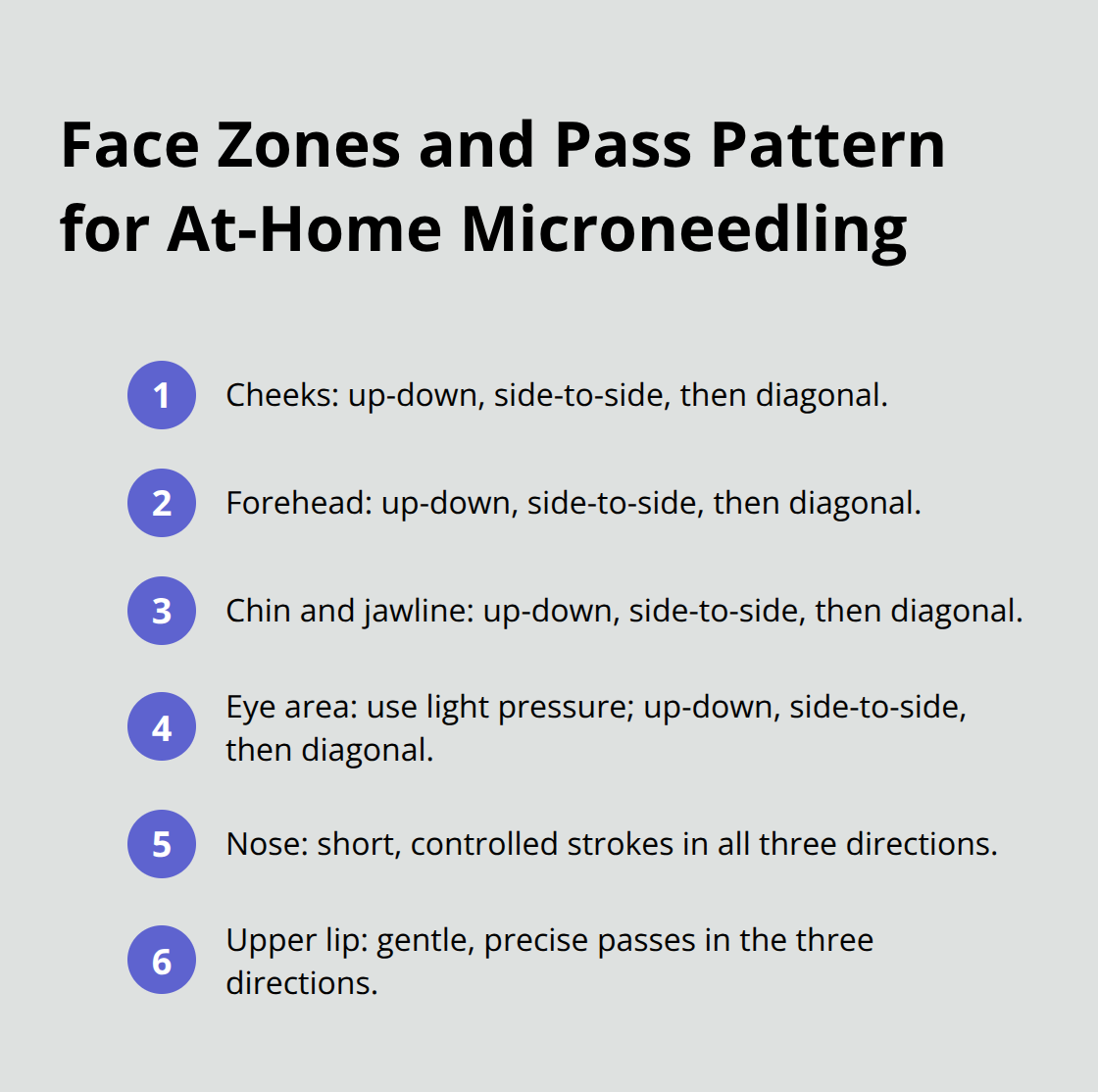
Divide your face into six zones-cheeks, forehead, chin and jawline, eye area, nose, and upper lip-and work in structured passes using straight lines: up-down, then side-to-side, then diagonal. Let the device glide; never press needles into your skin. This methodical approach prevents over-treating sensitive areas and ensures even coverage.
Match Needle Depth to Your Treatment Schedule
Needle depth and frequency directly control your results and safety. At-home devices using 0.25 millimeter needles can be used every other day because they work at the most superficial level and cause minimal disruption. Move up to 0.5 millimeter needles and you must space treatments two to four weeks apart to allow proper healing. The FDA emphasizes that deeper professional treatments at 1.0 millimeter or beyond require three to eight weeks between sessions because collagen remodeling is a slow but steady process.
Most people see visible improvements after four to six weeks, which is why expecting results after one session sets you up for disappointment and over-treatment. Plan for a series of treatments spaced appropriately over three to six months to build a foundation, then maintain results with one to two sessions per year.
Protect Your Skin After Treatment
Post-treatment care determines whether your skin glows or becomes inflamed. Immediately after microneedling, your skin is exceptionally receptive to serums. Use hydrating products containing hyaluronic acid or peptides, which calm inflammation and support collagen production. Avoid retinoids, vitamin C, glycolic acid, and other exfoliating actives for at least three to five days because these irritate freshly needled skin.
Sunscreen becomes non-negotiable since your skin is photosensitive after treatment. Even if you think your redness will fade quickly, UV exposure causes pigmentation changes and undoes collagen-building progress. Choose serums and moisturizers specifically formulated for post-microneedling use rather than your regular products, as sensitive skin after treatment reacts poorly to fragrance, essential oils, and other common irritants.
The difference between glowing results and compromised skin often comes down to one critical step that most at-home users overlook entirely-and it’s the reason why bruising and scarring happen far more often than they should.
Critical Mistakes That Cause Infection and Scarring
Device Sterilization: The Non-Negotiable Step
Skipping device sterilization represents the single most dangerous mistake at-home users make, and it happens far more often than people admit. The FDA emphasizes that new needle cartridges must be used for each session because reusing cartridges spreads bacteria directly into the micro-channels you create. If you cannot commit to using a fresh cartridge every time, do not start at-home microneedling. The micro-injuries you create are open pathways into deeper skin layers, and bacteria colonize these channels within minutes if your device is contaminated.
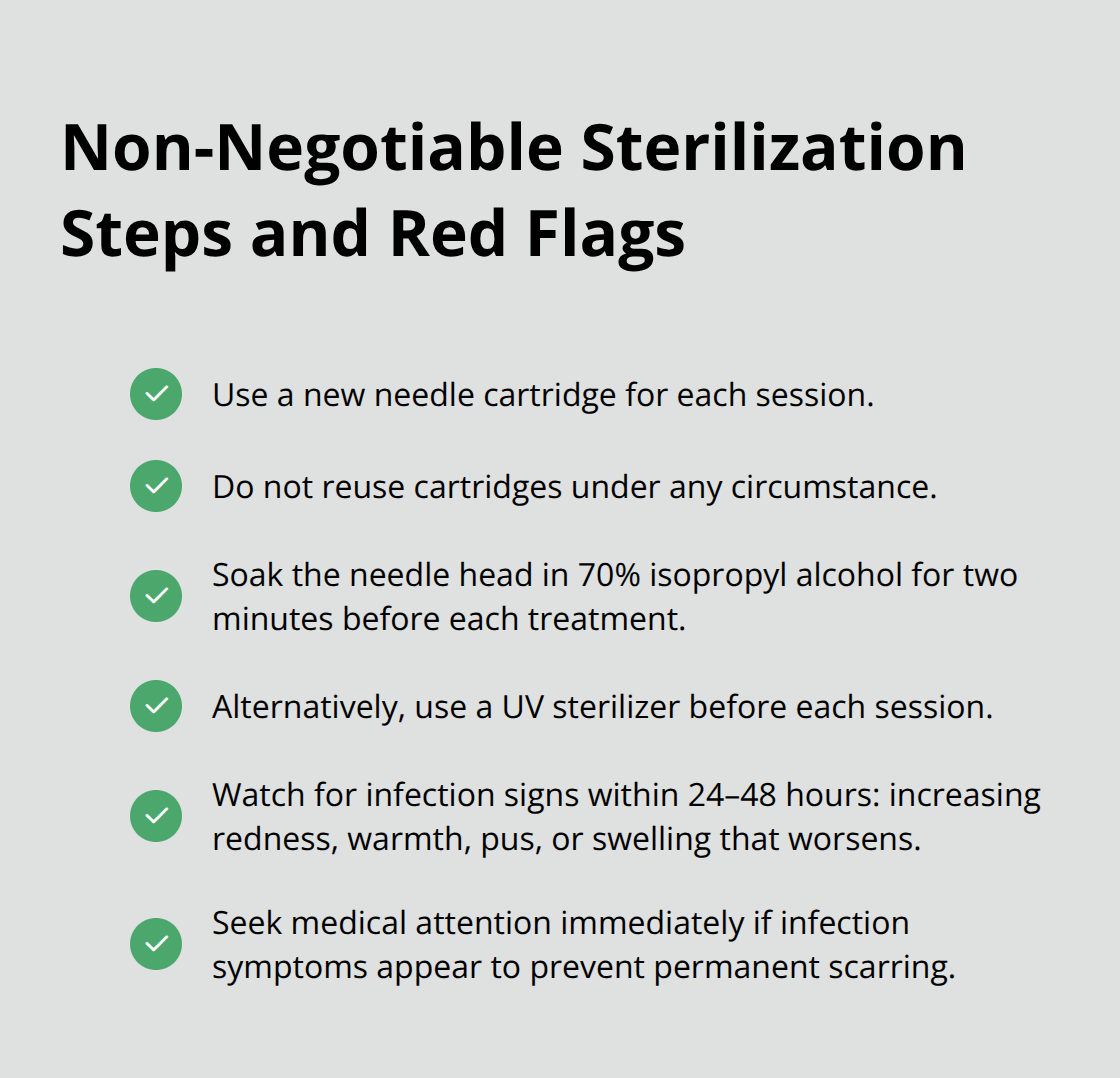
Device sterilization requirements involves soaking the needle head in 70% isopropyl alcohol for two minutes or using a UV sterilizer before each treatment. This is not optional. Infection develops within 24 to 48 hours after treatment and presents as increasing redness, warmth, pus, or swelling that worsens instead of improving. Once infection sets in, permanent scarring follows if you do not seek medical attention immediately. Scarring from infection is irreversible, which is why prevention through proper sterilization matters infinitely more than any treatment that follows.
Wrong Products Compromise Healing
Applying the wrong products immediately after treatment causes secondary damage that rivals infection risk. Your skin becomes hypersensitive post-treatment, and applying retinoids, vitamin C serums, glycolic acid, or other exfoliating actives creates chemical burns on freshly needled skin. These products do not just irritate-they compromise the healing process and cause post-inflammatory hyperpigmentation, especially in darker skin tones. Fragrance, essential oils, and alcohol-based products trigger similar reactions.
Many at-home users apply their regular skincare routine immediately after microneedling because they assume their skin can handle it, and this assumption costs them weeks of recovery and permanent discoloration. The correct approach uses only hydrating serums containing hyaluronic acid or peptides for the first week, followed by sunscreen without fail. Skipping sunscreen after treatment is equally destructive because UV exposure causes pigmentation changes and undoes collagen-building progress.
Medical Conditions That Contraindicate Treatment
Certain medical conditions make microneedling unsafe for at-home use. Do not treat active acne breakouts because microneedling spreads bacteria and worsens inflammation. Do not microneedle if you have uncontrolled diabetes, a history of blood clotting problems, active eczema, psoriasis, dermatitis, or inflamed rosacea in the treatment area, or a compromised immune system. These conditions prevent proper healing or increase infection risk exponentially. If you fall into any of these categories, consult a dermatologist before attempting at-home treatment.
Final Thoughts
At-home microneedling works when you follow the safety fundamentals outlined in this home microneedling safety guide. Sterilize every cartridge with 70% isopropyl alcohol before use, never reuse needles, prep your skin with antimicrobial products, and space treatments according to needle depth. Use only hydrating serums post-treatment, apply sunscreen without exception, and avoid retinoids and exfoliating acids for at least five days to prevent infection and scarring.
Stop treatment immediately if you notice increasing redness, warmth, pus, or swelling beyond the first 24 hours, as infection develops quickly in the micro-channels you create. If you have uncontrolled diabetes, blood clotting disorders, active eczema, psoriasis, rosacea, or a compromised immune system, skip at-home microneedling and consult a dermatologist instead. Professional microneedling makes sense if you want faster results, combination therapies, or customized treatment plans tailored to your specific skin type and goals.
We at YouShine Med Spa offer professional microneedling treatments if you prefer expert guidance and faster outcomes. Contact YouShine Med Spa to discuss whether professional microneedling aligns with your skin goals and timeline. Either way, prioritize safety over speed, and your skin will reward you with lasting results.