You notice it first in the mirror, then in photos, then in the way your ponytail feels a little less full. If you have been asking, does PRP work for thinning hair, the short answer is yes – for the right person, with the right plan, and with realistic expectations.
PRP hair restoration has become one of the most requested non-surgical treatments for early hair loss because it uses your body’s own growth factors to support healthier follicles. It is not a magic fix, and it is not the best option for every type of hair loss. But for many people dealing with thinning rather than complete baldness, it can be a very worthwhile treatment.
Does PRP work for thinning hair in real life?
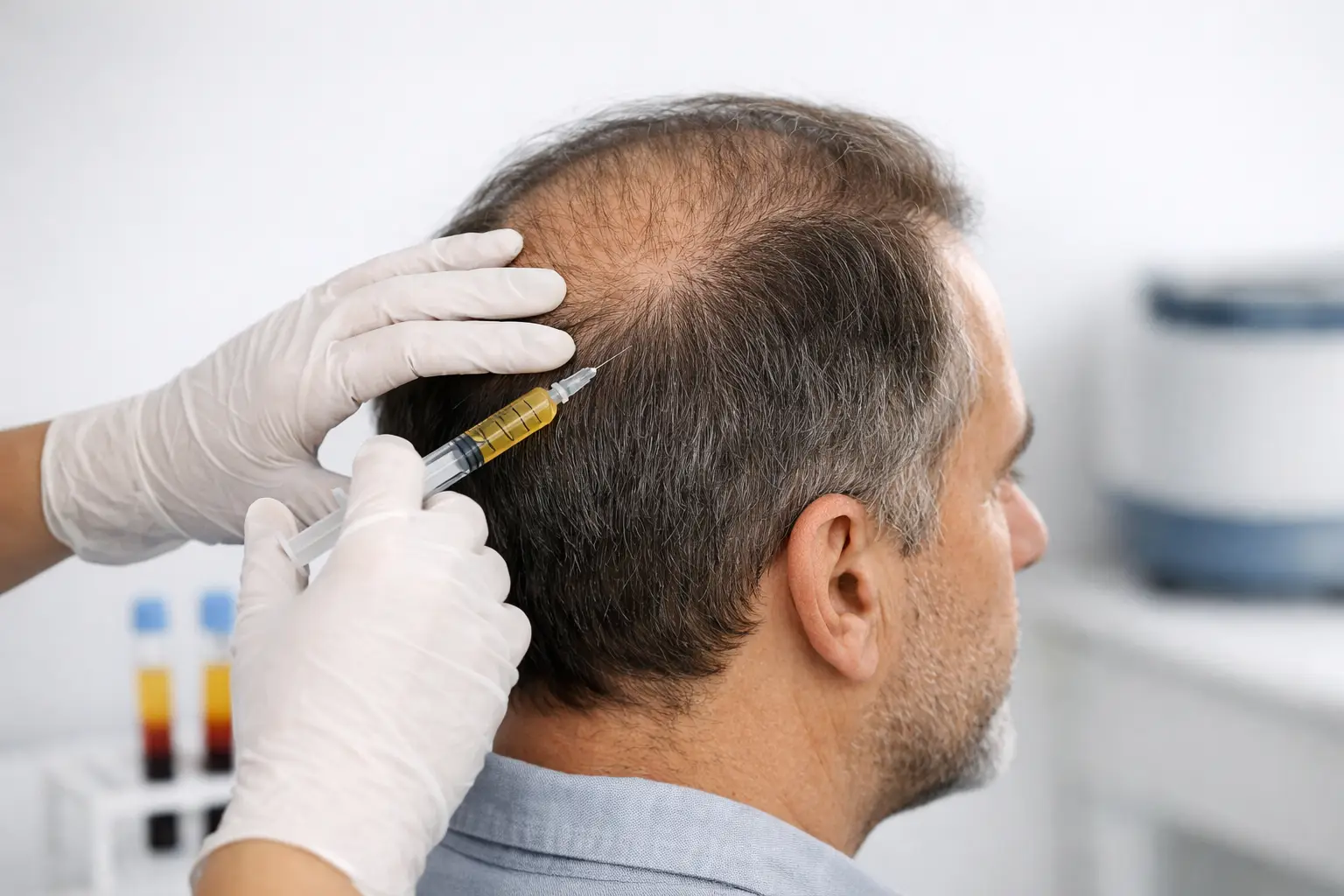
In real practice, PRP can improve hair density, reduce shedding, and help existing hair grow in stronger and healthier. The treatment works by drawing a small sample of your blood, separating out the platelet-rich plasma, and injecting that concentrated plasma into the scalp in areas where hair is thinning.
Platelets contain growth factors that help signal repair and regeneration. When placed into the scalp, they may support blood supply around the follicle, extend the growth phase of the hair cycle, and improve the function of weakened follicles. That is why PRP is often most helpful when hair is miniaturizing, not when a follicle has been inactive for a long time.
This distinction matters. If you are seeing widening at the part, more shedding in the shower, less density at the crown, or an overall reduction in fullness, PRP may offer meaningful improvement. If an area is completely smooth and bare, results are less predictable.
Who tends to see the best results?
PRP tends to work best for men and women in the earlier stages of thinning hair. That includes androgenetic alopecia, often called pattern hair loss, as well as some cases of stress-related shedding after the active trigger has passed.
Candidates often do well when they still have visible hair in the treatment area, even if it has become finer, weaker, or slower to grow. In those cases, the goal is to revive and strengthen what is still there. Think of PRP as support for struggling follicles, not a replacement for follicles that are gone.
Age alone does not decide whether PRP is a good fit. Scalp health, the cause of the thinning, hormone balance, nutrition, and the length of time the hair has been thinning all play a role. This is why an expert consultation matters. A personalized plan will always be more effective than chasing a one-size-fits-all solution.
When PRP may not be enough
PRP is a regenerative treatment, but it does have limits. If hair loss is caused by an untreated thyroid issue, severe iron deficiency, active autoimmune disease, scalp inflammation, or certain medications, those underlying factors need attention too.
It is also not ideal to frame PRP as a stand-alone cure. Some patients get the best outcome when PRP is combined with a broader hair restoration strategy. Depending on the case, that could include medical-grade scalp care, microneedling, supplements, prescription support, or maintenance sessions over time.
That does not mean PRP is weak. It means hair loss is complex. The most beautiful results in aesthetics often come from thoughtful layering, and hair restoration is no different.
What results should you actually expect?
One of the biggest reasons people feel disappointed with hair treatments is timing. Hair grows slowly, and improvement happens in stages. PRP does not create overnight fullness. Most patients need a series of treatments, usually spaced several weeks apart, before they notice a visible difference.
Early changes may include reduced shedding and better hair texture. After that, many people start to see improved density, stronger strands, and more coverage in thinning areas. Results usually continue to build over several months.
The goal is typically enhancement, not dramatic transformation. For someone who wants to preserve their hair, improve quality, and restore a fuller look without surgery, that can be exactly the right approach. If someone expects dense regrowth in a severely bald area, PRP alone may fall short.
What a PRP treatment feels like
For many patients, PRP appeals because it fits into a busy life. The treatment is done in-office and requires very little downtime. A blood sample is taken, the plasma is processed, and then the PRP is injected into targeted areas of the scalp.
You may feel some pressure, pinching, or tenderness during the injections, but most people tolerate it well. Mild soreness, tightness, or sensitivity in the scalp can happen afterward, though this usually resolves quickly.
Because the treatment uses your own plasma, PRP is also appealing to patients who prefer a more natural, regenerative option. It works with your body rather than introducing synthetic ingredients into the scalp.
Does PRP work for thinning hair better than other options?
That depends on what you are comparing it to and what kind of outcome you want. PRP offers advantages that many people find attractive. It is non-surgical, requires minimal recovery, and can be tailored to areas of concern. It also fits well for patients who want subtle, natural-looking improvement.
Compared with topical products, PRP is more procedure-based and may feel more clinically guided. Compared with surgery, it is far less invasive but also less dramatic. Compared with doing nothing, it gives you a chance to actively support hair health before thinning progresses further.
The best way to think about PRP is not as a competitor to every other treatment, but as one valuable tool in hair restoration. In the right hands, and with the right expectations, it can be a smart and elegant option.
Why treatment quality matters
Not all PRP experiences are the same. Technique matters. Patient selection matters. The way the blood is processed matters. Even the treatment schedule can affect whether someone feels they got real value.
A high-quality PRP hair restoration plan should start with a careful assessment of your scalp, shedding pattern, medical history, and goals. It should also include an honest conversation about whether you are likely to respond well. Luxury care is not just about comfort. It is also about precision, customization, and clinical judgment.
That is especially important with thinning hair, where subtle changes can make a visible difference. A personalized plan can help protect what you have now while supporting healthier growth over time.
Is PRP worth it for thinning hair?
For many patients, yes. If your hair is thinning, your part is widening, or your once-full style feels less dense than it used to, PRP can be worth considering. The treatment may help improve thickness, decrease shedding, and support stronger growth without surgery or significant downtime.
The key is knowing what PRP can and cannot do. It is not a quick fix. It works best as a series, not a single session. And it tends to be most rewarding for people who start before thinning becomes advanced.
At a practice like YouShine Med Spa, where personalized aesthetics are paired with regenerative expertise, PRP fits beautifully into a treatment philosophy focused on natural-looking results and renewed confidence. Hair restoration should feel encouraging, not overwhelming.
If you have been wondering whether thinning hair is simply something you have to accept, it may be time to think differently. Sometimes the most meaningful changes begin by supporting your body’s own ability to restore what has started to fade.