Hair thinning rarely feels like a small change. It may show up as a wider part, more shedding around the shower drain, a less-dense ponytail, or a hairline that no longer frames your face the way it once did. PRF for hair is a regenerative treatment designed to support the scalp using concentrated components from your own blood, offering a refined, non-surgical option for people who want to address early thinning with a natural-looking approach.
At YouShine Med Spa, hair restoration is never treated as one-size-fits-all. The best plan begins with understanding the pattern of hair loss, the condition of the scalp, your health history, and what fuller, healthier-looking hair means to you.
What Is PRF for Hair?
PRF stands for platelet-rich fibrin. Like PRP, or platelet-rich plasma, PRF is created from a small sample of your own blood. The sample is placed in a centrifuge to separate and concentrate platelets, growth factors, white blood cells, and fibrin – a natural protein matrix involved in the body’s healing process.
That concentrated material is then strategically placed into areas of the scalp affected by thinning. The goal is to create a healthier environment around existing hair follicles and encourage them to function at their best. PRF does not create new follicles where none exist, nor is it a guarantee against progressive hair loss. It is a regenerative option that may help support fuller-looking hair when viable follicles are still present.
The distinction between PRF and PRP matters, although both treatments use your own blood components. PRF is processed differently and typically contains a fibrin matrix that may allow growth factors to release more gradually. The right choice depends on your goals, the provider’s treatment approach, and the details of your scalp and hair concerns.
Who May Be a Good Candidate for PRF Hair Treatment?
PRF can be an appealing option for women and men who have noticed mild to moderate thinning and want a treatment that fits naturally into a thoughtful aesthetic maintenance plan. It is often considered for diffuse thinning, early hereditary pattern hair loss, changes related to aging, or hair that has gradually lost density.
You may be a stronger candidate if you still have visible, active follicles in the treatment area. This is why earlier care can be valuable. When an area has been completely bare for a long period, regenerative injections are less likely to produce meaningful improvement because there may be few follicles left to support.
A consultation is especially important if shedding began suddenly, is accompanied by itching or scalp irritation, or follows a major illness, surgery, rapid weight change, childbirth, or a medication change. Hair loss can be connected to thyroid conditions, nutrient deficiencies, hormonal shifts, autoimmune disorders, stress, and other medical factors. A med spa treatment can complement a broader hair-health plan, but certain patterns require evaluation by a primary care clinician or dermatologist first.
PRF may not be appropriate for everyone. Active scalp infections, certain blood or bleeding disorders, use of some medications, and medical conditions that affect blood quality can influence candidacy. Honest health screening protects both your comfort and your results.
What Happens During a PRF for Hair Appointment?
Your appointment begins with a close look at the areas you would like to improve. Your provider will discuss your hair history, current medications, previous treatments, and expectations. Photos may be taken so subtle changes can be tracked over time rather than judged from memory alone.
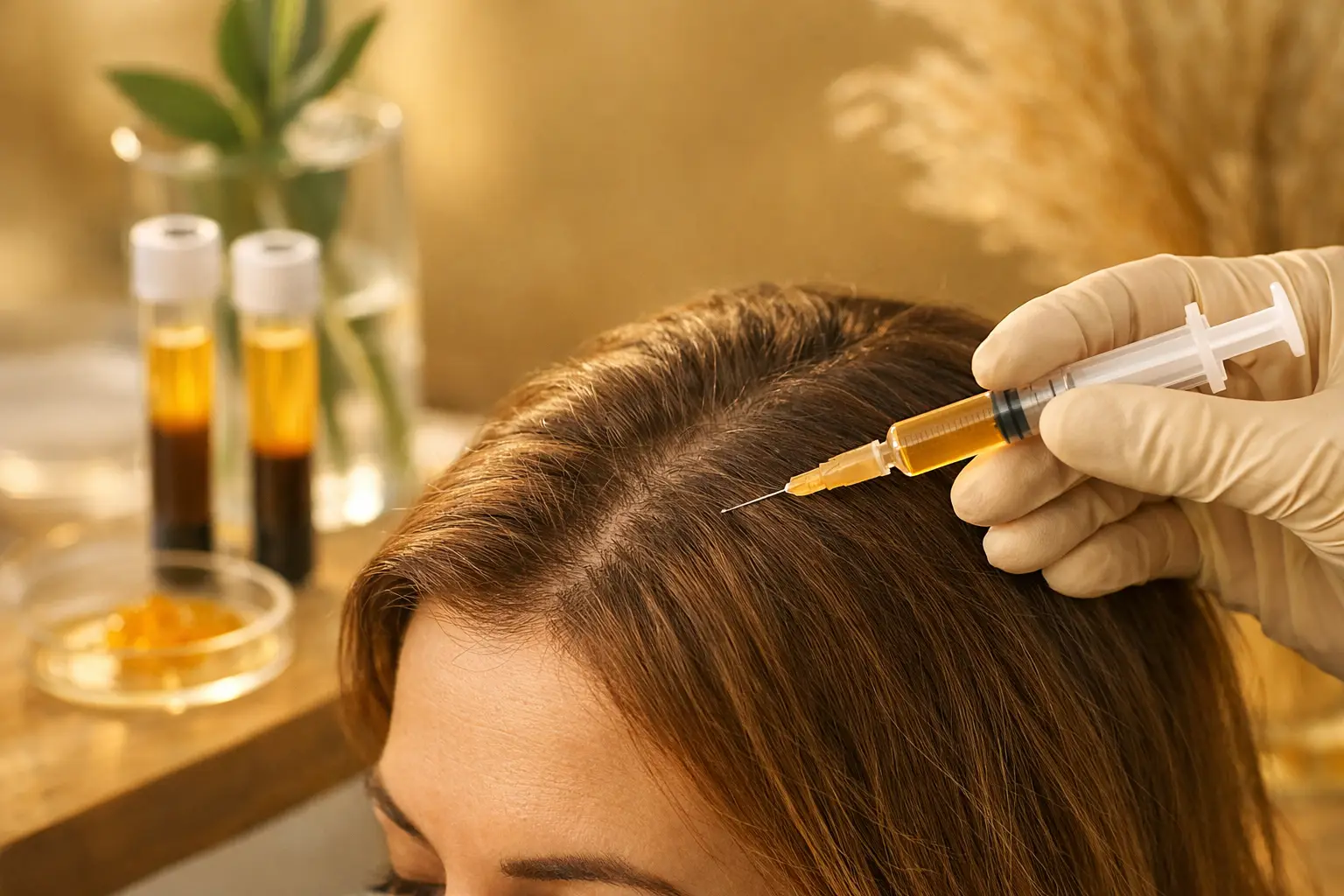
A small blood draw is performed, much like routine lab work. While the PRF is prepared, the scalp is cleansed and mapped for treatment. A topical numbing option may be used to make the experience more comfortable, though sensitivity varies by person and by treatment area.
Once the PRF is ready, your provider uses a series of small, precise injections across the thinning areas. The injection portion is generally brief. You may feel pressure, quick pinches, or temporary tenderness, but most clients find the process manageable.
There is little to no social downtime. Mild swelling, redness, pinpoint bleeding, or scalp soreness can occur and typically settle within a short period. Your provider will give you personalized aftercare instructions, which may include avoiding strenuous exercise, excessive heat, or harsh scalp products for a limited time. Plan your appointment around an evening at home if you prefer to give any tenderness time to fade quietly.
When Will You See Results?
Hair growth moves on its own timeline, and patience is part of the process. PRF works with the natural hair cycle rather than delivering an instant cosmetic change. Some people first notice less shedding, while others observe improvements in hair quality, density, or the appearance of their part over several months.
Most treatment plans involve a series of initial sessions spaced several weeks apart, followed by maintenance appointments when appropriate. The exact number depends on the degree and cause of thinning, your response, and whether PRF is being combined with other professionally recommended options.
Results can vary considerably. Genetics, hormones, stress, nutrition, styling practices, smoking, underlying medical concerns, and consistency with follow-up care all matter. A credible treatment plan makes room for that reality. The goal is not a dramatic overnight transformation. It is steady, polished progress that looks like your own hair at its healthiest.
How to Support Your PRF Results
PRF treatment is most effective when it is part of attentive hair and scalp care. Your provider may recommend a home routine or suggest coordinating with your physician for lab work or medical support when the cause of shedding is unclear. If you have hereditary thinning, ongoing management is often more realistic than a single treatment course.
Protecting the hair you have also makes a visible difference. Avoid frequent high-tension styles, aggressive brushing, repeated bleaching, and excessive heat when possible. Make room for adequate protein, iron-rich foods, hydration, and restful sleep. These habits are not a substitute for medical care or in-office treatment, but they can support the environment your follicles need.
It can also help to set a practical baseline before beginning. Take clear photos in the same lighting, part your hair the same way, and note whether your concern is shedding, a widening part, temple recession, or overall density. This gives you and your provider a more honest way to assess progress.
PRF vs. Other Hair Restoration Options
PRF is one option within a larger hair-restoration conversation. Topical or oral medications may be recommended for some forms of hereditary hair loss, while nutritional correction may be central when a deficiency is involved. Low-level light therapy, PRP, and scalp-focused treatments can also have a place depending on the person.
Hair transplant surgery is another path, generally considered when hair loss is more advanced or when a person wants to redistribute follicles from a denser donor area. It is a more involved procedure with a different recovery period and cost structure. PRF does not replace a transplant when transplant-level restoration is needed, but it may be useful for individuals who prefer a non-surgical starting point or want to support existing hair.
The right option is not always the newest or most intensive one. It is the one that aligns with your diagnosis, lifestyle, budget, comfort level, and desired degree of improvement. A personalized plan may use PRF alone, or it may pair it with other treatments for a more comprehensive strategy.
A Refined Way to Care for Thinning Hair
Choosing treatment for hair thinning can feel personal, especially when the changes are subtle enough that others may not see them but significant enough that you do. PRF offers an elegant option for supporting your scalp with your body’s own regenerative components, without surgery and with minimal interruption to your routine.
The most rewarding next step is a professional consultation that focuses on your individual pattern of loss rather than promises of instant regrowth. With clear expectations, thoughtful timing, and a plan designed around your goals, you can move forward feeling informed, cared for, and more confident in the hair you see in the mirror.