
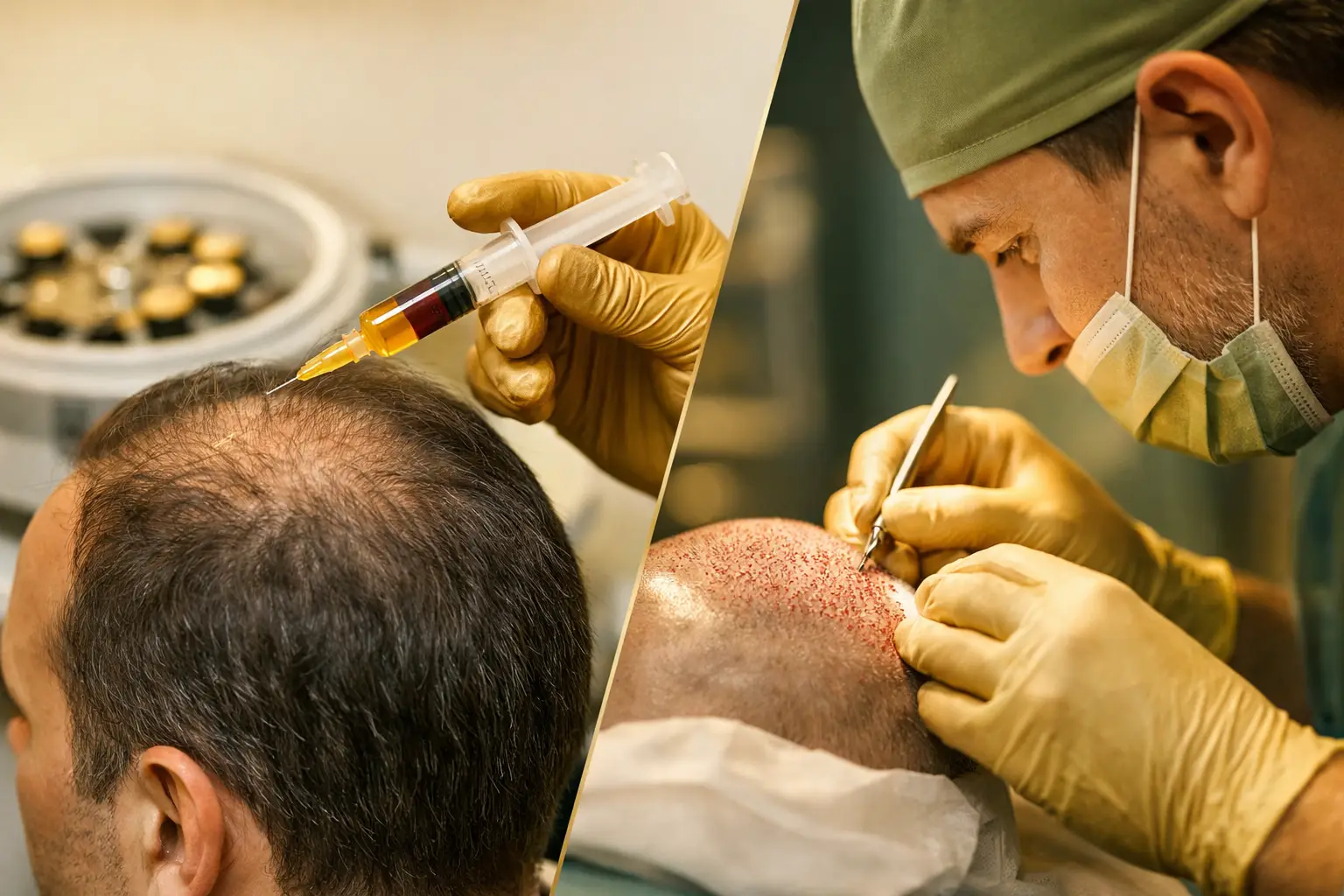
A widening part, more hair in the shower drain, or a hairline that no longer frames your face the way it once did can feel deeply personal. When comparing PRP versus hair transplant, the real question is not which treatment is “better.” It is which approach aligns with your pattern of hair loss, lifestyle, comfort level, and goals for natural-looking confidence.
Both treatments can have a place in a thoughtful hair restoration plan, but they work in very different ways. PRP is a non-surgical regenerative treatment intended to support existing follicles. A hair transplant is a surgical procedure that moves healthy follicles to areas with thinning or loss. Understanding that distinction makes it much easier to choose your next step with clarity.
PRP versus hair transplant: the essential difference
PRP, or platelet-rich plasma, uses a concentrated portion of your own blood. After a simple blood draw, the sample is processed to isolate platelets and growth factors. Those platelets are then carefully injected into targeted areas of the scalp.
The goal is to create a healthier environment for follicles that are still present but may be weakened or producing finer, shorter hairs. PRP does not create brand-new hair follicles, and it cannot replace follicles that are no longer active. Its value is in helping support existing hair and potentially improving hair caliber, density, and shedding patterns for appropriate candidates.
A hair transplant works differently. During the procedure, a surgeon removes hair follicles from a donor area, commonly the back or sides of the scalp, and places them into thinning or bald areas. Because the follicles are relocated, a transplant can restore hair to areas where follicles have been lost, provided the person has sufficient donor hair and is a suitable surgical candidate.
In simple terms, PRP is about preserving and strengthening what you have. A transplant is about redistributing healthy hair to rebuild coverage where it is needed.
When PRP hair restoration may be the right choice
PRP often appeals to people who want a discreet, non-surgical option with minimal interruption to work, social plans, and daily routines. It can be especially appropriate in the earlier stages of hair thinning, when follicles are still present and the goal is to slow progression while encouraging fuller-looking growth.
Many clients choose PRP when they notice gradual thinning at the crown, increased shedding, a widening part, or less volume through the top of the scalp. It may also be considered as part of a broader plan for hereditary hair thinning, depending on the provider’s assessment and the underlying cause.
Treatment typically begins with a series of sessions, often spaced several weeks apart, followed by maintenance appointments. Hair growth moves slowly, so meaningful changes should be evaluated over months rather than days. Some people notice reduced shedding first, followed by improvements in texture, thickness, or coverage over time. Results vary, and consistency matters.
The recovery is typically straightforward. The scalp can feel tender or look mildly red after injections, but most clients return to normal activities quickly. For people who prioritize subtle, gradual improvement without surgery, this low-downtime approach can feel especially appealing.
What PRP cannot do
PRP is not a substitute for a transplant in every situation. If an area is completely smooth or has been bald for years, there may be too few viable follicles for PRP to meaningfully improve density. It also cannot guarantee that hair loss will stop permanently, particularly when genetic hair loss is progressing.
A responsible treatment plan begins with honest expectations. PRP can be an elegant option for nurturing thinning hair, but it is not an overnight transformation or a one-visit solution.
When a hair transplant may make more sense
A hair transplant may be worth considering when hair loss is more advanced, the hairline has significantly receded, or there are clear areas where follicles are no longer producing hair. It can create more visible coverage in a specific area than PRP alone because it introduces functioning follicles where density is limited.
Transplants are often discussed by men with patterned recession or crown loss, but women can also be candidates depending on the distribution and cause of thinning. The evaluation is highly individualized. A qualified surgical provider will assess scalp health, donor-hair availability, the stability of hair loss, medical history, and the design of a natural hairline or coverage pattern.
The trade-off is that transplantation is surgery. Recovery requires more planning, and newly transplanted hairs often shed before the follicles settle into their growth cycle. Early regrowth may begin after several months, while fuller results can take 9 to 12 months or longer. There is also a healing period for both the donor and recipient areas.
A transplant can be long-lasting because transplanted follicles often retain characteristics of the donor area. Still, the native hair around them can continue to thin. That is why many people use medical or regenerative strategies alongside a transplant to help protect their existing hair.
Recovery, comfort, and timing
Your calendar matters when choosing between treatments. PRP is usually easier to fit around a busy schedule. There is no surgical incision, and most people can resume many normal activities promptly, following their provider’s aftercare instructions. You may need to avoid vigorous exercise, certain hair products, or scalp manipulation for a short time.
A hair transplant asks for more recovery time and patience. You will need to follow careful aftercare instructions to protect newly placed grafts, manage swelling, and allow the scalp to heal. If you have a wedding, major work event, or travel planned soon, the timing of surgery deserves careful consideration.
Comfort is personal as well. PRP involves a series of injections and is typically performed with measures to improve comfort. Transplant surgery is more involved and may use local anesthesia, but it also requires a longer appointment and a more detailed recovery process. Neither choice should feel rushed. The right treatment is one you can realistically commit to and care for properly.
Cost and long-term planning
It is understandable to compare cost, but the initial price tells only part of the story. PRP generally requires multiple sessions and ongoing maintenance, so it is best viewed as a continuing investment in scalp and follicle support. A transplant usually has a higher upfront cost because it is a surgical procedure, although it may involve fewer treatment days after the initial procedure.
The more useful question is what value each option offers for your specific stage of hair loss. Paying for PRP when a transplant is needed for meaningful coverage can lead to disappointment. Choosing surgery before exploring non-surgical support for early thinning may be more intervention than necessary.
A personalized consultation can help map out a sensible sequence. For example, someone with early diffuse thinning may start with PRP and monitor progress. Someone with stable, established recession may consider a transplant, with PRP used before or after surgery as part of an overall hair wellness plan.
Choosing based on your hair loss pattern
The source of hair loss matters as much as the amount. Hereditary thinning, hormonal changes, recent stress, nutritional factors, inflammatory scalp conditions, medication effects, and certain medical concerns can all affect the way hair grows and sheds. A sudden or patchy loss pattern deserves medical evaluation rather than an assumption that it is simply cosmetic thinning.
During an informed consultation, your provider should look at your scalp, review your health history, discuss the timeline of shedding or thinning, and ask what result would make you feel most like yourself. The goal is refined improvement, not a promise that every concern has one universal solution.
For Louisville clients seeking a non-surgical, personalized approach, PRP hair restoration at YouShine Med Spa can be a supportive option when existing follicles are still present and the goal is fuller, healthier-looking hair with minimal downtime. If surgery is more appropriate, a trusted hair-transplant surgeon can provide the specialized assessment needed to determine candidacy.
Your hair restoration choice should feel less like a leap and more like a well-considered plan. Begin with a professional evaluation, give yourself permission to ask direct questions about expected results and maintenance, and choose the path that supports both your appearance and your confidence over time.